
Eye Diseases
About Eye Diseases
Eye Diseases, Treatments and Surgeries
Eyes are one of our most important sensory organs, enabling us to see the world and guide our lives. Vision plays a critical role in perceiving our environment, managing daily life, and even achieving success in business. Therefore, early diagnosis and treatment of eye diseases are crucial for maintaining good health. Eye diseases can range from simple vision problems to permanent vision loss. Therefore, maintaining eye health is a crucial step in improving quality of life.
What Does the Ophthalmology Department Look For?
Eye diseases, medically known as ophthalmology, are medical specialties that deal with the diagnosis and treatment of diseases of the eye and surrounding structures. Specialists in this field are called ophthalmologists or ophthalmologists.
What are Eye Diseases?
Eye diseases are a variety of conditions that affect vision and can lead to serious health problems if not treated promptly. Eye health is an important part of our overall health, so early diagnosis and treatment through eye examinations are crucial. Common eye diseases include:
- Cataracts : A condition that causes vision loss due to clouding of the lens of the eye. It can develop due to aging, injuries, or certain diseases.
- Glaucoma (Eye Pressure): Nerve damage occurs due to increased internal pressure in the eye and can lead to permanent vision loss if left untreated.
- Myopia (Near Vision): The inability to see distant objects clearly. It occurs when the eye is long or the cornea is too curved.
- Hyperopia (Farsightedness): The inability to see near objects clearly. It occurs due to a short eye or insufficient curvature of the cornea.
- Astigmatism : It is a condition in which both distant and near objects appear blurry due to the inability of the eye to focus light properly.
- Age-Related Loss of Vision: This is the condition where the lens of the eye loses its flexibility due to aging and the inability to see close objects clearly.
- Strabismus : A condition in which the eyes are not parallel due to eye muscle incompatibility. This can cause both aesthetic and visual problems.
- Color blindness : A vision disorder that causes a person to have difficulty distinguishing certain colors, or to be unable to distinguish them at all. The most common is the confusion between red and green.
- Macular Degeneration (Macular Degeneration): This is a condition characterized by damage to the macula, the area of the retina that provides central vision. It becomes more common with age.
- Retinal Hole or Tear: This occurs when the retina separates or tears. It can lead to vision loss and requires immediate intervention.
- Diabetic Eye Diseases (Diabetic Retinopathy): The vessels in the eye are damaged due to diabetes, which can lead to vision loss.
- Corneal Ulcer (Corneal Inflammation): Inflammation and wounds occurring on the outer layer of the eye can lead to serious vision problems due to infection.
- Conjunctivitis (Red Eye or Pink Eye): Inflammation of the membrane covering the white part of the eye. It can be bacterial, viral, or allergic.
- Dry Eyes: Due to insufficient tear production, burning, itching, redness and vision disturbances may occur in the eyes.
- Eye Injuries: Physical injuries to the eye, penetration of foreign objects, and contact with chemicals can lead to eye diseases.
- Eye Infections: Swelling, redness, pain and vision loss may occur in the eye due to bacterial, viral or fungal infections.
- Eye Tumors : Benign or malignant tumors that form in the eye can lead to vision loss and other health problems.
- Blepharitis: Inflammation of the eyelid margin. It occurs due to blockage of the oil glands at the eyelid margin.
- Optic Nerve Inflammation (Optic Neuritis): Inflammation of the optic nerve can cause vision loss. This condition occurs due to immune system problems or infections.
- Drooping Eyelids (Ptosis): This is a condition where the eyelid hangs lower than normal. It can develop due to natural aging, neurological disorders, or muscle weakness.
- Keratoconus: It is characterized by the deformation of the cornea (the transparent layer at the front of the eye), thinning of the cornea and its collapse outwards.
- Eyelid Oil Gland : Swelling and inflammation resulting from blockage of the oil glands in the eyelid. Sometimes, surgery may be necessary.
- Eye Swelling or Hematoma (Subconjunctival Hemorrhage): Bleeding occurs as a result of rupture of the vessels in the eye.
- Lazy Eye : Vision loss occurs when one eye fails to develop properly. If not treated early, it can be permanent.
- Uveitis: Inflammation of the middle layer of the eye (uvea). It can develop due to infections, autoimmune diseases, or trauma.
- Visual Field Loss (Scotoma): A spot or area of vision is lost in the field of vision. This is associated with conditions such as macular degeneration or glaucoma.
- Eye Allergies: Itching, watering and redness of the eyes may occur due to pollen, dust or other allergens.
- Ophthalmopathy: Inflammation of the eye muscles causes pain, swelling, and vision problems. This condition is associated with thyroid disease.
- Keratitis: Inflammation of the cornea. It occurs due to infections (bacterial, viral, fungal) or chemicals.
- Optic Neuropathy: This is damage to the optic nerve. Vision loss occurs due to the death of nerve cells. It can develop for a variety of reasons.
- Pterygium: A fleshy growth on the white part of the eye.Bottom of Form
What are the symptoms of eye diseases?
- Cataract Symptoms : Blurred vision, night vision problems, glare or halos in the eye, faded or yellowed vision
- Glaucoma, Eye Pressure Symptoms : Vision loss, especially peripheral vision, eye pain or headache, blurred vision, sensitivity to light, narrowing of the visual field, deterioration of night vision.
- Allergic Eye Inflammation: Itching and burning in the eyes, watering in the eyes, swelling and redness around the eyes.
- Astigmatism Symptoms: Blurred or distorted vision, eye fatigue or strain, difficulty seeing at night, headaches
- Myopia (Near vision) Symptoms: Seeing distant objects blurry, no problem in reading or close work, effort to focus by squinting, headache and eye fatigue.
- Symptoms of Hyperopia (Farsightedness) : Blurred vision of nearby objects, eye pain or fatigue, especially during close-range reading, headaches, sensitivity to light.
- Eyelid Inflammation (Blepharitis) Symptoms: Redness and itching in the eyes, crusting or dandruff in the eyes, a burning or stinging sensation in the eyes, watering or dry feeling in the eyes.
- Eye Infection Symptoms: Bacterial, viral or fungal infections can cause redness in the eyes, swelling and pain in the eyes, purulent discharge from the eyes, sensitivity to light.
- Age-Related Macular Degeneration: Blurred or darkened vision in the center, a "gap" in the middle of the vision, straight lines appearing bent
- Dry Eye Symptoms: Stinging sensation, itching, burning or redness in the eyes, watery eyes (the body reacts to excessive dryness), feeling of tiredness in the eyes.
- Symptoms of Strabismus : One or both eyes are not parallel, double vision, head tilt or difficulty focusing the eyes.
- Eye Inflammation (Conjunctivitis) Symptoms : Redness, itching, burning in the eyes, discharge from the mouth or nose, watering or crusting in the eyes.
- Retinal Tear or Hole Symptoms: Sudden loss of vision, flashes of light or “flying lights,” black spot or shadow in the field of vision
- Diabetic Retinopathy Symptoms: Blurred vision, vision loss, bleeding or fluid accumulation in the retinal vessels
- Optic Neuritis: Loss of vision, pain in the eye, difficulty distinguishing colors, especially when moving.
- Corneal Dystrophy Symptoms: Blurred vision, pain or discomfort in the eyes, extreme sensitivity to light, frequent eye fatigue.
- Retinal Degeneration Symptoms: Vision loss, darkening or disappearing spots in the field of vision, fluctuations or flashes of light in the vision, general weakness in the eye.
How to Perform an Eye Examination
The first step in the examination is to listen to the patient's complaints and past medical history. The doctor may ask questions about complaints, use of glasses, family history of eye disease, and systemic diseases. The following checks are performed during the examination.
- Visual Acuity Test: This test evaluates your distance and near vision. If you wear glasses or contacts, the test is performed with or without them. You'll be asked to recognize letters or symbols using the Snellen letter chart , and an eyeglass prescription can be prepared based on your vision level.
- Eyeglass Prescription Measurement: Computerized devices are used to measure whether you are nearsighted, farsighted, or astigmatic. An autokeratometric device is used, and then your eyeglass prescription is manually adjusted.
- Eye Pressure Measurement: The risk of glaucoma (eye pressure) is assessed by measuring intraocular pressure . This can be done with an air-spraying device or a manual tonometer after applying eye drops. It's a painless and quick procedure.
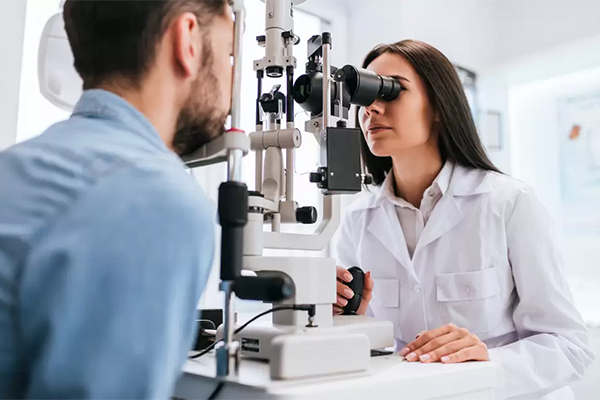
- Eye Exam with a Biomicroscope: During this stage, your doctor will examine your eye in detail using a special microscope: eyelids, eyelash roots, cornea (the clear layer of the eye), iris (the colored part), and lens (for cataracts). This allows for the detection of many problems, such as infections, cataracts, and corneal diseases.
- Fundus (Retina) Examination : The pupil is dilated with drops, and your retina and optic nerve are examined. The retina, blood vessels, and macula (the macula) are examined. Problems such as diabetic retinopathy, retinal tears, and macular degeneration are detected at this stage. Blurred near vision and light sensitivity may occur for a few hours after this procedure, and it is recommended that you refrain from driving.
- In some patients, further examinations such as eye tomography, visual field testing , corneal topography, and fundus photography may be performed to clarify the diagnosis.
How Long Does an Eye Examination Take?
A standard eye exam takes approximately 15–30 minutes . If a fundus exam is required, this time may be longer.
How Often Should You Have an Eye Exam?
| Age group | Recommended Inspection Frequency |
| 0–1 years old | At least once |
| 1–18 years old | Every 1–2 years |
| 18–40 years old | Every 2 years |
| 40 years and older | Every year |
| Those with eye problems | According to doctor's recommendation |
Treatment Methods for Eye Diseases
Treatments and methods for eye diseases vary depending on the type and severity of the disease.Cataract
- Surgical Intervention: Cataract Surgery : The only treatment for cataracts is surgery. The cloudy portion of the lens is removed and replaced with an artificial lens.
- Use of Glasses and Contact Lenses: In the initial stages of cataracts, glasses or contact lenses may be recommended to alleviate vision loss, and surgical intervention is necessary.
Glaucoma
- Medications (Drops or Tablets): Eye drops that lower intraocular pressure are used in the treatment of glaucoma. In some patients, eye pressure can be controlled with medication.
- Surgical Methods: Laser treatment or surgical interventions can be performed in advanced glaucoma.
- Laser Treatment: Laser therapy can regulate intraocular fluid production and control eye pressure.
Myopia (Near Vision)
- Glasses or Contact Lenses: The most common treatment for myopia is glasses or contact lenses. These lenses help focus light accurately on the retina.
- Laser Surgery (LASIK): Laser treatment corrects vision defects by reshaping the cornea. LASIK (Laser-Assisted In Situ Keratomileusis) is one of the most commonly used methods for treating myopia.
- Implanted Lenses: Instead of glasses and contact lenses, in some cases it may be necessary to place lenses into the eye.
Hyperopia (Farsightedness)
- Glasses or Contact Lenses : Glasses or contact lenses are used to correct hyperopia and enable clear vision of near objects.
- Laser Surgery (LASIK): LASIK laser treatment can also be used for hyperopia. It changes the shape of the cornea, allowing light to focus accurately on the retina.
- Implanted Lenses: Intraocular lenses can also be used in the treatment of hyperopia.
Astigmatism
- Glasses or Contact Lenses: Cylindrical lenses are used to treat astigmatism. These lenses help focus light properly.
- Laser Surgery (LASIK): Astigmatism can be treated by correcting the irregular shape of the cornea with a laser.
- Implanted Lenses: Special lenses placed inside the eye can be used to treat astigmatism.
Retinal Tear or Hole
- Laser Treatment: In the treatment of retinal tears, the tear area in the eye is treated with a laser and the retina is held in place.
- Vitrectomy: Surgical intervention (vitrectomy) may be performed for large retinal tears or detachments.
Age-Related Macular Degeneration
- Drug Therapy: This treatment involves injecting medications into the retina to prevent damage to the retinal vessels.
- Laser Therapy: Laser therapy can be used to treat some types of lesions.
- Low Vision Aids: Special glasses, magnifiers, or reading machines may be used to manage vision loss.
Strabismus
- Glasses or Prismatic Lenses: Strabismus can be corrected with glasses or prismatic lenses.
- Surgical Intervention: In the treatment of strabismus, surgical intervention may be used to correct the eye muscles.
- Eye Exercises: For some patients, eye exercises may be recommended to strengthen the eye muscles.
Conjunctivitis (Eye Inflammation)
- Antibiotic or Antiviral Eye Drops: Antibiotic drops or ointments are used to treat bacterial conjunctivitis. Antiviral treatment may be necessary for viral conjunctivitis.
- Warm Compress: Warm compresses can be applied to soothe the eyes and reduce pain.
- Antihistamines for Allergic Conjunctivitis: Antihistamine medications can be used to prevent allergic reactions.
Diabetic Retinopathy
- Drug Therapy: Drugs that prevent fluid accumulation on the retina can be used in the treatment of diabetic retinopathy.
- Laser Treatment: In the treatment of diabetic retinopathy, bleeding and fluid accumulation can be controlled by applying laser treatment to the retina.
- Surgical Intervention: Surgical intervention may be required in advanced stages.
- Surgical Intervention: Cataract Surgery : The only treatment for cataracts is surgery. The cloudy portion of the lens is removed and replaced with an artificial lens.
- Use of Glasses and Contact Lenses: In the initial stages of cataracts, glasses or contact lenses may be recommended to alleviate vision loss, and surgical intervention is necessary.
- Medications (Drops or Tablets): Eye drops that lower intraocular pressure are used in the treatment of glaucoma. In some patients, eye pressure can be controlled with medication.
- Surgical Methods: Laser treatment or surgical interventions can be performed in advanced glaucoma.
- Laser Treatment: Laser therapy can regulate intraocular fluid production and control eye pressure.
- Glasses or Contact Lenses: The most common treatment for myopia is glasses or contact lenses. These lenses help focus light accurately on the retina.
- Laser Surgery (LASIK): Laser treatment corrects vision defects by reshaping the cornea. LASIK (Laser-Assisted In Situ Keratomileusis) is one of the most commonly used methods for treating myopia.
- Implanted Lenses: Instead of glasses and contact lenses, in some cases it may be necessary to place lenses into the eye.
- Glasses or Contact Lenses : Glasses or contact lenses are used to correct hyperopia and enable clear vision of near objects.
- Laser Surgery (LASIK): LASIK laser treatment can also be used for hyperopia. It changes the shape of the cornea, allowing light to focus accurately on the retina.
- Implanted Lenses: Intraocular lenses can also be used in the treatment of hyperopia.
- Glasses or Contact Lenses: Cylindrical lenses are used to treat astigmatism. These lenses help focus light properly.
- Laser Surgery (LASIK): Astigmatism can be treated by correcting the irregular shape of the cornea with a laser.
- Implanted Lenses: Special lenses placed inside the eye can be used to treat astigmatism.
- Laser Treatment: In the treatment of retinal tears, the tear area in the eye is treated with a laser and the retina is held in place.
- Vitrectomy: Surgical intervention (vitrectomy) may be performed for large retinal tears or detachments.
- Drug Therapy: This treatment involves injecting medications into the retina to prevent damage to the retinal vessels.
- Laser Therapy: Laser therapy can be used to treat some types of lesions.
- Low Vision Aids: Special glasses, magnifiers, or reading machines may be used to manage vision loss.
- Glasses or Prismatic Lenses: Strabismus can be corrected with glasses or prismatic lenses.
- Surgical Intervention: In the treatment of strabismus, surgical intervention may be used to correct the eye muscles.
- Eye Exercises: For some patients, eye exercises may be recommended to strengthen the eye muscles.
- Antibiotic or Antiviral Eye Drops: Antibiotic drops or ointments are used to treat bacterial conjunctivitis. Antiviral treatment may be necessary for viral conjunctivitis.
- Warm Compress: Warm compresses can be applied to soothe the eyes and reduce pain.
- Antihistamines for Allergic Conjunctivitis: Antihistamine medications can be used to prevent allergic reactions.
- Drug Therapy: Drugs that prevent fluid accumulation on the retina can be used in the treatment of diabetic retinopathy.
- Laser Treatment: In the treatment of diabetic retinopathy, bleeding and fluid accumulation can be controlled by applying laser treatment to the retina.
- Surgical Intervention: Surgical intervention may be required in advanced stages.
Age-Related Distance Vision Loss
- Reading Glasses: Presbyopia occurs with age and can be corrected with reading glasses.
- Multifocal Lenses: Multifocal contact lenses or glasses can help correct both near and far vision problems simultaneously.
- Laser Surgery: Laser surgery techniques can also be used to correct presbyopia.
- Lens Implants: Multifocal lenses placed in the eye can be used to treat presbyopia.
Lazy Eye
- Glasses: Glasses are used to treat amblyopia. These can help improve vision in the weaker eye.
- Eye Exercises: Special eye exercises can be done to strengthen the eye muscles.
- Eye Patching: The stronger eye may be patched to force the lazy eye to "work." This treatment can strengthen the connection between the brain and the eye.
- Unit Glasses: In some cases, especially if strabismus is present, unit glasses may be used.
Color Blindness
- Special Glasses and Contact Lenses: Color blindness can be treated with special glasses or contact lenses that help people distinguish colors better.
No Treatment: Color blindness is a permanent condition and has no cure. Special devices can help individuals distinguish colors more easily.
Visual Field Loss
- Treatment Varies Depending on the Cause: Treatment for scotoma depends on the cause of vision loss. For example, glaucoma may be treated with eye drops or laser surgery. Retinal diseases may require medication or laser therapy.
- Low Vision Aids: Low vision aids such as special glasses, magnifiers, or screen magnifiers may be used for individuals with vision loss.
Photophobia (Sensitivity to Light)
- Glasses or Contact Lenses: People with photophobia can use special glasses that protect against sunlight.
- Light Selective Lenses: For photophobia, lenses that reduce light sensitivity can be used.
- Treatment: Medications Based on the Cause: Because photophobia stems from an underlying condition, it requires treatment specifically for that condition. For example, medications to treat migraines or eye infections may be used.
Strabismus
- Glasses and Prismatic Contact Lenses: Glasses and prismatic contact lenses can be used to treat strabismus. These lenses help align the eyes.
- Eye Exercises: Eye exercises can be done to strengthen the eye muscles in the treatment of strabismus.
- Surgical Intervention: In severe cases of strabismus, surgery may be required to reposition the eye muscles.
Conjunctivitis (Eye Inflammation)
- Antibiotic or Antiviral Treatment: Antibiotic eye drops or ointments may be used for bacterial conjunctivitis, and antiviral medications may be used for viral conjunctivitis.
- Cold Compress: Cold compresses can be applied to reduce swelling and discomfort in the eyes.
- Antihistamine medications: Antihistamine eye drops or medications can be used for allergic conjunctivitis.
Dry Eyes
- Artificial Tears: In cases where tear production is insufficient, artificial tears (eye drops) can be used to moisten the eye surface.
- Anti-inflammatory Medications: Corticosteroids or other anti-inflammatory medications may be used to reduce inflammation in the eye.
- Laser Treatment: Laser treatment can be used to stimulate the tear glands and cause them to produce more tears.
Retinal Tear or Hole
- Laser Treatment: In the treatment of retinal tears, the tear area can be treated by intervening with laser on the retina.
- Surgical Intervention (Vitrectomy): If the tear is large or a retinal detachment has developed, surgical intervention may be necessary.
Optic Neuritis
- Steroid Therapy: Inflammation on the optic nerve can be reduced by using corticosteroids in the treatment of optic neuritis.
- Physiotherapy and Rehabilitation: Vision therapy and rehabilitation may be required for patients experiencing vision loss.
Allergic Eye Inflammation
- Antihistamines: Antihistamines in the form of eye drops or tablets can be used in allergic eye inflammations.
- Steroid Eye Drops: For severe allergic reactions, steroid eye drop treatment may be applied.
- Cold Compress: Cold compresses may be recommended to relieve itching and swelling in the eyes.
- Reading Glasses: Presbyopia occurs with age and can be corrected with reading glasses.
- Multifocal Lenses: Multifocal contact lenses or glasses can help correct both near and far vision problems simultaneously.
- Laser Surgery: Laser surgery techniques can also be used to correct presbyopia.
- Lens Implants: Multifocal lenses placed in the eye can be used to treat presbyopia.
- Glasses: Glasses are used to treat amblyopia. These can help improve vision in the weaker eye.
- Eye Exercises: Special eye exercises can be done to strengthen the eye muscles.
- Eye Patching: The stronger eye may be patched to force the lazy eye to "work." This treatment can strengthen the connection between the brain and the eye.
- Unit Glasses: In some cases, especially if strabismus is present, unit glasses may be used.
- Special Glasses and Contact Lenses: Color blindness can be treated with special glasses or contact lenses that help people distinguish colors better.
No Treatment: Color blindness is a permanent condition and has no cure. Special devices can help individuals distinguish colors more easily.
- Treatment Varies Depending on the Cause: Treatment for scotoma depends on the cause of vision loss. For example, glaucoma may be treated with eye drops or laser surgery. Retinal diseases may require medication or laser therapy.
- Low Vision Aids: Low vision aids such as special glasses, magnifiers, or screen magnifiers may be used for individuals with vision loss.
- Glasses or Contact Lenses: People with photophobia can use special glasses that protect against sunlight.
- Light Selective Lenses: For photophobia, lenses that reduce light sensitivity can be used.
- Treatment: Medications Based on the Cause: Because photophobia stems from an underlying condition, it requires treatment specifically for that condition. For example, medications to treat migraines or eye infections may be used.
- Glasses and Prismatic Contact Lenses: Glasses and prismatic contact lenses can be used to treat strabismus. These lenses help align the eyes.
- Eye Exercises: Eye exercises can be done to strengthen the eye muscles in the treatment of strabismus.
- Surgical Intervention: In severe cases of strabismus, surgery may be required to reposition the eye muscles.
- Antibiotic or Antiviral Treatment: Antibiotic eye drops or ointments may be used for bacterial conjunctivitis, and antiviral medications may be used for viral conjunctivitis.
- Cold Compress: Cold compresses can be applied to reduce swelling and discomfort in the eyes.
- Antihistamine medications: Antihistamine eye drops or medications can be used for allergic conjunctivitis.
- Artificial Tears: In cases where tear production is insufficient, artificial tears (eye drops) can be used to moisten the eye surface.
- Anti-inflammatory Medications: Corticosteroids or other anti-inflammatory medications may be used to reduce inflammation in the eye.
- Laser Treatment: Laser treatment can be used to stimulate the tear glands and cause them to produce more tears.
- Laser Treatment: In the treatment of retinal tears, the tear area can be treated by intervening with laser on the retina.
- Surgical Intervention (Vitrectomy): If the tear is large or a retinal detachment has developed, surgical intervention may be necessary.
- Steroid Therapy: Inflammation on the optic nerve can be reduced by using corticosteroids in the treatment of optic neuritis.
- Physiotherapy and Rehabilitation: Vision therapy and rehabilitation may be required for patients experiencing vision loss.
- Antihistamines: Antihistamines in the form of eye drops or tablets can be used in allergic eye inflammations.
- Steroid Eye Drops: For severe allergic reactions, steroid eye drop treatment may be applied.
- Cold Compress: Cold compresses may be recommended to relieve itching and swelling in the eyes.
Treatment methods may vary from patient to patient, and it's important to develop a personalized treatment plan for each patient. If you have any concerns about eye conditions, you should consult an ophthalmologist.
Myopia, Hyperopia and Astigmatism Treatment Methods
- Glasses and Contact Lenses: These are the most common and practical solutions.
- Excimer Laser: Provides permanent treatment. Corneal shape is reshaped.
- LENS (Intraocular Lens) surgeries: Can be performed in advanced cases where laser surgery is not possible.
Cataract Treatment Method: Cataract Surgery: The cloudy natural lens is removed and replaced with an artificial intraocular lens. Today, this procedure is performed using sutureless and rapid-healing methods.
Glaucoma (Eye Pressure) Treatment Methods
- Eye Drops: It is the first choice to reduce intraocular pressure.
- Oral medication: Used when drops are not sufficient.
- Laser Treatment: Can be performed to increase intraocular fluid drainage.
- Surgical Intervention: If medication and laser are not effective, a channel is opened to drain the fluid.
Treatment Methods for Macular Degeneration
- Anti-VEGF Intraocular Needles: Stops the progression of abnormal blood vessels under the retina.
- Laser Treatment: Can be used in limited cases.
- Vitamin and Mineral Supplement: Slows down the progression, especially in the dry type.
Diabetic Retinopathy Treatment Methods
- Laser Photocoagulation: Prevents bleeding and edema.
- Anti-VEGF Needles: Reduces edema and prevents vascular leakage.
- Vitrectomy Surgery: It is performed in advanced cases.
Eye Infections (Conjunctivitis, Keratitis, etc.) Treatment Methods
- Antibiotic / Antiviral / Antifungal Drops and Ointments: Selected according to the active microorganism.
- Eye Hygiene and Preventive Measures: Are as important as treatment.
Dry Eye Treatment Methods
- Artificial Tear Drops and Gel: Relieves symptoms.
- Anti-Inflammatory Eye Drops: Used in long-term cases.
- Closing the Tear Ducts: Can be applied to reduce tear evaporation.
Corneal Diseases (Keratoconus, Corneal Ulcer, etc.) Treatment Methods
- For keratoconus, hard contact lenses, laser-assisted treatment to strengthen the cornea, and corneal transplantation may be performed in advanced cases.
- For Corneal Ulcer: Antibiotics, antiviral or antifungal drops, surgery in severe cases
Uveitis (Intraocular Inflammation) Treatment Methods
- Cortisone Eye Drops and Pills
- Immunosuppressant drugs
- Intraocular injections (in severe cases)
Retinal Detachment Treatment Methods
- Laser or Cold Therapy
- Vitrectomy Surgery: The retina is glued in place
- Pneumatic Retinopexy: The retina is repositioned by injecting gas into the eye.
Lazy Eye Treatment Methods:
- Eye Closure Treatment: Working the lazy eye by covering the good eye
- Glasses and exercises
- Treatment at an early age is very important!
Strabismus Treatment Methods
- Glasses or prismatic lenses
- Eye exercises
- Botox injection (in selected cases)
- Strabotomy
Eye Tumor Treatment Methods
- Surgical removal
- Radiotherapy / Chemotherapy
- Local laser treatments
Blepharitis (Eyelid Margin Inflammation) Treatment Methods
- Cover cleaning and hygiene
- Antibiotic drops and ointments
- Hot compress applications
Precautions to Take to Protect Eye Health
- Regular Eye Exams : Early diagnosis of eye diseases can make treatment much more successful. Regular eye exams are especially important for people over the age of 40.
- Balanced Nutrition: A diet containing nutrients that are beneficial for eye health, such as Vitamins A, C and E, can protect against eye diseases.
- UV Protection: It is important to wear sunglasses to protect the eyes against the harmful UV rays of sunlight.
Not Smoking: Smoking can harm eye health and increase the risk of eye diseases such as cataracts.
The Importance of Eye Examination
Eye health is an integral part of our overall health. Many people only see an ophthalmologist when they experience vision problems . Regular eye exams not only ensure clear vision but also play a crucial role in the early diagnosis of many subtle diseases. Therefore , it's crucial for everyone, regardless of age, to have regular eye exams .
Monitoring Eye Development in Childhood
Developmental issues like amblyopia and strabismus in children, if not detected early, can lead to permanent vision problems in the future. Therefore, it is recommended that children receive regular eye exams with an eye specialist before and after school.
Frequently Asked Questions
I frequently experience blurry vision. What could this be a symptom of?
Blurred vision can be a sign of conditions such as myopia, hyperopia, astigmatism, cataracts, glaucoma, and diabetic retinopathy. An eye examination should determine the exact cause.
What is Dry Eye and How is It Treated?
Dry eye occurs when tears are insufficient or of poor quality. It is treated with artificial tear drops and lifestyle changes.
What is a cataract, and who gets it?
A cataract is a loss of transparency in the lens of the eye, causing blurred vision. It's common in the elderly. Diabetes, trauma, or certain medications can also cause it.
What are the symptoms of glaucoma (eye pressure)?
Glaucoma progresses without symptoms. It occurs due to increased intraocular pressure. Symptoms such as eye pain, halos, and blurred vision may develop. Early diagnosis is crucial.
What is Lazy Eye, and Can It Be Treated?
Lazy eye is when one eye has less vision than the other. It usually develops in childhood, and if diagnosed early, treatment is possible.
What are Diabetic Eye Diseases?
Diabetic retinopathy is the most common. It causes damage to the retinal vessels, and regular eye checkups are essential to prevent vision loss.
Who Can Get Laser Eye Resurfacing (Excimer Laser)?
It can be performed on people over the age of 18 who have myopia, hyperopia or astigmatism and whose prescriptions have been fixed.
Is Using Contact Lenses Instead of Glasses Harmful?
They are not harmful when used properly. If hygiene rules are not followed, there may be a risk of infection.
When Should Children Get an Eye Exam?
The first eye exam should be performed after birth, followed by regular checkups at 6 months, 1 year, 3 years, and preschool. Problems like amblyopia and strabismus can be detected early.
What Causes Eye Allergies and How Can They Be Treated?
They're triggered by allergens like dust and pollen. Itching, watering, and redness can occur. Avoiding the allergen, using eye drops, and cold compresses can provide relief.
I'm Seeing Floaters and Flashes of Light in My Eyes. Is This Normal?
This condition is associated with changes in the structure of the intraocular gel called the vitreous. It could also be a sign of serious conditions such as a retinal tear or detachment. It's important to see an ophthalmologist.
Is Strabismus Only Seen in Children?
Strabismus is a misalignment of the eye's alignment. While it typically occurs in childhood, it can also affect adults. It can be treated with glasses, patching therapy, exercises, or surgery.
Can Color Blindness Be Treated?
Color blindness is a genetic condition and there is currently no definitive cure. However, there are special lenses and glasses available to help distinguish colors.
I Have a Stye on My Eyelid. What Should I Do?
A stye occurs when an oil gland in the eyelid becomes inflamed. Warm compresses can be applied. If it doesn't go away, antibiotic drops or creams may be necessary.
What is night blindness, and what diseases cause it?
Night blindness is the difficulty seeing in dim light. It can be associated with vitamin A deficiency, genetic diseases such as retinitis pigmentosa, or cataracts.
What Should You Pay Attention to When Wearing Contact Lenses?
Hands should be clean, lenses should be disinfected regularly, and they should not be worn for longer than the recommended time. Contact lenses should always be removed before going to sleep.
What is an Ocular Migraine?
Ocular migraines are characterized by flashing lines, fluctuations, or temporary vision loss in the visual field, accompanied by a headache. They can be neurological or ocular in origin.
What is Macular Degeneration?
Age-related macular degeneration is a serious eye disease that causes central vision loss. It is particularly common in individuals over the age of 60. Early diagnosis can slow the progression of the disease.
Ophthalmology Examination in a Private Hospital
At private hospitals, appointments can be made the same day or within a few days. Patients receive one-on-one attention and a detailed evaluation. If you're looking for a nearby ophthalmology examination , Magnet Hospital is located in Tandoğan , a central district of Ankara .
Eye Examination at Magnet Hospital
Magnet Hospital's Ophthalmology Department offers comprehensive eye examinations using a variety of modern diagnostic methods, including computerized eye scans , intraocular pressure measurements, and retinal and fundus examinations. Our experienced ophthalmologists help you maintain eye health through early diagnosis.
Private Hospital Ophthalmology Appointment
The Magnet Hospital Ophthalmology appointment process is quick and easy. You can schedule your appointment using the following methods:
Online Appointment : You can make an appointment in just a few minutes via the hospital's official website or mobile application.
Appointment by Phone : You can make an appointment on a convenient day and time by calling the call center at 0 312 212 80 80 .
On-Site Application : You can go to the hospital and get examined and have your tests done on the same day.
February 2025