



Huntington's Disease
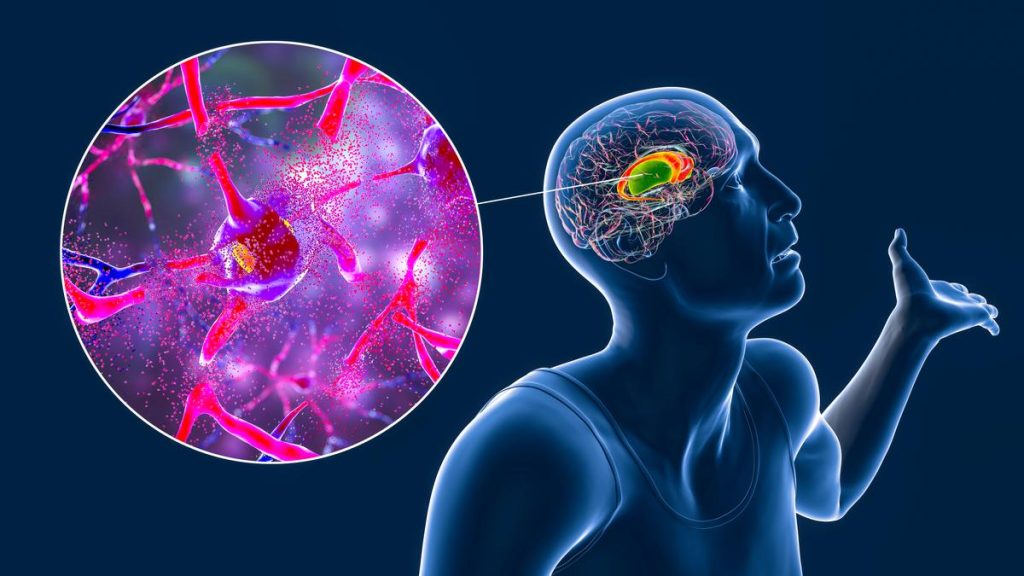
Huntington disease (HD) is a genetic disorder and represents a degenerative disorder of the central nervous system (brain and spinal cord). It is a progressive disorder that typically begins with automatic movements (known as choreiform movements) and affects more brain regions over time.
Huntington's disease usually appears between the ages of 30 and 50, but it can begin earlier or later. HD often runs in families and is inherited in an autosomal dominant manner, meaning that 50 percent of children of a parent with the disease are likely to also develop the disease.
Huntington's disease symptoms
The symptoms of Huntington's disease worsen over time due to the progressive nature of the disease. They can generally be grouped into three main categories: motor symptoms, cognitive symptoms, and psychiatric symptoms.
Motor symptoms:
- Choreiform movements: Involuntary, uncontrolled, and rhythmic muscle movements. These typically begin in the hands, arms, face, and legs and may spread to other parts of the body over time. The movements often intensify and may manifest as contractions and twitching.
- Muscle stiffness: A feeling of tightness and stiffness in the muscles.
- Lack of coordination: Imbalance, difficulty walking, risk of falling.
Cognitive symptoms:
- Mental dysfunction: Impaired cognitive function, such as attention deficit, decreased mental flexibility, memory loss, difficulty making difficult decisions, difficulty planning and problem solving.
- Thought and language disorders: Difficulties with speaking and writing skills, loss of fluency, word-finding difficulties.
Psychiatric symptoms:
- Depression: Persistent sadness, feeling of hopelessness, loss of energy.
- Anxiety: Excessive worry, panic attacks, anxiety disorder.
- Irritability: Easily irritated, temper tantrums, impatience.
- Behavioral changes: Social withdrawal, obsessive-compulsive behaviors, personality changes.
Huntington's disease symptoms can vary from person to person, and symptoms can change throughout the stages of the disease. The disease typically begins with motor symptoms, but cognitive and psychiatric symptoms also develop over time. Treatment and support can help manage symptoms and improve quality of life.
What causes Huntington's disease?
A type of mutation called CAG (cytosine-adenine-guanine) repeats has been identified as the cause of Huntington's disease in the HTT gene. Normally, these CAG repeats occur 10–28 times. However, in Huntington's disease, these CAG repeats occur 36 or more times.
As the number of CAG repeats increases, Huntington's disease symptoms generally begin earlier and become more severe. It is not fully understood why these repeats cause the disease in this way. Mutated Huntington's protein is thought to have toxic effects on the brain. The normal function and toxicity of Huntington's protein are still poorly understood, and active research continues in this area.
Because Huntington's disease is the result of a genetic mutation, it is not yet completely curable. However, treatments and supportive measures are available to alleviate and manage symptoms and improve quality of life. Genetic counseling and testing can be an important resource for at-risk families.
Who is at greater risk for Huntington's disease?
Because Huntington's disease has an autosomal dominant inheritance pattern, the risk of developing the disease is higher in individuals who inherit the mutated gene from a parent who has the disease. The risk arises from inheriting the affected gene from a parent who also has the mutated HTT gene.
Therefore, the risk of Huntington's disease is higher in people who:
- People who inherit the disease from a parent : If one parent has Huntington's disease, each of their children has a 50 percent chance of passing it on.
- Families with a history of Huntington's disease: People with a family history of Huntington's disease are generally at increased risk of inheriting the disease. If there are family members who have had the disease in previous generations, they are more likely to develop the disease.
- Individuals identified as at risk through genetic testing: Genetic testing can identify individuals who carry the HTT mutated gene. Individuals at risk can be identified through genetic counseling and testing.
Importantly, genetic counseling and testing are essential for accurately determining the risk of transmitting Huntington's disease. These tests can help determine a person's risk of contracting the disease and assist with family planning and health management.
How is Huntington's disease diagnosed?
Huntington's disease is a rare, autosomal dominant genetic disorder. Genetic testing is used to confirm the condition. The steps for diagnosing Huntington's disease are as follows:
- Detailed medical history: A detailed medical history is taken of the patient's symptoms. Huntington's disease usually appears in young adulthood (between the ages of 20 and 40), but it can also occur later in life.
- Physical examination: A physical examination helps assess the patient's symptoms and signs. These may include loss of motor control, involuntary movements (chorea), muscle rigidity, and balance problems.
- Genetic testing: Genetic testing is used to confirm Huntington's disease. This test examines a patient's DNA and detects a mutation in the HTT (huntingtin) gene. This test is usually performed on a blood sample.
Huntington's disease is diagnosed if genetic testing reveals an increased number of CAG repeats in the HTT gene. Normally, the HTT gene has 36 CAG repeats or fewer, while individuals with Huntington's disease have 40 or more CAG repeats. Higher CAG repeat numbers are associated with earlier disease onset and more severe symptoms.
Because Huntington's disease is a genetic disorder, familial transmission is also a consideration. If a person is diagnosed with Huntington's disease, genetic counseling is recommended, and family members may also be tested.
To diagnose Huntington's disease, it's important to have genetic testing and the results interpreted by a geneticist. Therefore, the diagnosis and counseling process is typically led by a geneticist or neurologist.
How is Huntington's disease treated?
Treatment of Huntington's disease includes symptomatic and supportive measures. Below are some of the methods and approaches used in the treatment of Huntington's disease:
- Medication: Medications can be used to manage symptoms such as motor control problems, depression, anxiety, and psychosis. For example, antipsychotics, antidepressants, anxiolytics, and some muscle relaxants can be used. Medications can relieve symptoms but do not completely cure the disease.
- Physiotherapy : Physiotherapy is a treatment method that involves exercises to improve a patient's muscle strength, balance, and mobility. A physical therapist can create a customized exercise program to improve the patient's quality of life and help them maintain their daily activities.
- Speech and swallowing therapy : As Huntington's disease progresses, difficulties with speech and swallowing may arise. Speech therapists can help address these issues using methods such as voice exercises, speech techniques, and swallowing exercises.
- Nutritional support: As Huntington's disease progresses, nutritional problems and weight loss may occur. Dietitians can create a personalized nutrition plan to meet patients' nutritional needs and provide enteral or parenteral nutrition support as needed.
- Psychosocial support : Huntington's disease can have a profound emotional impact on both patients and their families. Psychosocial support aims to support patients and their families through this challenging time by providing counseling, psychotherapy, support groups, and education.
- Genetic counseling: Because Huntington's disease is a genetic disorder, patients and their families can benefit from genetic counseling. Genetic counselors can provide information about the genetic transmission of the disease, risks, and family planning.
Huntington's disease treatment aims to manage symptoms, improve quality of life, and meet the needs of patients and their families through supportive measures. The treatment approach should be individualized based on the severity of symptoms, the patient's age, and overall health. A specialist physician should determine the treatment plan for each patient.
Is Huntington's disease a fatal disease?
Yes, Huntington's disease is a progressive neurological disorder and, unfortunately, is currently incurable. The disease progresses over time and affects life expectancy. People with Huntington's disease typically live between 10 and 30 years from the onset of symptoms.
The course of the disease can vary from person to person. Symptoms gradually worsen, and over time, motor control problems, cognitive impairments, and psychiatric symptoms increase. During this progressive process, it is common for patients to experience difficulty performing activities of daily living and require specialized care.
However, the rate of disease progression and the severity of symptoms can vary among individuals. Children and young adults with early-onset Huntington's disease often have more rapidly progressing and severe symptoms, while those with late-onset disease may develop more slowly.
Can a Huntington's patient become mentally retarded?
Huntington's disease is a progressive neurological disorder that affects cognitive function. As the disease progresses, cognitive and intellectual impairments may occur. However, the effects of the disease can vary among patients.
Cognitive impairments in people with Huntington's disease often occur in areas such as memory, thinking skills, focus, and planning. Over time, patients may lose problem-solving skills, experience difficulty making decisions, and experience a decrease in their ability to think and process quickly. This can impact daily activities and functionality.
However, cognitive function and mental status may vary among individuals with Huntington's disease. Factors influencing the course of the disease include genetic factors, the number of CAG repeats, the age of onset, and other influencing factors. Cognitive impairments may be more pronounced in some patients, while they may be milder in others.
Importantly, individuals with Huntington's disease are not intellectually disabled. Intellectual disability is a condition that is present at birth or acquired early in life and permanently affects general cognitive function. Huntington's disease, on the other hand, typically begins in adulthood and causes progressive cognitive deterioration.
