


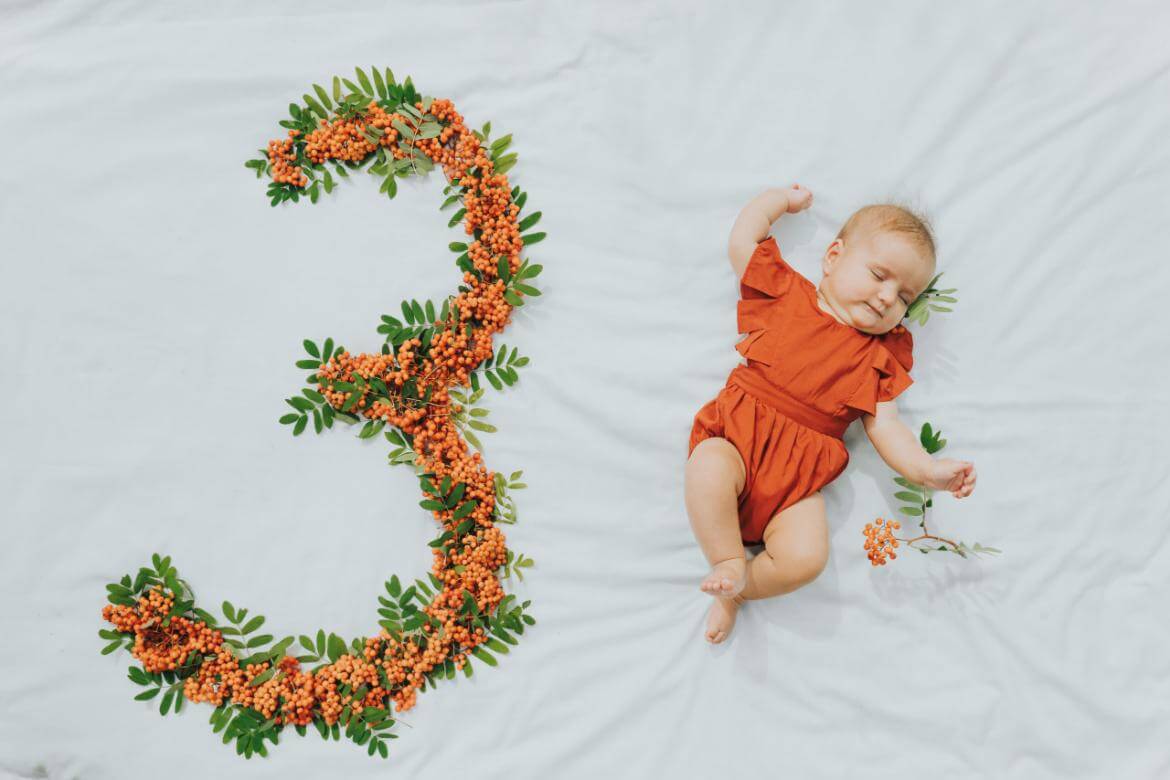
How Does a 3-Month-Old Baby Develop?
During the three-month period, when parenting becomes increasingly enjoyable, babies' mental and physical development continues rapidly. Babies who can sit upright when held also make significant progress in their hearing. From three months on, babies become excited and responsive to familiar voices. They may respond to their parents' voices with a smile or a thrilled cry. At the same time, their curiosity about unfamiliar sounds increases.
Their vision is also developing rapidly; babies can now better perceive objects both near and far. Their color perception is also improving; they can distinguish almost all colors, in addition to pastels and brights. Compared to last month, their ability to distinguish between breast milk and formula has increased. Their sense of taste is also developing, and they begin to reject unpleasant smells. Similarly, unpleasant odors can cause babies to become restless.
Babies should generally be breastfed every three hours, but they may want to feed more frequently depending on their appetite. If breast milk is insufficient because solid foods are not yet available, formula supplementation can be recommended with a doctor's recommendation.
Sleep patterns may not yet be fully established, but babies are generally more alert and active during the day and begin to sleep longer at night. Three-month-old babies enjoy playing with their hands and begin to explore their environment with their fingers. Toys that make sounds when touched can be attractive at this stage. Furthermore, as babies continue to develop socially, they frequently make eye contact, consciously respond to smiles, and may want to touch their parents' faces.
During this period, when touch, grip, and grasping skills are rapidly developing, babies can hold and shake toys for short periods. They explore their parents' faces and hold them upright for short periods when held. As their grasping and grasping skills develop, babies increase the variety of objects they touch. While they try to recognize and connect with their hands and objects by bringing them to their mouths, it's important to maintain hygiene, especially for small objects they might swallow.
A developed sense of sight supports tactile skills. Three-month-old babies can perceive almost all colors and shapes. They can focus on objects at different distances, and their hearing is also developing. They recognize familiar sounds by turning their heads in the direction of the sound, which can lead to cries of joy.
As hearing develops, language skills also improve. Towards the end of the third month, they can say syllables with consonants, such as "agu." They may also begin to express their happiness and sadness through facial expressions, a sign of emotional development. Babies are now more able to recognize which emotions they are feeling in different situations.
While daytime sleep typically decreases to 3-4 hours, nighttime sleep duration increases, with babies sleeping between 8 and 13 hours a night. It's recommended that babies sleep in a dark environment at night and in a bright light during the day so they can understand the difference between day and night.
3 Month Old Baby Development Chart
A baby growth chart is a frequently used tool by healthcare professionals, allowing a baby's development to be compared to other babies of the same age and gender. This chart helps monitor a baby's physical development by assessing parameters such as weight, height, length, and head circumference.
For example, 3-month-old baby girls typically measure between 54 and 65 cm tall and weigh between 4000 and 7200 grams. Baby boys, on the other hand, can measure between 55 and 65 cm tall and weigh between 4150 and 7500 grams.
Doctors measure the baby's head circumference and compare this data to growth charts. This allows them to track their growth rate and compare it with measurements from previous months to provide a general assessment.
What is the Mental Development of a 3-Month-Old Baby?
Three-month-old babies are experiencing rapid cognitive development. During this period, babies can move their entire bodies more consciously, as well as their hands. They can turn their heads toward sounds and respond with smiles or cries of joy when they see familiar people or favorite objects.
As motor skills develop, babies can be observed making movements toward objects they want to touch or grasp. It's thought that during this period, memories and experiences are stored in the baby's brain. They learn that crying can attract attention and that smiling can elicit a similar response.
A baby, realizing that they can enjoy spending time with their parents and other people, often responds by smiling when they want to have a good time. Activities such as playing musical instruments and hitting objects to make sounds can be included to support their mental development.
Materials like toys and mobiles suspended at a height that babies can reach can be used to demonstrate actions they can't perform and to help them grasp the connection between action and reaction. This can contribute to strengthening the baby's mind.
It's also important to talk and sing to your baby frequently to develop language skills. Allowing your baby to explore sound-making toys and other materials can also be beneficial to support mental development.
Social Development and Skills of a 3-Month-Old Baby
Social skills in a 3-month-old baby develop rapidly after the first two months. The use of vocalizations and facial expressions increases. The baby responds with smiles and frequently sticks out their tongue. Babies may also vocalize when they talk to their parents. These types of interactions are an important part of the social development babies experience in their third month.
A baby's actions of interacting by making sounds or using language often convey a kind of "I want to talk" message. The baby is particularly familiar with its parents and has established a strong bond with them. At this stage, they are generally unafraid of strangers and may smile at almost anyone.
Babies may occasionally cry to engage in social interaction. In other words, crying during this stage can often be a behavior to gain attention.
What Can a 3-Month-Old Baby Do?
During 3-month-old babies' development, they become more active both mentally and physically. During this period, babies can hold their heads upright without support. They can lift their heads approximately 45 degrees when lying on their backs. They can take steps when supported and held under their arms. They can respond and react to their parents' voices.
As babies begin to use their hands more effectively, they explore their fingers and use them actively. They can consciously make sounds by clapping their hands together or shaking objects. As their visual perception develops, they can see people around them more clearly, making them feel more secure. This can often lead to less crying.
When Should a 3-Month-Old Baby's Health Check Be Done?
Health checkups are crucial for a baby's development at three months old . Regular monthly doctor visits are generally recommended, starting from birth. These visits measure the baby's height, weight, and head circumference, and provide a general health assessment. Additionally, the baby's vaccinations are administered according to a specific schedule.
In particular, tuberculosis, 5-valent combination, pneumonia, and rotavirus vaccines, which should be administered at the end of the second month, should be completed by the beginning of the third month. Eye squint or strabismus, which may occur in the first two months after birth, usually tends to resolve spontaneously towards the end of the third month. However, it is important to consult a doctor and have the condition checked.
How to Play with 3-Month-Old Babies?
- Communicate through eye contact: Make eye contact with your baby, talk, smile, or sing to them. Babies love these kinds of interactions to foster emotional connection and language development.
- Sounds and facial expressions: Play games by making different sounds or using different facial expressions. Imitate the sounds your baby makes and interact with him. This helps him develop his sense of emotion and sound.
- Colorful and sound-filled toys: Brightly colored books, sound-filled toys like musical instruments, or colorful, tactile toys can capture your baby's attention. Interacting with these toys contributes to both mental and sensory development.
- Activities for balance and muscle development: You can encourage your baby to lift their head by laying them on their stomach. You can help their muscle development by spending time on their tummy, holding their hands and pulling them into a sitting position, or doing bicycle movements with their legs.
- Spending time in different positions: Help your baby see the world from different perspectives by carrying him on his back or stomach. This helps him explore his surroundings and learn new things.
- Swings or rocking toys: Your baby loves to ride on swings or rocking toys. These types of activities can be both fun and contribute to sensory development.
These are some suggestions for games and activities that you can enjoy with your baby and contribute to their development. Remember, every baby is different, so it's important to observe the activities and toys your baby shows interest in and act accordingly.
Can a 3-Month-Old Baby Be Given Supplementary Food?
Complementary foods are generally not recommended for babies aged 3 months and older . The World Health Organization (WHO) and many expert organizations recommend that the optimal time to introduce complementary foods to babies is around six months.
Ideally, a baby should be fed only breast milk or formula for six months. Babies' digestive systems aren't fully developed until six months of age, so introducing solids too early can cause digestive issues or allergies.
However, every baby is different, and sometimes doctors may make recommendations based on specific circumstances or developmental factors. In these cases, it's most important to follow your doctor's advice. It's especially important to talk to your doctor if you're concerned about when to start solid foods or if you'd like to learn more about your baby's needs.
How Many Hours a Day Should 3-Month-Old Babies Sleep?
A 3-month-old baby typically sleeps between 14 and 17 hours a day. Most of this time is spent sleeping at night, and they may typically sleep for 4 to 6 hours straight. During the day, they may tend to sleep between 3 and 5 hours.
Every baby is different, so sleep times and patterns can vary from baby to baby. Your baby's sleep can often be developed around a routine. Establishing a set sleep routine and engaging in calming activities as bedtime approaches can help your baby fall asleep.
Sleep is crucial for 3-month-old baby development , so establishing a schedule that follows daylight hours and encourages sleep at night is important to help your baby understand the difference between day and night. Also, if you're concerned about your baby's sleep patterns or need help with a different sleep routine, it may be helpful to consult a specialist.
