


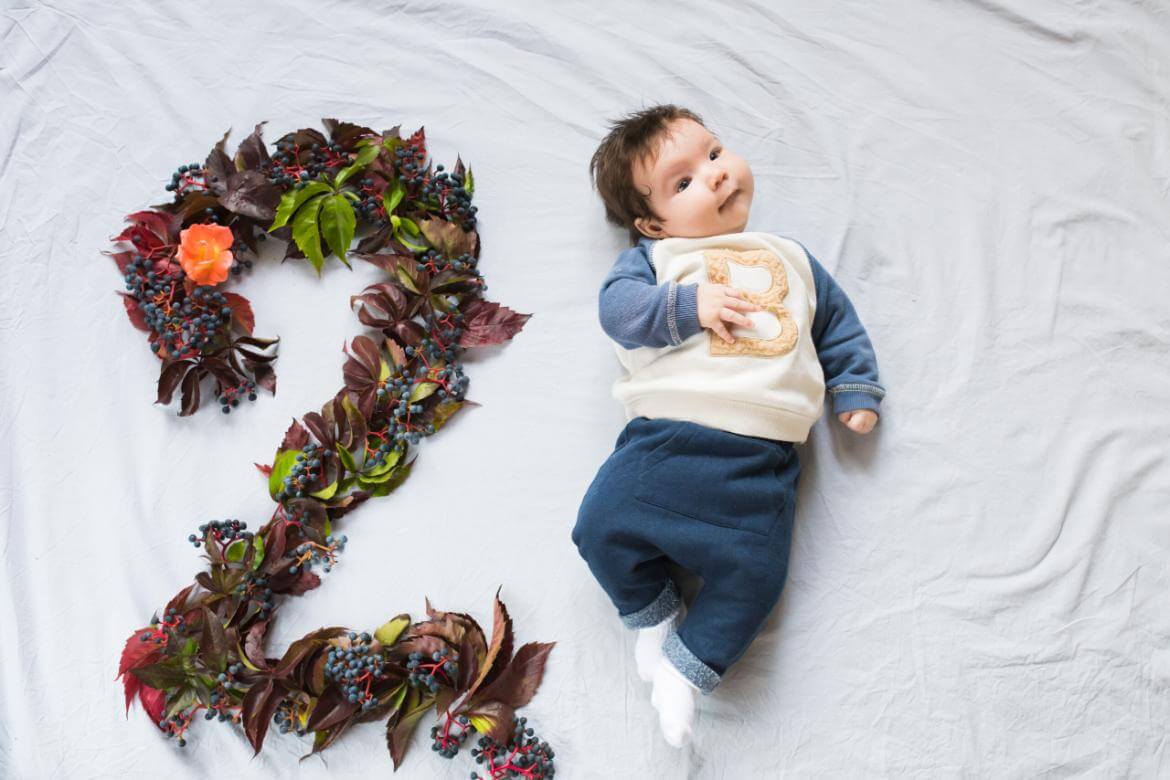
How Does a 2-Month-Old Baby Develop?
The two-month-old baby's development is a period in which the baby continues to adapt to the world. During this period, the baby's sleep pattern begins to develop. The more active the baby, the more responsive they are to their environment and parents. They feed 8 to 12 times a day. They gain approximately 150-200 grams of weight each week, reaching approximately 4.5 to 5 kg. They also grow approximately 1-1.5 cm in length within a month.
A baby's eyes, which can only see contrasting colors and moving objects in the first month, develop enough to perceive different objects by the second month. A baby who can easily perceive pastel colors responds more strongly to vibrant, brightly colored objects. They may respond enthusiastically to the sight and sound of their parents. A baby who can better perceive and distinguish sounds may become restless when left in a quiet environment for extended periods.
The baby's tongue is often outward because they want to imitate sounds. Talking to your baby frequently during this period is important for their language skills and mental development. While they enjoy soft tones, sudden, loud noises can make them anxious.
Her sense of smell and taste also develops. She may react differently to different natural scents. She can distinguish between breast milk and bottle-fed formula.
Babies who clench their fists are rapidly developing hand-use skills during this period. They extend their hands, spread their fingers, and touch objects. They especially enjoy touching and getting to know their parents.
Although the fontanelle in the skull maintains its current state during this month, it begins to slowly close from the third month onwards.
After the first four weeks with a baby, both parents and baby begin to adjust to each other and their new world. During this period, babies begin to understand the difference between night and day, and they become accustomed to 6 to 10 hours of sleep. Keeping the environment relatively dark and quiet during the day can help babies understand the difference between day and night and sleep more soundly at night. Babies who don't sleep in a dark environment during the day may find it easier to establish a sleep pattern.
In the second month after birth, babies begin to respond to smiling, a social skill. This response usually occurs when the other person smiles, and the baby smiles back. Responding to a baby's smile helps them understand that their interactions are reciprocated and is important for self-concept.
When placed on their stomach, a baby can lift their head approximately 45 degrees, and by the middle of the second month, they can lift their head 90 degrees. By constantly playing with their hands and feet, their sense of touch continues to develop. They may explore their hands and fingers for extended periods. They enjoy touching pastel and brightly colored objects, shaking things they grasp with their hands, and often putting them in their mouths.
Hand and body movements are more coordinated than in the previous month, but they don't yet have full body control. A baby takes great pleasure in the sounds they hear and strives to hear their own voice. They understand that they are being cared for when they receive a response. The sound of their parent's voice, in particular, helps a baby feel safe and at peace. In some cases, they may cry out in joy. A two-month-old baby who cries to express discomfort or unhappiness can be calmed and quieted when picked up.
2 Month Old Baby Development Chart
A baby growth chart, used to monitor a baby's general health at two months of age , is a tool similar to monitoring a baby's development during pregnancy. This chart allows comparisons of parameters such as length, weight, and head circumference with those of other babies of the same age and gender. The average measurements for a two-month-old girl, as shown in the chart, are approximately 57 cm tall, weigh 4750 g, and have a head circumference of 38.3 cm. A boy of the same age measures approximately 58.5 cm tall, weighs 5200 g, and has a head circumference of 39.1 cm. However, these values are general averages, and each baby may vary. A baby's development is thoroughly assessed during a routine two-month doctor visit.
During this period, babies can be soothed by activities like sucking or being held. They may be more attentive listeners than in the previous month and understand that they are being cared for. They try to understand the sounds they hear and can especially distinguish their parents' voices from other sounds. These sounds can excite them, even prompting them to scream. Babies are pleased when called by name and spoken to. They may also enjoy listening to quieter, less loud music.
Their sleep can often last longer, and while they are more alert during the day, they may sleep more at night. Their eyes are more alert and they are constantly watching what's going on around them.
What is the mental development of a two-month-old baby?
Two-month-old babies' mental development is a significant process. During this period, their motor development accelerates, and their movements become more conscious. Their ability to control their heads increases when supported. They frequently show interest in their hands and feet. They constantly move their fingers and enjoy sucking. Crying is now a means of communication; they use it to communicate hunger or discomfort. They can express different emotions through different crying patterns. They may reach for objects, grasp them with their fingers, scream when excited, or flail their arms and legs.
They can understand that events unfold sequentially and respond to sounds. They can turn their heads and bodies toward the direction of sounds. During this period, interacting with babies is important to support their mental development. Interacting with them, responding to their reactions, singing, talking directly to them, and communicating can all contribute positively to their mental development.
Hanging a toy or mobile within head reach can help babies engage with these objects and develop their ability to touch and perceive texture. Such interactions can be beneficial for babies' cognitive development.
What Can a 2-Month-Old Baby Do?
Two-month-old babies' development can vary; some babies may have different abilities than others. Generally, two-month-old babies are aware of their interactions with their environment and enjoy being cared for. They may sleep more at night and less during the day, and they may find pleasure in making sounds or responding to sounds. During this period, babies may:
- When lying face down, the patient can lift his/her head and body partially upwards.
- He/she constantly moves his/her hands and feet and frequently puts them in his/her mouth.
- Can grasp a given object, shake it, or release it.
- Their movements are usually more conscious, but they may not yet have full body control.
- Their eyes are more lively and they enjoy observing their surroundings.
- He/she may attract attention and demand attention by making sounds.
- They may scream with joy from time to time.
When Should a 2-Month-Old Baby's Health Check Be Done?
A visit to the doctor is crucial for a two-month-old baby to check their development and schedule vaccinations. This visit is usually part of a routine checkup. The doctor will assess the baby's growth and development.
During the visit, the baby's height, weight, weight-for-height ratio, and head circumference are measured. Parents are also asked questions about the baby's ability to lift their body when lying face down and their speech responses.
During the development of a 2-month-old baby, he or she usually receives vaccines such as BCG (tuberculosis vaccine), DTaP-IPV-Hib (first dose of the five-valent combination vaccine), PCV (first dose of the pneumococcal pneumonia vaccine) and rotavirus (diarrhea vaccine).
What movements should a 2-month-old baby do?
A 2-month-old baby may not have developed all of their motor skills yet. However, some activities and movements can be done to support their development:
- Talking to your baby: Babies are curious to hear and explore their environment. Talking to them, communicating with facial expressions, varying your tone of voice, and speaking lovingly can contribute to language development.
- Prone time: You can encourage your baby to try to lift their body by placing them on their stomach for short periods. This can strengthen their head and neck muscles.
- Playing with hands and feet: Giving your baby opportunities to play with their hands and feet can help them develop motor skills. Giving them toys can help them explore their hands and fingers.
- Sounds and music: Babies respond to sounds. Singing to them, playing soft music, or making different sounds can contribute to their sensory development.
- Baby massage: A gentle, gentle massage can help a baby relax. It can also help foster bonding between parent and baby.
- Play and interaction: Babies begin to interact with the outside world. Experiencing different textures, objects, and colors can capture their attention and develop their perception.
Every baby is different, so it's important to observe your baby's reactions and interests to determine the movements and activities that best suit their development and comfort. Also, if you have any concerns about any movement or activity, it's always best to consult a doctor.
How Often Does a 2-Month-Old Baby Feed at Night?
Every baby's feeding schedule may vary, depending on factors such as their growth, needs, and weight gain. In general, a 2-month-old baby can nurse 8 to 12 times a day for optimal development.
Newborn babies often need to feed frequently, and this is related to their growth rate and feeding habits. During this period, babies may often need to feed at night.
However, every baby is different, and the duration and frequency of feedings can vary. Some babies may want to feed every hour, while others may need longer periods. You can determine the frequency of feedings based on your baby's weight gain, overall health, and your doctor's recommendations.
The key is to listen to your baby's needs and adjust feeding frequency based on your baby's growth and development. If you have any concerns or questions about breastfeeding, it's helpful to consult a doctor or breastfeeding specialist.
