


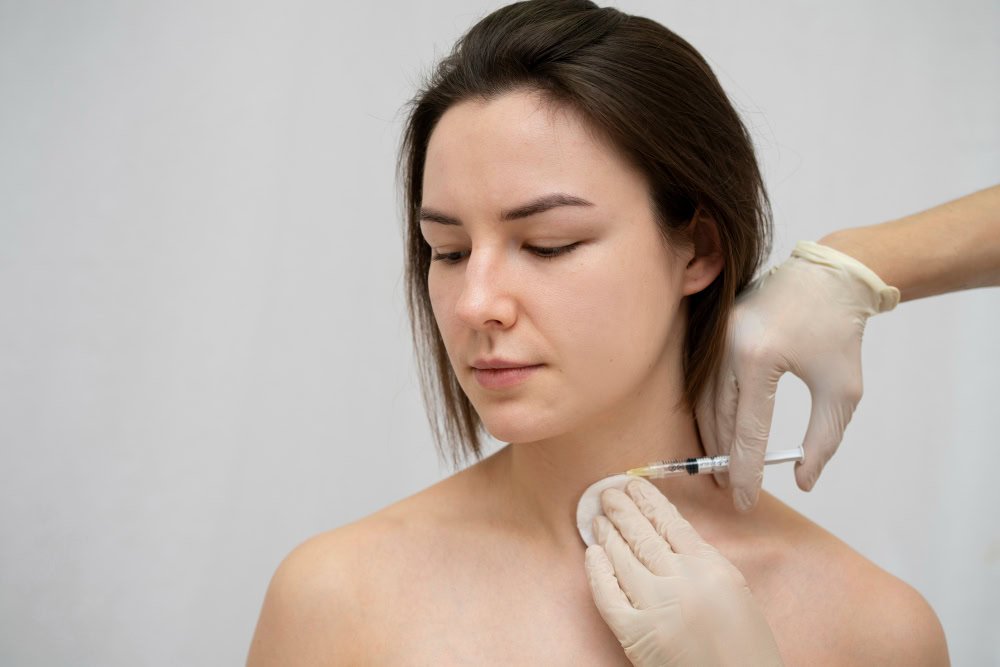
Fine Needle Biopsy
1. What is a Fine Needle Biopsy?
Fine needle biopsy (FNAB) is a diagnostic procedure that uses cell samples from suspicious masses in the body to distinguish between cancer and benign tissue . It is a painless, short-term, and safe procedure. Fine needle biopsy is the process of taking a sample ( cell
)
from a suspicious mass in a tissue or organ for pathological examination.
In medical literature, it's known as "Fine Needle Aspiration Biopsy (FNAB) . It's performed to determine whether a mass in an organ like the thyroid , lymph nodes , breast , liver , or lung is benign or malignant. This procedure uses a fine needle, eliminating the need for surgery. It's considered a painless, rapid, and reliable diagnostic method.
2. How is a Fine Needle Biopsy Performed?
The procedure is usually completed in a short time without the need for local anesthesia.
-
The patient is laid in a comfortable position.
-
The suspicious area is sterilized.
-
A thin needle is inserted into the tissue and a sample of cells is withdrawn.
-
The sample obtained is sent to the pathology laboratory.
In some cases, the procedure is performed with ultrasound guidance so that the needle is directed to the correct area.
3. In Which Diseases Is Fine Needle Biopsy Performed?
• Thyroid nodules
• Lymph node enlargements
• Breast masses
• Salivary gland tumors
• Liver and pancreatic lesions
• Lung nodules
• Soft tissue tumors
It is the most frequently preferred type of biopsy to diagnose these diseases.
4. In Which Complaints Is Fine Needle Biopsy Performed?
• Swelling in the neck or body
• Presence of a nodule in the breast or thyroid
• Enlarged lymph nodes in the armpit or groin
• Detection of a suspicious mass in radiological examinations
• Persistent pain or a feeling of regional fullness, suspicion of cancer or malignant lesions should be performed.
5. Things to Do Before Fine Needle Biopsy
• Blood-thinning medications (aspirin, Coumadin, etc.) should be discontinued under the supervision of a doctor.
• Bleeding tests may be requested before the procedure.
• The patient does not have to fast; however, 4–6 hours of fasting may be required for liver or abdominal biopsies.
• Allergies or chronic diseases should be reported to the doctor before the biopsy.
6. What to Do After Fine Needle Biopsy
• Pressure can be applied to the area for a few hours after the procedure.
• If swelling or bruising occurs, an ice compress can be applied.
• If pain occurs, mild painkillers can be taken.
• Strenuous exercise should be avoided for 24 hours.
• If signs of infection (fever, redness, discharge) occur, a doctor should be consulted.
7. Fine Needle Biopsy Risks and Disadvantages
The procedure is quite safe, but some risks can occur in rare cases:
• Mild pain or bruising
• Bleeding or infection (very rare)
• Inadequate sample collection, re-procedure may be necessary
• Risk of needle insertion into the wrong area in deep organ biopsies (this is prevented by ultrasound)
8. Advantages of Fine Needle Biopsy
• Does not require surgery
• Completed in a short time (5–10 minutes)
• Painless and does not require anesthesia
• Economical
• Provides rapid results (usually within 3–5 days)
9. Fine Needle Biopsy Alternative Methods
• Core needle biopsy (tru-cut biopsy)
• Surgical excision biopsy
• Endoscopic biopsy
In some cases, these alternative methods are preferred when more extensive tissue examination is required.
10. Fine Needle Biopsy Usage Areas
• Diagnosis of thyroid and breast masses
• Evaluation of lymph nodes and soft tissues
• Diagnosis of internal organs such as liver, lung and pancreas
• It is an important procedure for metastasis research
11. Preparation and Duration Before Fine Needle Biopsy
The preparation process is generally brief. The procedure takes
approximately 5–15 minutes
.
A preliminary blood test is performed only for patients with a bleeding tendency.
The patient is then discharged the same day.
12. Does Social Security Cover Fine Needle Biopsy?
Yes, the procedure fee is covered at hospitals covered by the Social Security Institution (SGK) or private hospitals with an SGK agreement.
However, private hospitals may charge a surcharge.
13. Things to Consider After Fine Needle Biopsy
• Keep the treated area clean and dry. • Do not shower
for the first 24 hours .
• Avoid strenuous exercise and hot baths.
• Follow the doctor's instructions exactly.
14. In which department is fine needle biopsy performed?
The procedure is usually performed and evaluated jointly by the radiology or pathology
departments.
Thyroid and breast biopsies are performed by a radiologist using ultrasound guidance .
15. Who Cannot Have a Fine Needle Biopsy?
• Patients with bleeding disorders
• Serious infection or areas of compromised skin integrity
• Patients who are uncooperative (mobile) are not subjected to fine needle biopsy.
16. What Does a Fine Needle Biopsy Reveal?
In pathological examination:
• Benign cells
• Inflammatory cells (infection)
• Malignant cells (malign) can be detected.
Pathology results are usually available within 3–7 days.
17. Where Can Fine Needle Biopsy Be Performed in Ankara?
Many private and public hospitals in Ankara perform fine needle biopsies.
Magnet Hospital offers fast, safe, and comfortable biopsy services with its experienced radiologists and state-of-the-art equipment.
18. Does Private Insurance Cover Fine Needle Biopsy?
Yes, many private health insurance companies cover this biopsy under the "diagnostic procedures" policy.
Coverage may vary depending on the insurance plan.
19. Fine Needle Biopsy Prices
The cost of fine needle biopsy in private hospitals may change by 2025. Procedures performed with ultrasound guidance may increase the price slightly.
20. Fine Needle Biopsy and Appointment at Magnet Hospital
Biopsy procedures at Magnet Hospital are performed with high accuracy under ultrasound guidance
by experienced radiologists
in a sterile and comfortable environment .
Appointments: You can easily make an appointment through the Magnet Hospital website or call our call center ( 0312 212 80 80
).
Your results will be evaluated and provided to you in a short time by the pathology laboratory.
21. Frequently Asked Questions
1. Is a fine needle biopsy painful?
No, it is usually painless. There may be a slight stinging sensation.
2. When will the results be available?
They usually take 3–7 days.
3. Does a fine needle biopsy cause cancer?
No, this procedure does not cause cancer; it only helps with diagnosis.
4. Can I shower after the procedure?
It is okay to shower after 24 hours.
5. Will there be a scar after the procedure?
No, only a small spot will be left, the size of the needle entry point.
