

What is Medicated MRI (Contrast-Enhanced MRI)?
Medication-enhanced MRI is a special type of magnetic resonance imaging (MRI) technique that uses contrast material to provide detailed images of tissues, organs, and blood vessels within the body.
Contrast material is usually administered intravenously, making it easier to distinguish tissue within the area being examined. This is particularly important in cases such as tumors , inflammation , vascular occlusion , and cancer investigations .
2. How is Medicated MRI Performed?
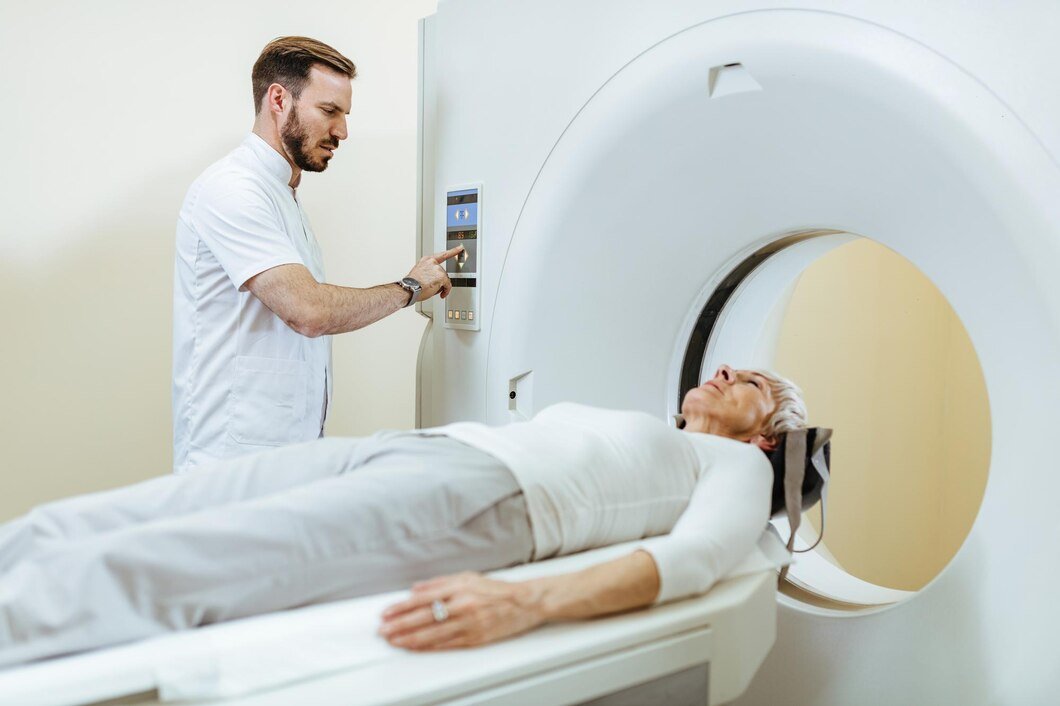
Before the scan, the patient is placed in an intravenous line, and contrast material is administered during the scan. An MRI machine uses powerful magnetic fields and radio waves to create detailed images.
The scan typically takes 20-40 minutes . The patient must remain still, as even slight movement can degrade image quality.
3. In which diseases is medicated MRI performed?
• Brain tumors
• Multiple sclerosis (MS)
• Liver, kidney and pancreatic masses
• Cardiovascular diseases
• Breast and prostate cancer research
• Spinal cord lesions
• Metastasis (spread) detection
4. For which complaints is medicated MRI performed?
• Long-lasting headache
• Visual or speech disturbances
• Numbness in arms or legs
• Abdominal pain or swelling
• Chest pain or shortness of breath
• Areas suspected of being cancerous
5. What to Do Before Medication-Induced MRI
• A 4-6 hour fast is required before an MRI with medication .
• A preliminary information form is filled out by the doctor.
• Those with kidney disease should definitely inform their doctor. A kidney function test (creatinine) may be required.
• The patient should not wear any metal jewelry, watches, or hair clips during the scan.
• The scan usually takes 20-45 minutes
.
• Contrast-enhanced MRI is not recommended during pregnancy.
6. What to Do After Medication MRI
• Drinking plenty of fluids accelerates the removal of the contrast.
• If allergic symptoms (nausea, dizziness, itching, rash, shortness of breath) develop, they usually resolve quickly and should be reported to a doctor. • For breastfeeding mothers, expressing breast milk is recommended for 24 hours
after contrast material administration.
• You can continue your normal routine unless your doctor tells you otherwise.
7. Medicated MRI Side Effects
• Allergic reactions to contrast material may occur, although rare.
• Individuals with claustrophobia (fear of closed spaces) may have difficulty.
• Caution should be exercised in patients with poor renal function.
8. Advantages of Medicated MRI
• High-resolution images are obtained.
• Does not contain radiation.
• Provides clear visualization of tumors and vascular structures.
• Helps early diagnosis.
9. Medicated MRI Alternative Methods
Alternatively, non-contrast MRI, CT (Computed Tomography), or ultrasonography can be used.
However, medicated MRI provides higher accuracy, especially for tumors, vessels, and inflammatory conditions.
10. Areas of Use of Medicated MRI
• Brain and nervous system examinations
• Liver and pancreas lesions
• Spinal diseases
• Breast and prostate screenings
• Cardiovascular diseases
11. In which department is medicated MRI performed?
It is performed by the radiology department.
The imaging is performed by a specialist radiology technician, and the evaluation is performed by a radiologist.
12. Who cannot undergo medicated MRI?
• Those who are suspected of being pregnant
• Those with kidney failure
• Those with a pacemaker or metal implant (in some cases)
• Those with a history of severe allergic reactions
13. What are the findings in a drug-assisted MRI?
• Details such as tumors, inflammation, vascular occlusion, and edema are clearly revealed.
• Even small lesions not visible on non-contrast MRI can be detected.
14. Where can I get a Medicated MRI in Ankara?
Imaging scans can be performed in Ankara's imaging center, state hospital, university hospital, private hospital, and city hospital.
Magnet Hospital's Radiology Unit stands out with its same-day appointment and rapid reporting options.
Experienced specialists prioritize patient comfort and perform imaging scans.
15. Current Prices for Medicated MRI (2025)
As of 2025, the price of an MRI
scan will vary depending on the imaging area, the contrast agent used, and the hospital's technical equipment. The difference in fees is lower in institutions contracted by the Social Security Institution (SGK) and private hospitals.
16. Same-Day Medicated MRI Scan at Ankara Magnet Hospital and Appointment
Same-day appointments for MRI scans are available at Magnet Hospital .
Imaging is covered by social security and private insurance. You can easily schedule an appointment
by calling the hospital's call center at 0312 212 80 80 or through the website.
17. Comments on Medicated MRIs
Patients report that they are pleased with the technicians' attention to detail regarding the Magnet Hospital MRI scans
, that the results are quickly prepared, that a comfortable environment is provided during the scans, and that they are pleased with Magnet Hospital's fast and friendly service.
18. Frequently Asked Questions
1. Harms of Medicated MRI
It is generally harmless. Rarely, allergic reactions, dizziness, or nausea may occur. Caution should be exercised in patients with kidney disease.
2. In which cases is medicated MRI requested?
The doctor requests it when he/she wants to clearly see conditions such as tumors, inflammation, vascular occlusion, or mass spread in tissues or organs.
3. How is the medicated MRI drug eliminated from the body?
The gadolinium contrast agent used is excreted in the urine via the kidneys within a few hours.
4. Can I sleep during a medicated MRI?
Light sedation is generally not necessary. However, a sedative may be administered to patients with claustrophobia.
5. Do I need to take off my clothes during an MRI with medication?
Yes. A metal-free apron is worn.
6. Should the medicated MRI be performed on an empty or full stomach?
The test is usually taken on a slightly empty stomach. It is recommended not to eat for 3-4 hours before the test.
7. What should be done to avoid fear in Emar?
Take deep breaths, close your eyes, and ask for headphones if necessary.
8. Who cannot undergo medicated MRI?
-
For those with kidney failure
-
For those with allergies to contrast material
-
For those in the first 3 months of pregnancy
9. Why does the doctor order an MRI with medication?
It is required to highlight vascular structures, tumor spread, or areas of inflammation that are not clearly visible in normal MRI.
10. Is a medicated MRI performed on an empty stomach?
Yes, fasting for 4-6 hours is generally required.
11. Does Social Security pay for medicated MRIs?
SGK covers the cost of medicated MRI when deemed necessary.
12. Does private insurance cover medicated MRIs?
It's covered by most private health insurance policies.
The contrast agent used is gadolinium-based, and its cost is included in the scan fee.
It's usually reported the same day or within one business day.
15. How many minutes does a medicated MRI take?
It takes approximately 20-45 minutes to complete.
16. What should be done after medicated MRI?
Drink plenty of water and be careful about possible allergic reactions that may rarely occur.
