


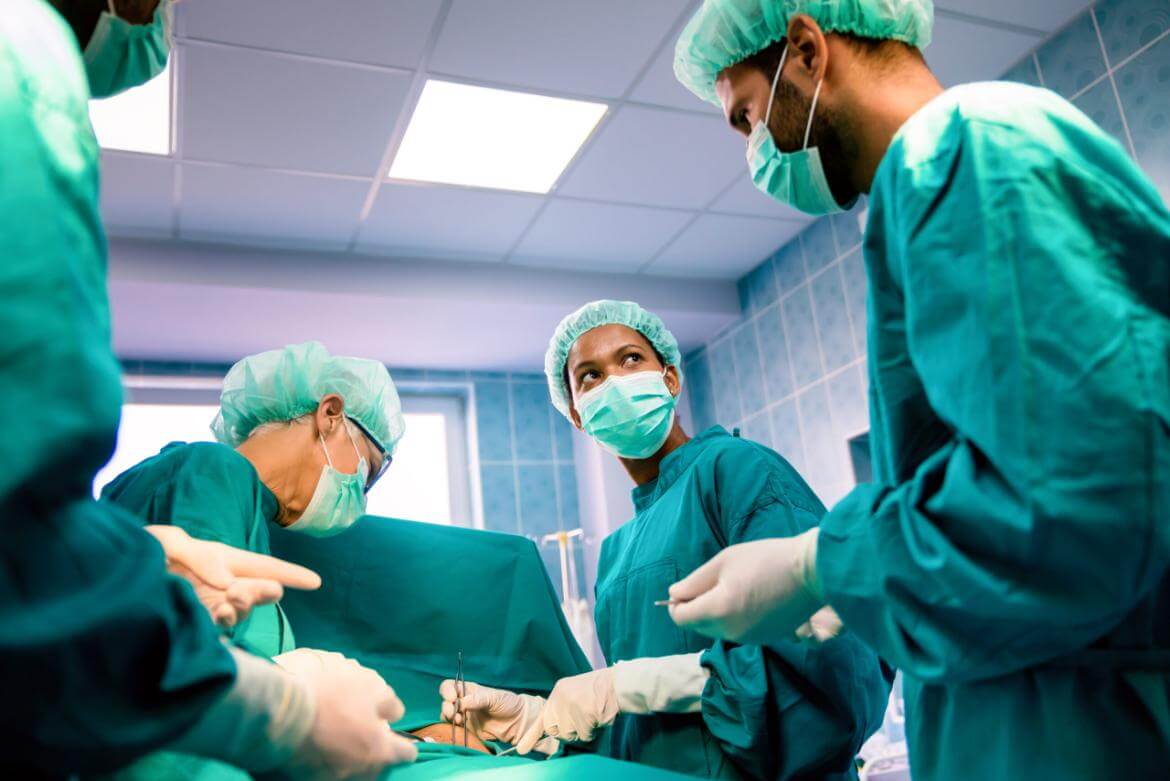
What is Splenectomy?
A splenectomy is the surgical removal of your spleen. The spleen is a fist-sized organ that helps fight infection in the body by filtering blood and allowing it to flow to the liver. When the spleen needs to be removed due to cancer or other medical conditions, a surgeon performs a splenectomy.
Where is my spleen and what does it do?
The spleen is an organ located in the upper left side of your abdomen. About the size of a fist, the spleen has many functions.
Spleen:
- It cleans (filters) old and damaged blood cells.
- It produces antibodies that help fight infection.
- It stores blood cells.
Why should I have my spleen removed?
Your spleen may be removed for a number of illnesses.
- Certain cancers: Lymphoma (Hodgkin lymphoma and non-Hodgkin lymphoma) are the primary conditions for which your spleen may be removed. Other less common diagnoses, such as chronic lymphocytic leukemia, hairy cell leukemia, and cancers that have spread to the spleen, may also be reasons for your spleen to be removed.
- Blood disorders: When medical treatment isn't successful, certain conditions can be treated by removing your spleen. These disorders primarily include idiopathic thrombocytopenic purpura and autoimmune hemolytic anemia.
- An enlarged spleen (splenomegaly): A splenectomy may be necessary to determine the cause of an enlarged spleen or to treat symptoms such as pain and early satiety (feeling full after eating only a small amount of food).
- Hypersplenism: An enlarged spleen can become overactive, destroying too many blood cells and platelets.
- Trauma: Although many cases can be treated without removal, splenectomy may be necessary if bleeding cannot be controlled.
- Infection: A splenic abscess is very rare, but it may be a reason to have your spleen removed.
How are spleen disorders diagnosed?
Spleen disorders are diagnosed as follows:
- Blood tests, including complete blood count.
- Physical exam (an enlarged spleen may be felt by your healthcare provider).
- Imaging tests such as ultrasound or computed tomography (CT) scans.
- Bone marrow tissue biopsy.
Spleen Removal Surgery?
- In most cases, if the spleen is not significantly enlarged, a splenectomy can be performed laparoscopically. Under general anesthesia, the abdomen is insulated with carbon dioxide so your surgeons can see the operating field. A camera (laparoscope) is inserted into the abdomen through small incisions, and the images are sent to video monitors for the surgeons to view. Other small surgical instruments are used to perform the procedure.
- Your surgeon frees the spleen from all surrounding attachments. An incision is eventually extended to about 2 cm to insert a "stapler" to control the organ's blood supply (the splenic artery and vein). The now-free spleen is placed in a special bag with a string that is passed through the largest incision. Using a finger inside the bag, your spleen is divided into smaller pieces.
- If your spleen is too large to be removed laparoscopically, it will be removed using an open approach through a single, large incision. In addition to the size of your spleen, scar tissue from previous surgeries may lead your surgeon to choose an open approach. This decision can be made before or during surgery.
- Indeed, if there are bleeding problems, it is always possible to convert a laparoscopic case to open.
What are the possible complications of splenectomy?
- Possible complications include the usual risks of all surgery, including bleeding, infection, and injury to surrounding abdominal organs.
What are the long-term risks of splenectomy?
- A particular risk associated with splenectomy is post-splenectomy infection. Fortunately, there are vaccines available to protect against major bacterial strains. Your doctor will likely recommend three shots before surgery and two months afterward to optimize your immune system.
- Booster shots are then given after five years. You should also get your annual flu shot. Splenectomy patients can get sick and be around sick people. However, if you develop an illness, as indicated by a high fever, you should contact your healthcare provider immediately and antibiotics will be prescribed.
Frequently asked questions
What can I expect after having my spleen removed?
- Once you can tolerate a regular diet, move around without difficulty, and your pain is under control, you will be discharged home. This usually occurs within two to three days with a laparoscopic technique and within five to seven days with an open incision.
- Your incisions will be closed with dissolvable stitches and skin adhesive, so you can shower or bathe immediately. You can drive as long as you don't need narcotic painkillers or have any bothersome pain. While every patient is unique, the hope is that you can return to your daily activities quickly. Then, you should slowly increase your activities as tolerated. In fact, this process is slower with an open approach. Young children who have had their spleens removed may be given antibiotics to prevent serious infections.
Can I live without my spleen?
- Yes, you can live without your spleen. Your liver will take over many of your spleen's functions. As mentioned, while the risk of infection is quite low, it may be increased. If you develop a high fever after your spleen is removed, it's important to be vigilant and seek immediate medical attention.
Our surgeons perform splenectomy at Ankara Magnet Hospital.
If I have had a splenectomy, when should I call my healthcare provider?
Call your healthcare provider or surgeon if:
- Persistent fever over 101°F (38.5°C).
- Shake.
- Swelling in your abdomen.
- Pus/drainage from your incisions.
- Redness around the incision that worsens or grows.
- Cough or shortness of breath.
- Bleeding.
- Nausea and vomiting.
- Pain cannot be relieved with medication.
