


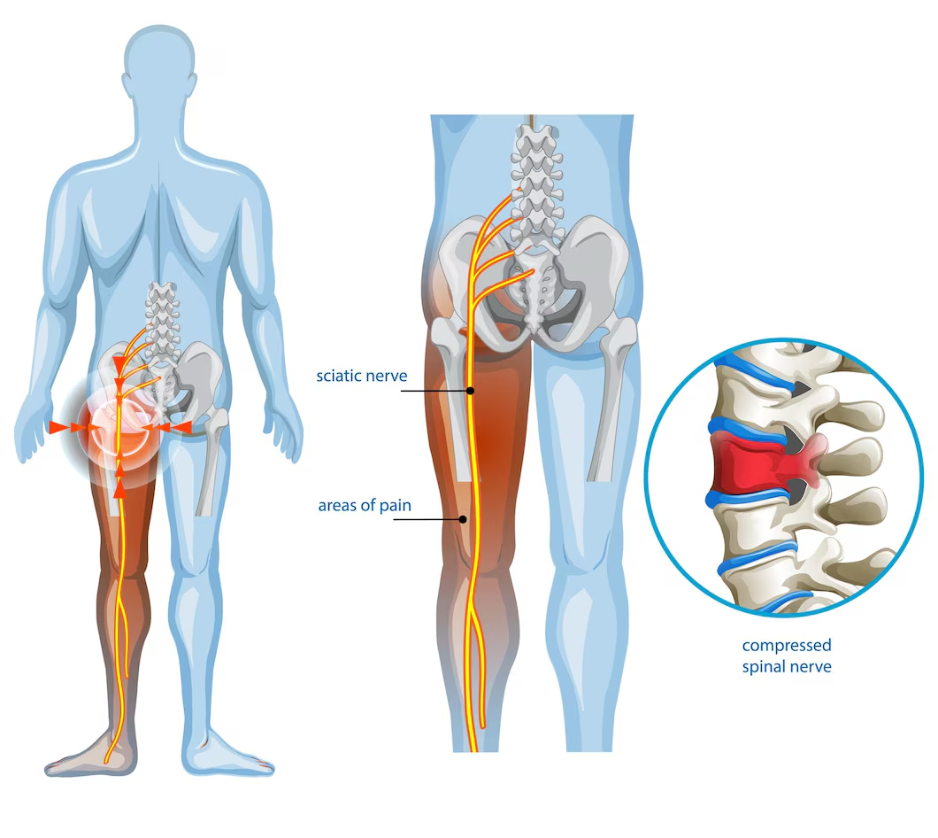
What is Sciatica? (Pain Radiating from the Waist to the Leg)
Sciatica is a type of pain that radiates from the lower back to the buttocks and down the back of the leg, usually caused by nerve compression or irritation. This pain occurs when the sciatic nerve, which originates from the spine and extends down the legs, is affected. Sciatic pain develops as a result of nerve root compression or inflammation and often significantly reduces the patient's quality of life. Magnet Hospital, with its expert physical therapists and multidisciplinary healthcare team, offers comprehensive, safe, and personalized solutions for sciatica diagnosis and treatment.
Sciatica (Sciatic Nerve Compression) Symptoms
Sciatica symptoms vary depending on the degree and location of nerve compression. The most common complaints in patients presenting to Magnet Hospital include:
Sharp pain in the lower back and hips: This may be particularly severe when sitting, standing or walking.
Pain radiating to the leg : It may feel like a stabbing or electric shock.
Sleep disturbance: Pain increases in some positions and sleep quality decreases.
Numbness and tingling: Numbness may occur in the leg or foot.
Muscle weakness: Loss of strength in the leg muscles may occur due to nerve pressure.
Decreased reflexes: In severe cases, leg reflexes are reduced.
What Causes Sciatica and What Are the Risk Factors?
Sciatica can be caused by different health problems:
Lumbar disc herniation (Disc herniation): The disc in the lumbar vertebrae puts pressure on the nerve root.
Spinal stenosis: Pressure on the nerves due to narrowing of the spinal canal.
Spondylolisthesis: A vertebra slips forward, putting pressure on the nerve root.
Muscle spasm and psoas muscle tension: It creates tension around the nerve, causing pain.
Trauma: Nerve damage following trauma such as falls, traffic accidents, injections.
Lifestyle: Factors such as prolonged sitting, heavy lifting, inactivity, aging, and excess weight increase the risk.
Diabetes.
Pregnancy: Sciatica pain is quite common during pregnancy and usually occurs later in pregnancy. This is primarily due to anatomical and hormonal changes in the mother's body.
What Causes Sciatica During Pregnancy?
Enlarging Uterus and Uterus Pressure: As pregnancy progresses, the uterus grows and can put pressure on the nerves in the pelvic area. This pressure is particularly noticeable in the pelvis and lower back, where the sciatic nerve passes. The result: pain, numbness, or tingling radiating from the lower back to the buttocks and legs.
Hormonal Changes: The hormone relaxin loosens joint ligaments and increases flexibility in the pelvic bones. This can cause mild instability in the spine and pelvis, making it easier for nerve compression.
Posture and Weight Shift: The growing abdomen and forward shift in the center of gravity increase lordosis (a dip) in the waist. This creates extra pressure on the back muscles and nerves, which can trigger sciatica pain.
Muscle Tension and Spasms: The lower back and hip muscles become tight during pregnancy. Muscle spasms put additional pressure on the sciatic nerve.
Varicose Veins and Fluid Retention: During pregnancy, swelling and dilated veins in the legs can occur. This can create pressure around nerves and increase pain.
Suggestions
Be careful not to stay in the same position for a long time.
Placing a pillow between your knees while lying on your side provides relief.
Light walks and stretching exercises recommended for pregnant women
Heat application or light massage (with doctor's approval)
If the pain is very severe, you should definitely consult a doctor.
How Is Sciatica Diagnosed?
The sciatica diagnosis process at Magnet Hospital is comprehensive and consists of the following stages:
Patient history and physical examination: The duration, severity and conditions under which the pain increases are evaluated.
Nerve and reflex tests: Muscle strength and reflexes are measured.
Imaging methods:
Nerve roots and soft tissues are examined with MRI (Magnetic Resonance) .
Bone structures are evaluated with CT (Computed Tomography).
Spinal alignment is checked with X-rays.
Nerve conduction tests (EMG/NCS): Nerve activity and conduction are measured.
Thanks to this detailed examination, a treatment plan is prepared specifically for the individual.
Sciatica (Sciatic Nerve Compression) Treatment Methods – Magnet Hospital Approach
The goal of sciatica treatment is to reduce pain, relieve sciatic nerve compression and pressure, and improve quality of life. The main methods used at Magnet Hospital include:
Personalized physical therapy and rehabilitation: Muscle support is provided through stretching and strengthening exercises.
Drug treatment: Pain and edema are controlled with painkillers and anti-inflammatory drugs.
Percutaneous nerve blocks : Pain is reduced with cortisone or local anesthetic.
EPINOSIS method: It aims to reorganize the perceptual signals around the nerve.
Surgical treatment: Pressure on the nerve is removed with minimally invasive methods (in advanced cases).
The most appropriate method for each patient is determined through a multidisciplinary evaluation.
Precautions That Can Be Taken at Home
To relieve sciatica pain and prevent its recurrence, the following suggestions can be applied:
Correct sitting and standing habits: Sitting upright and getting up slowly reduces nerve pressure.
Regular exercise and walking: Increases blood circulation and supports healing.
Proper mattress and pillow: Keeps the spine in a neutral position.
Waist, hip and leg stretching exercises: Reduces muscle tension.
Avoid triggers: Risk factors such as excess weight, smoking, and lifting heavy loads should be avoided.
How to Relieve Sciatica Pain (Sciatic Nerve Compression)?
Sciatica is a severe pain that can significantly limit daily life and radiate from the waist down to the buttocks and down the back of the leg. At Magnet Hospital, this condition is addressed with a multidisciplinary approach, aiming to control pain, reduce nerve pressure, and restore mobility. During sciatica treatment, the patient's pain severity, lifestyle, general health, and underlying causes are considered, and they consult with a neurosurgeon, orthopedic surgeon, or physical therapist. A personalized treatment plan is developed by the doctor.
1. First Stage – Rest and Activity Planning
A short period of rest is recommended at the beginning of treatment. This can relieve pressure on the sciatic nerve. However, prolonged inactivity can weaken muscles and prolong healing, so Magnet Hospital specialists will develop an appropriate activity program for the patient.
2. Medication and Pain Control
Medications used to treat sciatica: Nonsteroidal anti-inflammatory drugs (NSAIDs), particularly options like ibuprofen, help relieve pain by reducing inflammation. Magnet Hospital physicians administer medication in a controlled and safe manner. Muscle relaxants or neuropathic pain medications may also be prescribed if necessary.
3. Physical Therapy and Rehabilitation
Physical therapy is one of the most important steps in sciatica treatment. The programs planned by Magnet Hospital's physical therapists include the following goals:
Increase muscle strength
Maintaining spinal balance
Reducing pressure on the nerve
In this process, stretching exercises, low-tempo walks and posture correction exercises come to the fore.
4. Methods That Can Be Applied at Home
Magnet Hospital experts guide their patients through simple but effective methods they can apply at home:
Cold compress: Inflammation and swelling are reduced by applying it in the first 48 hours.
Hot application: Helps control pain by relaxing the muscles in the following days.
Regular exercise: Strengthens the waist and hip muscles.
Correct sitting and standing habits: Protects spinal health.
Sciatica Vitamin and Mineral Deficiency
There are no direct vitamin or mineral deficiencies in the sciatic nerve. However, certain vitamins and minerals are critical for healthy nerve function and pain relief. Deficiencies can increase sciatic nerve pain or complicate healing.
Vitamins and Minerals That Can Affect Sciatic Nerve Pain:
B Vitamins (especially B1, B6, B12): These vitamins play a role in nerve cell protection and transmission. Deficiencies can exacerbate numbness, tingling, burning sensations, and nerve pain. B12 deficiency, in particular, can accelerate nerve damage.
Vitamin D: Essential for bone and muscle health. Low vitamin D levels can exacerbate back and leg pain.
Magnesium: Helps relax muscles and prevents muscle spasms. Deficiency can increase muscle cramps, stiffness, and nerve pain.
Calcium: Important for nerve conduction and muscle contraction. A deficiency can cause muscle twitching and cramps.
Omega-3 fatty acids (not minerals, but important): Help regenerate nerve tissue. Their anti-inflammatory effects may reduce sciatic nerve inflammation.
Copper deficiency increases sciatica pain.
Deficiency of B vitamins, vitamin D, magnesium, calcium and copper can negatively affect nerve health and cause sciatica pain to worsen.
Sciatic Nerve Compression Exercises
Exercises that can be done at home for sciatic nerve compression (sciatica) and are generally considered safe aim to reduce pressure on the nerve, strengthen muscles, and increase flexibility. If your pain is severe or worsens with movement, it is recommended that you perform the exercises under the supervision of a doctor or physical therapist.
Knee-to-Chest Exercise: Purpose: Stretch the lower back and glutes and reduce pressure on the sciatic nerve. Lie on your back with your knees bent. Pull your right knee toward your chest, supporting it with your hands. Hold for 20–30 seconds, then release. Repeat for the left knee. Repeat 3–5 times daily.
Piriformis Muscle Stretch : Purpose: To relieve pressure on the sciatic nerve if the piriformis muscle is compressing it. Lie on your back. Place your right foot on your left knee, forming a letter 4 position. Grasp your left thigh with your hands and pull it toward your chest. Hold for 20–30 seconds, then repeat for the other leg.
Cat-Cow Pose: Purpose: Increase mobility in the lumbar spine and relieve nerve pressure. Get on your hands and knees. Inhale and arch your back down (Cow). Exhale and round your back up (Cat). Repeat 10–15 times.
Lower Back and Hip Strengthening: Objective: To reduce nerve strain by strengthening the hip and lower back muscles. Lie on your back, knees bent, feet on the floor. Slowly lift your hips, forming a straight line from shoulders to knees. Hold for 5 seconds, then slowly lower. Do 10–15 repetitions, 2–3 sets per day.
Stretch: Purpose: To reduce tension on the sciatic nerve by stretching the muscles at the back of the thigh. Lie on your back and lift your right leg, keeping it straight. Using your ankle or calf, gently pull. Hold for 20–30 seconds and repeat on the other leg.
Pay attention to pain during the exercise; if there is sharp pain, stop. Perform the movements slowly and with control. Regular repetition can help reduce sciatica pain.
What Can Happen If Sciatica Is Not Treated?
If sciatica is left untreated, various problems can occur as pressure and damage to the nerve can continue.
What Can Happen If Sciatica Is Left Untreated
Chronic Pain: Initially intermittent, the pain may become constant over time. Burning, stinging, or sharp pain in the lower back, hips, and legs persists for an extended period.
Numbness and Tingling: When nerve pressure persists, loss of sensation in the legs and feet can occur. Tingling in the toes or legs and a loss of sense of touch may also occur.
Muscle Weakness and Atrophy: Muscles exposed to nerve pressure for extended periods may experience weakness and muscle atrophy. The calf and thigh muscles may be particularly affected, making walking and climbing stairs difficult.
Loss of Reflexes: A decrease in knee and ankle reflexes may be observed. This indicates that nerve damage is progressing.
Inactivity and Reduced Quality of Life: Pain and limited mobility make daily activities difficult. The risk of sleep disturbances, psychological stress, and depression may increase.
Rare but Serious Complications: Cauda equina syndrome : If severe pressure occurs on the lower portion of the sciatic nerve, problems with urination, bladder, and bowel control may occur. This is an emergency situation that requires rapid intervention.
If sciatica is left untreated, problems such as not only pain but also loss of nerve function, muscle weakness and a serious decrease in quality of life can occur.
What is Post-Injection Sciatic Nerve Injury?
Intramuscular injections are usually administered in the gluteal region. If the needle is inserted into the wrong spot, it can cause direct or indirect pressure on the sciatic nerve. Sciatic nerve injury (neuropathy) occurs, meaning mechanical or chemical damage to the nerve.
Post-Injection Sciatic Nerve Injury Symptoms
Severe back or hip pain that begins immediately after the injection
Tingling, numbness, or burning sensation in the leg
Muscle weakness or difficulty walking
Rarely, loss of reflexes in the toes or foot drop
Causes of Post-Injection Sciatic Nerve Injury
Wrong Injection Point: Injecting the lower part of the hip muscle is risky for the sciatic nerve.
Depth or Angle of the Needle: Injecting too deep or at the wrong angle can cause direct damage to the nerve.
Drug Properties: Some drugs can cause irritation and inflammation due to contact with the nerve.
Post-Injection Sciatic Nerve Injury Treatment
First Aid and Rest: Avoid lifting weights and rest your legs if possible.
Drug Treatment: Painkillers, anti-inflammatories, and if necessary, neuroprotective drugs (such as B vitamins, gabapentin) are used.
Physical Therapy: Supports nerve and muscle functions, reduces pressure on the nerve with exercises and stretching movements.
Surgical intervention: In cases of Post-Injection Sciatic Nerve Injury, if the nerve is severely damaged, surgical intervention may rarely be required.
Post-injection sciatic nerve injury is a rare but serious complication. If symptoms are recognized promptly and intervention is initiated early, loss of function can often be prevented.
Advantages of Sciatica Treatment at Magnet Hospital
Main reasons to choose Magnet Hospital:
Experienced and expert staff: A team of experts in orthopedics, physical therapy and neurosurgery .
Modern technology: Advanced diagnostic and treatment facilities such as MRI, CT and nerve blocking devices.
Personalized treatment plan: Different solutions for each patient.
Patient-friendly environment: Comfortable clinical areas.
Frequently Asked Questions
What is the Sciatic Nerve?
The sciatic nerve, the largest nerve in the body, originates from the lumbar vertebrae (L4–S3) and extends through the buttocks, the back of the thigh, and behind the knee to the ankle and foot. This nerve carries both motor (muscle movement) and sensory (feeling) functions in the legs.
How long does sciatica pain last?
Most patients see significant improvement within 4–6 weeks. However, if there are underlying conditions such as a herniated disc or spinal stenosis, the process may be longer.
How is sciatica diagnosed?
The location and cause of nerve compression are determined through physical examination, MRI, CT and EMG tests.
How is sciatica treated?
With physical therapy, medication, nerve blockade and surgical intervention when necessary.
Can sciatica be prevented?
Yes. The risk can be reduced with regular exercise, weight control, and proper posture.
Can exercises be done for sciatica?
Correct exercises, under the supervision of a doctor, accelerate recovery.
How long does sciatica last and does sciatica go away?
Most patients experience significant improvement within 4-6 weeks. In mild cases, improvement may be seen within a few days or weeks. If the sciatic pain is caused by a serious medical condition (herniated disc, spinal stenosis, tumor, trauma), sciatic pain can persist for months, depending on the cause. Sciatic pain lasting longer than 3 months is considered chronic.
Herbal Oils That Are Good for Sciatica Pain
Peppermint Oil (contains menthol): Its cooling effect soothes nerve impulses. It reduces pain. It can be applied by massaging into the waist and legs (must be diluted with a carrier oil).
Rosemary Oil: Increases blood circulation, relieves muscle spasms, and may reduce leg cramps associated with sciatica.
St. John's Wort Oil: Nourishes nerve cells and has a calming effect. It can be used as a soothing massage oil on the sciatic nerve.
Lavender Oil: Both a muscle relaxant and a sedative. It reduces the stress that comes with pain and improves sleep quality.
Ginger Oil: It has strong anti-inflammatory effects and helps reduce inflammation around the nerves.
Capsaicin (Hot Pepper Oil/Extract): Reduces the pain transmitter "substance P" in nerve endings. Regular use can reduce pain. However, it should be used with caution as it can cause a burning sensation on the skin.
Eucalyptus Oil: Has refreshing and anti-inflammatory properties. It can relieve muscle stiffness caused by sciatica.
These oils should not be applied directly to the skin; they should be mixed with a carrier oil (olive, coconut, or almond oil). Massage should be performed using gentle circular motions along the waist and legs. Pregnant women, breastfeeding women, or those with chronic illnesses should consult a doctor before use.
Sciatica is a condition that reduces quality of life but can be controlled with the right treatment. Magnet Hospital stands out as a reliable address for sciatica treatment with its multidisciplinary treatment approach, expert staff, and modern technological infrastructure.
For appointments: 0312 212 80 80
