


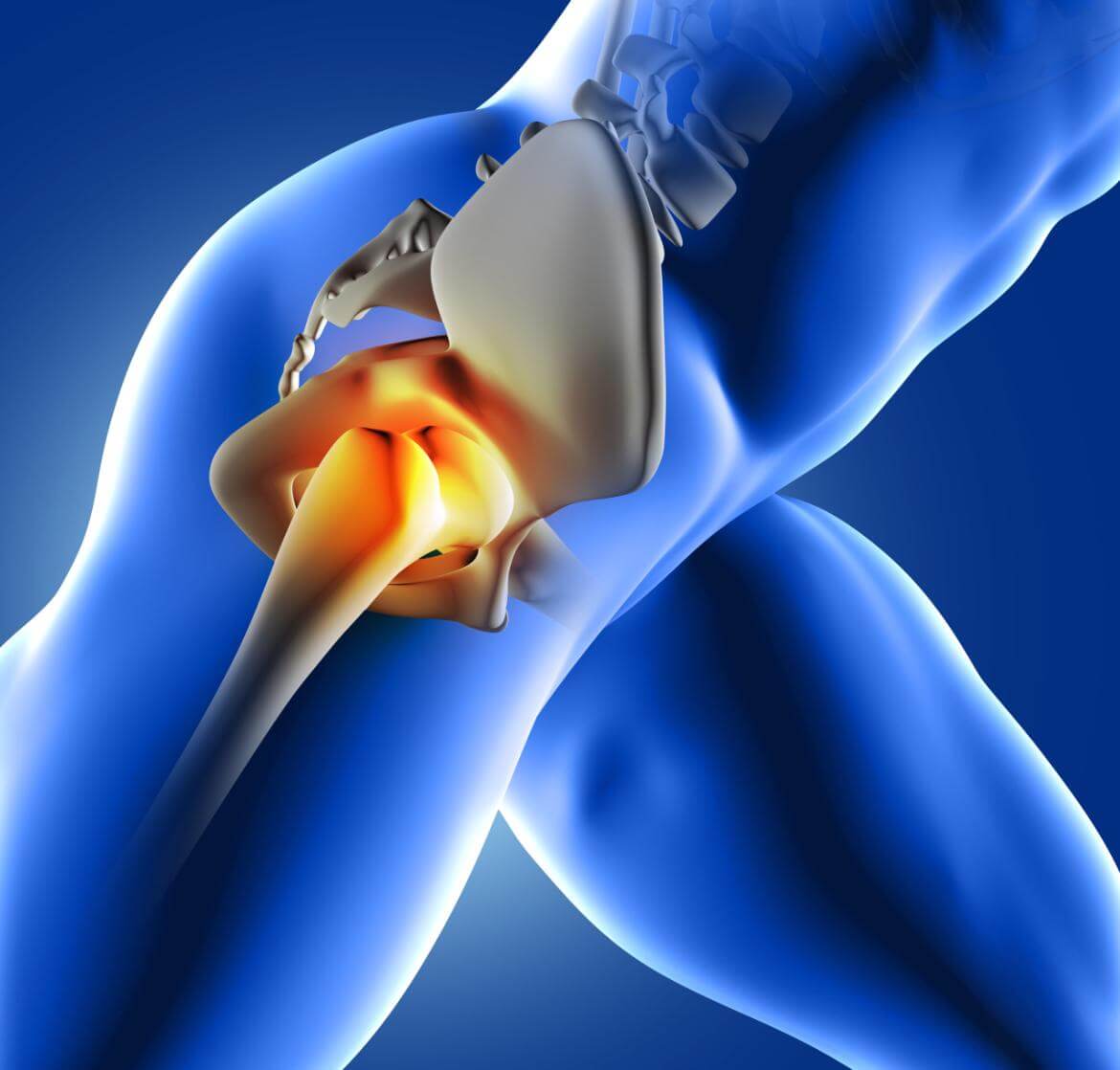
What is Hip Arthroscopy?
Hip arthroscopy is a surgical procedure to diagnose and treat problems inside the hip joint. This procedure is performed using a specialized instrument called an arthroscope. The hip joint is where the leg bone (femur) meets the hip bone (pelvis). Articular cartilage protects the joint and facilitates movement. Hip arthroscopy is a tool for viewing and treating problems inside the hip joint.
In what cases is hip arthroscopy performed?
- Femoroacetabular stenosis: The hip joint can become narrowed where the femoral head meets the hip bone. This can cause pain, limited mobility, and other symptoms. Hip arthroscopy can be used to repair damage caused by this stenosis and improve hip joint function.
- Labral tears: The hip joint contains a ring of cartilage that protects the labrum. Labral tears occur when this tissue tears or wears away and can cause pain, limited mobility, and other symptoms. Hip arthroscopy can be used to repair or remove labral tears.
- Hip dislocation: The hip joint is supported by muscles and ligaments to keep the femoral head in its proper position relative to the hip bone. A hip dislocation occurs when the femoral head moves out of its normal position. Hip arthroscopy can be used to repair the damage and restore it to its normal position.
- Cartilage damage: The hip joint contains cartilage, and cartilage damage can cause pain, limited mobility, and other symptoms. Hip arthroscopy may be used to repair or remove cartilage damage.
- Inflammatory arthritis: Rheumatoid arthritis and other types of inflammatory arthritis can cause inflammation of the hip joint. Hip arthroscopy can be used to repair the damage and relieve symptoms in this condition.
Hip arthroscopy is a surgical procedure and is not necessarily performed on every patient. Patients experiencing hip problems can consult with their doctor to determine the most appropriate treatment option.
Who cannot undergo hip arthroscopy?
Hip arthroscopy is a surgical procedure used to diagnose and treat hip joint problems. However, there are some situations where hip arthroscopy may not be appropriate. These situations may include:
- Severe osteoarthritis: Osteoarthritis is a condition that causes damage and wear to the cartilage surface in the hip joint. Hip arthroscopy may not be effective in this case.
- Significantly advanced deformity: Hip arthroscopy may not be sufficient to correct bony deformities in the joint. In this case, more invasive surgery may be necessary.
- Overweight patients: In overweight patients, hip arthroscopy can be technically challenging and carry a higher risk of complications.
- Blood vessels or nerves near the hip joint: Hip arthroscopy can be risky if there are problems with the blood vessels and nerves near the hip joint.
- Hip joint infection: Hip arthroscopy can increase the risk of infection, and arthroscopy of an infected joint can cause the infection to spread.
- Severe hip damage: If there is significant damage to the hip joint, hip arthroscopy may not be appropriate. In these patients, inserting the joint may cause further damage.
What are the diagnostic methods of hip arthroscopy?
Hip arthroscopy begins with a review of the patient's history, symptoms, and physical examination. Your doctor may order various imaging tests to help diagnose the cause of your hip pain. These tests include X-rays, magnetic resonance imaging (MRI), computed tomography (CT), and bone scans.
X-ray: For hip arthroscopy, the patient's X-rays are first examined. This test is used to examine the bones and joint spaces. X-rays can reveal any evidence of arthritis or bone damage in the hip joint.
Magnetic resonance imaging (MRI): An MRI for hip arthroscopy is an imaging procedure that provides detailed images of soft tissues and bones. This test is used to examine the cartilage, tendons, and muscles of the joint. MRI can also detect bone fractures, infections, and other problems.
Computed tomography (CT): CT is another imaging modality used for hip arthroscopy. This test produces cross-sectional images of the hip joint and surrounding tissues. CT allows for detailed visualization of the bones and soft tissues.
Bone scintigraphy: A bone scintigraphy is another imaging test used to determine the cause of hip pain. This test involves injecting a radioactive substance into the bone, which identifies damaged or infected areas.
How is hip arthroscopy surgery performed?
Hip arthroscopy is often performed on patients experiencing pain and limited mobility due to conditions such as arthritis, damaged cartilage or labrum (the tissue surrounding the joint), or hip dislocation. Here's a step-by-step explanation of how hip arthroscopy is performed:
- Anesthesia: Before the surgery, the patient is usually put to sleep under general anesthesia or epidural anesthesia is applied.
- Position: The patient should lie prone. This position allows the surgeon direct access to the hip joint.
- Beginning the procedure: The surgeon inserts an arthroscope (camera) into the hip joint. The arthroscope provides the surgeon with clear images of the tissues inside the joint, allowing the surgeon to examine the inside of the joint and identify any problem areas.
- Preparing the joint: The surgeon cleans and prepares the tissues around the hip joint. This is done using an arthroscope.
- Treatment: The surgeon may address problem areas such as arthritis, damaged cartilage, or the labrum. Treatment options may include cartilage transplantation, trimming bone spurs, or repairing the labrum.
- Finalization: Once the procedure is complete, the surgeon removes the arthroscope and closes the small incision wounds with stitches or special tape. This procedure provides a minimally invasive approach to speed the patient's recovery.
- Recovery: After hip arthroscopy, patients may need painkillers to control pain. Physical therapy or rehabilitation can help patients regain mobility after surgery.
Surgical time can vary from approximately 45 minutes to two hours, depending on the complexity of the procedure. Hip arthroscopy allows direct access to the joint without damaging or injuring surrounding tissues, allowing only the diseased tissue to be treated. This allows the patient to maintain pain-free and comfortable postoperative joint movements. Recovery is quicker with arthroscopic surgery than with open surgery. This is particularly true for young and middle-aged athletes who benefit from hip arthroscopy. Although hip surgery is necessary for these individuals, large incisions are not required because they require a rapid return to sports. Therefore, arthroscopy is a suitable option for them.
Most frequently asked questions
What is the price of hip arthroscopy surgery?
The cost of hip arthroscopy surgery can vary depending on many factors. Factors that influence the cost include the experience of the surgeon performing the surgery, the complexity of the procedure, the patient's overall health, and the post-operative treatment process.
In general, hip arthroscopy is less invasive than other major surgeries, so the cost is generally lower. However, this is a general rule and may vary depending on your specific situation and your treatment provider.
Is hip arthroscopic surgery dangerous?
Hip arthroscopy is generally less risky than other surgical procedures. However, as with any medical procedure, there are some potential risks and complications.
When can I walk after hip arthroscopy surgery?
Walking time after hip arthroscopy may vary depending on the patient, the complexity of the surgery, and any complications. However, patients are generally able to walk immediately after surgery. Walking is often limited in the first few days after surgery.
Walking time varies from person to person, and some patients may take several weeks or even months to fully recover. However, patients can generally return to walking activities within a few weeks. It's important to follow your doctor's instructions carefully and proceed slowly throughout the post-operative period.
How many days does it take for a person who has hip surgery to stand up?
The time it takes to get back on your feet after hip surgery can vary depending on the type of surgery, the patient's overall health, age, physical condition, and post-operative rehabilitation. Recovery time varies for each patient. However, in general, patients typically rest in bed for the first few days after hip surgery and gradually increase their mobility afterward.
Many patients who undergo primary hip replacement surgery are encouraged to get out of bed and begin walking within the first few days after surgery, under the guidance of a physical therapist. This process can vary depending on the patient's overall health and the surgical method. Some patients may begin walking on the first or second day after surgery, while others may take a few days longer.
In which cases is arthroscopy surgery performed?
Arthroscopy is a surgical procedure in which a camera and surgical instruments are inserted into a joint. It is generally used for diagnostic purposes, but in some cases, it can also be used for therapeutic purposes. Common uses for arthroscopy include:
- Meniscus Injuries: The menisci of the knee joint are the shock-absorbing cushions of the knee. Meniscus tears can often occur due to sports injuries or aging. Arthroscopy is a frequently used procedure to repair or correct meniscus tears.
- Joint Surface Deformities: Articular cartilage damage or articular surface deformities can cause symptoms such as joint pain, stiffness, and limited mobility. Arthroscopy can be used to assess joint surface damage and administer appropriate treatment. In this case, cartilage repair, correction of bone spurs originating from the joint, or joint resurfacing procedures may be performed.
- Knee and Shoulder Capsule Ruptures: Capsule tears can occur in joints such as the knee or shoulder. The capsule is a layer of tissue that surrounds the joint and provides stability. Arthroscopy can be used to repair or suture capsular tears.
- Intra-articular Inflammation: Inflammatory conditions within a joint can occur as a result of autoimmune diseases such as rheumatoid arthritis or traumatic joint injuries. Arthroscopy can be used to reduce inflammation or remove inflammatory tissue within the joint.
- Loose Bodies in the Joint: Small particles floating freely within the joint can cause symptoms such as pain, swelling, and limited joint mobility. Arthroscopy can be used to remove or immobilize these loose bodies.
Arthroscopy is a commonly used surgical procedure for diagnosis and treatment of these and many other conditions. However, each patient's situation may vary, and it is important to consult a doctor to determine if arthroscopy is appropriate.
