


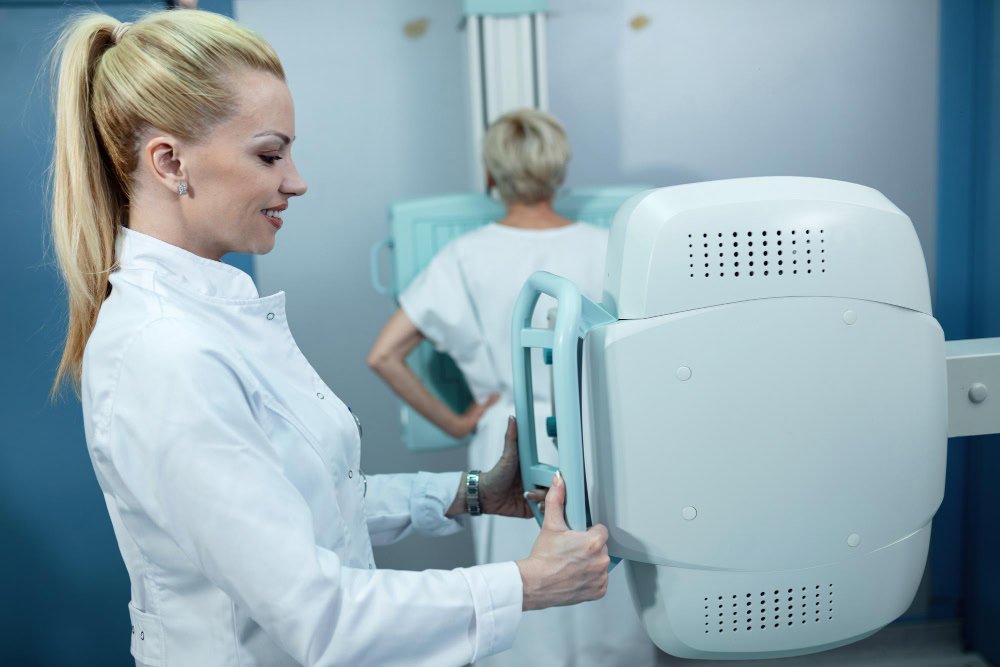
What is Breast MRI (MRI) and How is it Performed?
Breast MRI (MRI) is a magnetic resonance imaging method used to visualize breast tissue in three dimensions and in high resolution. It provides highly reliable results, particularly in breast cancer screening, mass assessment, and post-operative follow-up. It can detect even the smallest changes in breast tissue.
How is a Breast MRI (MRI) Performed?
The patient is placed in a prone position, rather than supine, before entering the magnetic resonance imaging device. The breasts are immobilized with special pillows and bandages. If a medicated scan is requested, a contrast agent (medication) is administered intravenously. Throughout the procedure, the device uses a high magnetic field and creates images in slices. Sounds from the device are normal, but it is very important to remain still throughout the procedure. The scan takes approximately 20–40 minutes.
In Which Diseases Is Breast MRI Performed?
Breast cancer and precursor lesions
Fibroadenoma and cystic formations
Breast abscess or inflammation
Control of breast implants
Differentiation between mass and tumor (benign – malignant)
Post-surgical follow-up or suspicion of recurrence
Monitoring of risky patient groups
For Which Complaints is Breast MRI Performed?
Palpable hardness, mass, or swelling
Nipple retraction or discharge
Unexplained findings with imaging (mammography/USG)
Breast pain, asymmetry or deformity
For screening purposes in women with a family history of breast cancer
What to Do Before Breast MRI
The menstrual cycle should be carefully considered. Testing is generally recommended between days 7 and 14.
If you are pregnant or breastfeeding, the doctor should be informed.
Items such as metal jewelry, credit cards, and watches should be removed.
If contrast material is to be used, fasting for 4-6 hours may be required.
In contrast-enhanced imaging, intravenous access is established.
The shoot takes approximately 30-45 minutes.
What to Do After Breast MRI
Drink plenty of water, it accelerates the removal of the contrast medium from the body.
Mild dizziness, itching, rash or nausea may occur; they pass in a short time.
You can return to daily life immediately.
Breastfeeding mothers should express their milk for 24 hours.
Disadvantages and Risks of Breast MRI
Patients with claustrophobia (fear of closed spaces) may have difficulty.
Allergy to contrast material may occur rarely.
Caution should be exercised in those with metal implants or pacemakers.
Advantages of Breast MRI
Does not contain radiation.
Detects tumors at an early stage.
Provides high resolution images.
It can examine the entire breast tissue.
It clearly shows the remaining tissues after surgery.
Breast MRI Alternative Methods
Alternatively, mammography, ultrasound, or biopsy can be used. However, breast MRI can reveal even small lesions that may not be detected by other methods.
In Which Department Is Breast MRI Performed?
It is performed by the radiology department. The imaging is performed by a radiology technician, and the evaluation is performed by a radiologist.
Who Cannot Have Breast MRI?
Pregnant women (especially the first trimester)
Patients with renal failure
Those with a pacemaker or metal implant
Those with a history of severe allergies
What Does a Breast MRI Show?
Mass, cyst, inflammation, tumor or edema
Areas suspected of cancer
Increased vascular density
Post-surgical changes are clearly visible.
Where can I get a breast MRI in Ankara?
It can be performed at many private hospitals, imaging centers, and public hospitals in Ankara. Magnet Hospital, with its experienced staff and modern equipment, is one of the centers specializing in breast MRI. It offers same-day appointments and rapid reporting.
Breast MRI Prices
Breast MRI prices,
The hospital's equipment,
The contrast agent used,
Varies depending on SSI or private insurance status.
A difference fee is charged in institutions with an SSI agreement.
Same-Day Breast MRI
Magnet Hospital's Radiology Unit offers same-day breast MRI scans. Social Security and private insurance are accepted, and reports are prepared quickly.
Does Social Security Pay for Breast MRI?
The Social Security Institution (SGK) covers breast MRI scans when deemed necessary by a doctor. While there may be an additional fee at private hospitals, it is free at public hospitals.
Does Private Insurance Cover Breast MRI?
Many private health insurance policies cover breast MRI scans. Fees may vary depending on the policy details.
Frequently Asked Questions
Why is breast MRI (MRI) requested?
Breast MRI is used to visualize breast tissue in more detail. It is used when a suspicious lump is detected on mammography or ultrasound, in patients with dense breast tissue, in cases where breast cancer has been diagnosed and the extent of its spread needs to be investigated, and for postoperative follow-up or implant evaluation.
Can breast cancer be detected on MRI?
Yes, breast MRI is one of the most sensitive methods for detecting breast cancer. Tumor tissue often absorbs contrast material, making it appear brighter. This allows even small, deeply located cancerous areas to be detected.
Can a breast lump be detected on an MRI?
Yes, MRI provides detailed information about the size, shape, borders, and vascular structure of breast lumps. It is helpful in distinguishing between benign (fibroadenoma) and malignant (cancer) tumors.
What does a breast MRI report say?
A breast MRI report typically includes the following: the structure and density of both breasts, the location and size of the mass or lesion, signal characteristics, contrast enhancement (important for cancer suspicion), and the BI-RADS classification (score 1–6). This score indicates the likelihood of the lesion being cancerous.
What is the difference between mammography and breast MRI?
Mammography uses X-rays and specifically reveals microcalcifications. Breast MRI uses a magnetic field, is radiation-free, and provides a much more detailed view of soft tissue. MRI provides clearer results than mammography in dense breast tissue.
Is breast MRI dangerous?
No, breast MRI is harmless. Radiation is not used; images are captured using a magnetic field and radio waves. Only patients receiving contrast material (gadolinium) should be cautious if their kidney function is low.
Does breast MRI provide accurate results?
Breast MRI detects abnormal areas with high sensitivity, but it does not provide a definitive diagnosis. If a suspicious area is identified, biopsy is required to confirm the diagnosis. Therefore, MRI is a guide to early diagnosis, but not a definitive diagnostic tool.
Is breast MRI performed on an empty stomach?
Yes, if contrast material is to be used, 4-6 hours of fasting is required.
When will the breast MRI results be available?
It is usually reported the same day or within 1 business day.
How long does a breast MRI take?
It is completed in approximately 30-45 minutes.
Is breast MRI harmful?
No, it does not contain radiation and is safe.
Can breastfeeding women have it done?
Yes, but expressing milk should be avoided for 24 hours after using contrast material.
