


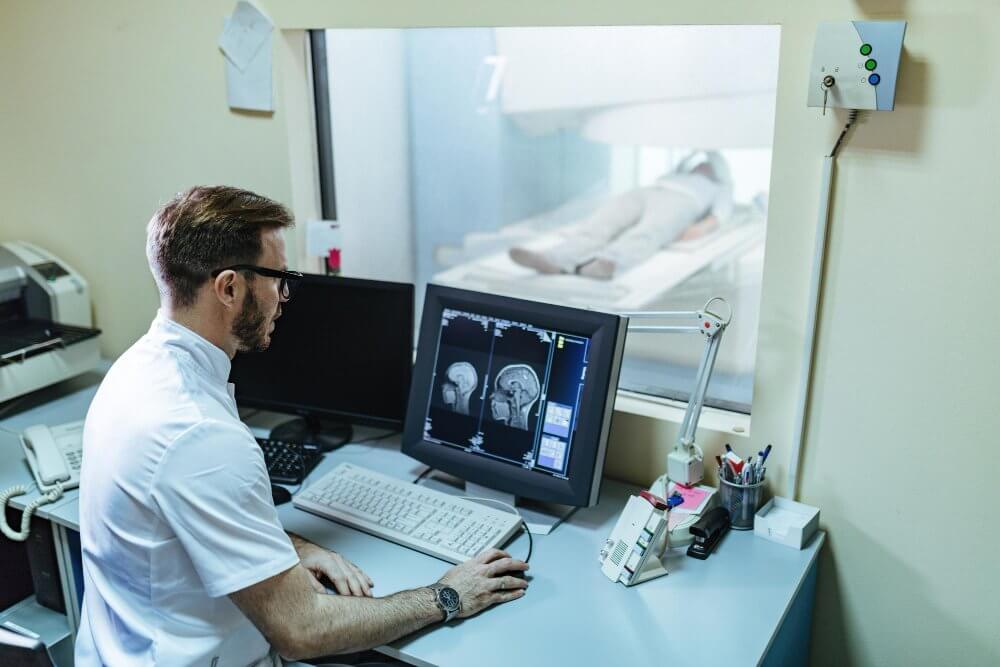
What is Brain CT Angiography?
Brain CT Angiography (Virtual Brain Angiography) is a modern, rapid, and reliable imaging method vital for the early diagnosis of cerebrovascular diseases. Compared to traditional angiography, it is more comfortable for the patient because it does not require an invasive procedure.
Magnet Hospital, one of the centers in Ankara where you can safely have this procedure done, offers reliable diagnostic services with its SGK and private insurance agreements, advanced CT devices, and experienced radiology team.
1. What is Brain CT Angiography?
Brain CT angiography, also known as “virtual brain angiography”, is an advanced diagnostic method that provides detailed visualization of brain vessels using computerized tomography (CT).
With this method:
-
Cerebral vascular occlusions
-
Aneurysms (vessel bubbles)
-
Vascular constrictions
-
Bleeding foci
can be displayed quickly, clearly and three-dimensionally .
Unlike traditional angiography, no catheter is inserted into the vein. The scan is performed using a contrast agent (dye) administered through a vein in the arm. This makes the procedure painless, quick, and low-risk.
2. In Which Diseases Is Cerebral Angiography Performed?
Cerebral angiography is one of the most detailed methods of showing the cerebral vascular structure and is used in the diagnosis of many serious diseases.
a. Brain Aneurysm (Vascular Balloon)
An aneurysm is a ballooning that occurs at a weak point in the cerebral artery wall.
With CT Angiography:
-
Location of the aneurysm
-
Size
-
Shape
-
Risk of explosion
This information is critical for surgical or endovascular treatment planning.
b. Cerebral Vascular Occlusion (Risk of Stroke)
Blockage or narrowing of the cerebral vessels can lead to stroke.
Angiography of the obstruction:
-
Cause (clot, plaque, etc.)
-
Location
-
Seriousness
It provides detailed information about the condition. This allows clot dissolution (thrombolytic therapy) or vessel opening (angioplasty) to be planned.
c. Arteriovenous Malformation (AVM)
AVM is the formation of abnormal vascular connections between brain arteries and veins.
With angiography:
-
The exact location of the shopping mall
-
Vascular density
-
Direction of blood flow
This information is used to plan surgical, embolization, or radiosurgery treatments.
d. Brain Hemorrhages and Investigation of Their Causes
The cause of every brain hemorrhage may not be immediately apparent with imaging.
Cerebral angiography is the most definitive method for determining whether bleeding is of vascular origin (e.g., due to an aneurysm or AVM).
e. Examination of the Vascular Structure of Brain Tumors
Some brain tumors can affect surrounding blood vessels.
Angiography:
-
The relationship of the tumor with the vessels
-
Degree of blood flow
It is used in preoperative planning.
f. Narrowness in the Neck and Brain Veins (Carotid Stenosis)
Plaques that form in the neck veins can reduce blood flow to the brain.
Angiography determines the degree of stenosis and decides whether stent/surgery is necessary.
g. Post-Traumatic Vascular Injuries
A vascular rupture or fistula may develop after head trauma or brain surgery.
Angiography guides treatment by showing the location and severity of this damage.
3. In Which Complaints is Cerebral Angiography Requested?
Cerebrovascular diseases can sometimes progress without symptoms. However, a physician may request a cerebral angiogram if the following symptoms occur:
a. Sudden onset of severe headache
Sudden pain described as "the worst headache of my life" could be a sign of a ruptured aneurysm. In this case, urgent angiography is necessary.
b. Visual Impairments and Visual Field Loss
Blockage in the vessels supplying the optic nerve can cause blurred or double vision. Angiography provides a definitive diagnosis by assessing vascular flow.
c. Weakness or Numbness in the Arm or Leg
These symptoms are early signs of a stroke. CT angiography clearly shows the location and impact of the clot.
d. Speech Disorder or Facial Asymmetry
When one of the vessels supplying the speech center is blocked, facial twitching and speech impairment may occur. Angiography is used to assess the condition of the blocked vessel.
e. Dizziness and Loss of Balance of Unknown Cause
Problems with the cerebellum and brainstem vessels can cause these symptoms. Angiography provides detailed images of blood flow in these areas.
f. Recurrent Transient Paralysis Attacks (TIA)
In cases of short-term paralysis or speech disorders, the risk of future paralysis is investigated.
g. Pulsation in the Ear (Pulsatile Tinnitus)
Some vascular anomalies can cause a pulsating sensation in the ear. Angiography can identify the source.
4. How is Brain CT Angiography Performed?
-
Contrast material is injected into the patient's arm vein.
-
The patient lies down on the CT scanner and remains still for a short time.
-
The device creates 3D images of the brain vessels within seconds.
The procedure is painless. You may feel a warm sensation for a few seconds when the contrast material is administered.
5. Brain CT Angiography Preparation
Things to consider before the procedure:
a. Hunger
No food should be consumed 6 hours before the shoot.
b. Drinking Plenty of Water
It facilitates the excretion of contrast material by the kidneys.
c. Allergy / Kidney Disease Information
If you have had a history of allergy to contrast material, asthma, or kidney disease, you should definitely inform your doctor.
d. Pregnancy
If there is suspicion of pregnancy, information should be given before the procedure.
6. How Long Does Brain CT Angiography Take?
-
The shoot takes approximately 10–20 minutes .
-
The total time, including preparation and contrast medium administration, is 30–40 minutes .
-
Results are usually available on the same day.
7. Things to Consider After Brain CT Angiography
a. Plenty of Fluid Consumption
Contrast medium is eliminated more rapidly by the kidneys.
b. Light Rest
Recommended for patients with dizziness.
c. Redness at the injection site
It usually passes in a short time.
d. If Allergic Symptoms Occur
If shortness of breath, rash, or headache develops, a doctor should be consulted.
8. Disadvantages of Brain CT Angiography
-
There is some radiation exposure (very low in modern devices).
-
Caution should be exercised in those with allergies to contrast media.
-
Contrast media may pose a risk in patients with renal failure.
However, it is much faster, more comfortable and less risky than classical angiography.
9. Brain CT Angiography Usage Areas
It is commonly used in the diagnosis of the following conditions:
-
Suspicion of cerebral vascular occlusion and clot
-
Aneurysm research
-
Detection of brain hemorrhage and AVM
-
Stroke risk assessment
-
Vascular mapping before surgery or stent placement
10. Who is Not Applied to Brain CT Angiography?
a. Pregnant women
Not applicable due to radiation.
b. Those with Severe Kidney Failure
Contrast media can strain the kidneys.
c. Those with Contrast Material Allergy
In cases of severe allergy history, the procedure may not be performed.
d. Those with Severe Heart Failure
11. What is Seen in Brain CT Angiography?
With this display method:
-
Cerebral vascular constrictions
-
Plaques in the vascular wall
-
Aneurysms
-
Bleeding foci
-
Congestion and circulatory disorders
can be examined in detail.
12. Does Social Security Cover Virtual Brain Angiography?
Yes. SGK covers Brain CT Angiography when deemed medically necessary by a specialist.
However, private hospitals may charge a surcharge .
Magnet Hospital is a SGK-affiliated center and performs the procedure with reasonable surcharges.
13. Does Private Insurance Pay for Brain CT Angiography?
Many private health insurance companies cover this procedure.
a. Insurances That Generally Cover Payments
-
Allianz
-
Bitter almond
-
Anadolu Insurance
-
Mapfre
-
Axa
-
Gunes Insurance
Magnet Hospital has agreements with many private insurance companies.
14. Brain CT Angiography Prices 2025
Prices for 2025 vary depending on the institution:
a. State Hospitals
It is generally free under SSI .
b. University Hospitals
Social Security + difference fee is charged.
c. Private Hospitals
Difference fees vary depending on the hospital's pricing policy and the technology used.
d. Private Imaging Centers
The fee is collected in full from the patient.
Magnet Hospital: It has an agreement with SGK and offers services with reasonable difference fees.
15. Where can Brain CT Angiography be performed in Ankara?
Centers providing brain CT angiography services in Ankara:
a. Magnet Hospital
It provides secure shooting with high-tech IT devices, with SGK and private insurance agreements.
b. University Hospitals
They are academic reference centers.
c. City Hospitals
It is one of the most comprehensive centers within the state.
d. Private Imaging Centers
Provides angiography services for a fee.
16. Frequently Asked Questions
a. Is brain CT angiography painful?
No. The procedure is completely painless. You may feel a brief warm sensation while the contrast material is administered.
b. When can I be discharged after the procedure?
Most patients are discharged on the same day .
c. When will the results be available?
After the photoshoot, the report is usually ready within 1-2 hours .
d. Is there much radiation in virtual angiography?
Radiation has been greatly reduced with new generation devices .
e. What is the difference between brain CT angiography and classical angiography?
-
No catheter is used.
-
It takes less time.
-
It is more comfortable and low risk.
-
Vascular structures appear 3D.
CONCLUSION
Brain CT Angiography is one of the fastest and most reliable diagnostic methods for assessing the risk of aneurysms, vascular occlusions, hemorrhages, AVMs, and strokes . Its painless, comfortable, and rapid nature allows for early diagnosis
of cerebrovascular diseases, playing a lifesaving role.
