


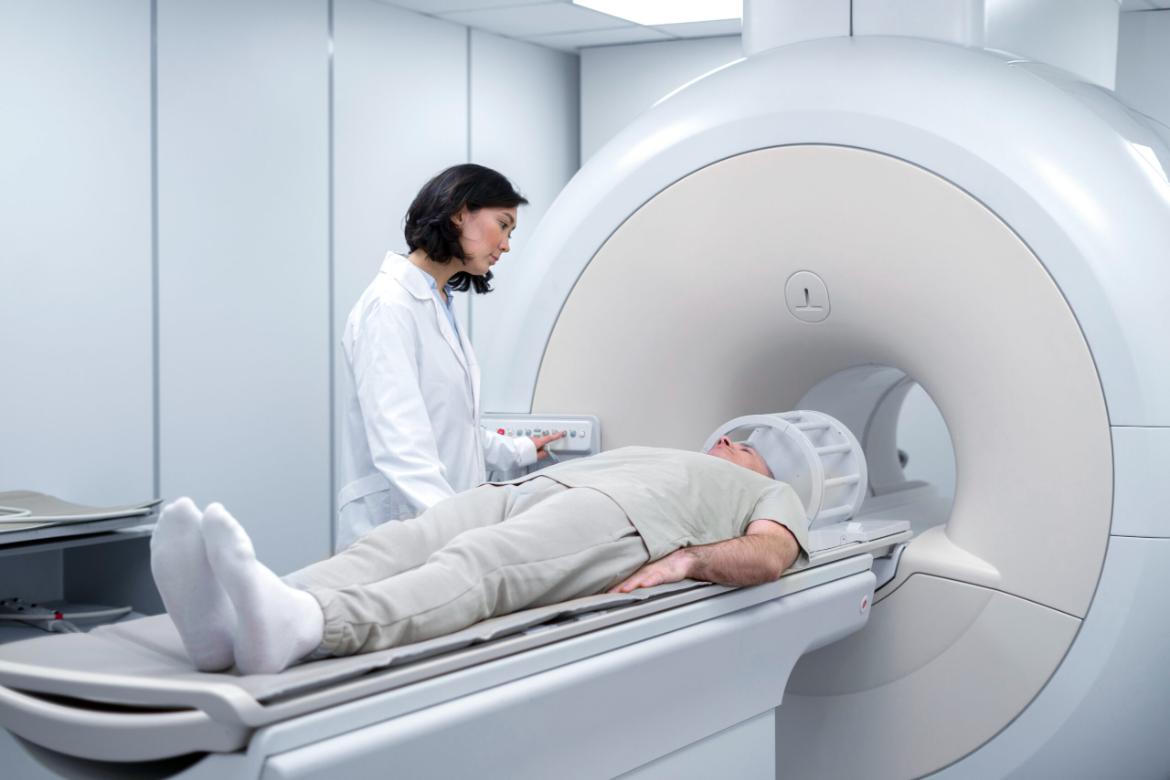
What is an Open MRI? Why is it Performed?
Open MRI (Magnetic Resonance Imaging) is a common imaging method used in medical diagnosis and research. MRI uses magnetic fields and radio waves to image tissues inside the body. Open MRI offers a more comfortable medical imaging experience for humans and animals, a significant advantage for patients with claustrophobia during medical procedures. Additionally, open MRI devices are less noisy and cause less discomfort during the procedure.
Open EMAR devices are a newer technology and less widely used than closed EMAR devices. This is because closed EMAR devices have higher magnetic fields and provide higher-resolution images.
Advantages of Open MRI
Open MRI has several advantages. First, open MRI offers a more comfortable medical imaging experience compared to closed-tube MRI. Patients feel more comfortable in an open structure and therefore experience less stress. Second, open MRI reduces the risk of exposure to high magnetic fields, making it safer for patients with implants. Third, open MRI has a larger field of view, making it more suitable for obese patients. Fourth, open MRI is a less intimidating option for children and other patients.
What are the Types of Open MRI?
Open MRI has an open structure and allows imaging of organs and tissues inside the body using magnetic fields and radio waves.
There are different types of open MRI, and these types are selected based on the patient's medical needs and physical condition. There are four different types of open MRI devices:
- Standard Open MRI: The standard open MRI is the most commonly used type of open MRI. This type of open MRI has a wide aperture and allows patients to have a comfortable medical imaging experience. Standard open MRI is used for imaging the brain, spine, joints, and other organs.
- High-Field Open MRI: High-field open MRI operates at higher magnetic fields and produces more sensitive images. This type of open MRI requires fewer repetitions and offers shorter scanning times. High-field open MRI is used to diagnose cancer, brain tumors, and other medical conditions.
- Open-Ended MRI: An open-ended MRI has both an open structure and a pointed structure. This type of open-ended MRI allows patients to leave their legs or arms exposed during medical imaging. Open-ended MRI is used for imaging joints such as shoulders, elbows, hands, hips, knees, and feet.
- Low-Feld Open MRI: Low-field open MRI uses a less powerful magnetic field compared to closed-tube MRI by reducing the strength of the magnetic fields. This method is an ideal option for patients who prefer not to be exposed to magnetic fields or who are sensitive to them. Low-field open MRI is used to diagnose many medical conditions, including muscle and bone injuries, brain injuries, nervous system diseases, and infections.
Who Should Have an Open MRI?
Open MRI is not always preferred over closed MRI. People who may prefer open MRI over closed MRI may:
- Claustrophobia: Claustrophobia is the fear of enclosed spaces and is not suitable for closed-tube MRI. Open MRI, offering a wider field of view, is an ideal option for patients with claustrophobia.
- Obese Patients: Obesity is a condition that makes closed-tube MRI unsuitable. Open MRI provides obese patients with a more comfortable medical imaging experience.
- Patients with Magnetic Field Sensitivity: Patients with magnetic field sensitivity may prefer not to undergo closed-tube MRI. Open MRI uses less powerful magnetic fields, allowing patients with magnetic field sensitivity to have a more comfortable medical imaging experience.
- Children: Children may experience distress or anxiety during a closed-tube MRI. An open MRI offers a wider opening, allowing children to have a more comfortable medical imaging experience.
- Patients with Orthopedic Problems: Patients with orthopedic problems may be unable or difficult to change position during a closed-tube MRI. Open MRI facilitates position changes, providing patients with orthopedic problems with a more comfortable medical imaging experience.
Consequently, open MRI is an ideal medical imaging method for patients who are not suitable for closed-tube MRI, such as those with claustrophobia, obesity, sensitivity to magnetic fields, children, and patients with orthopedic problems. However, the most appropriate medical imaging method for each patient should be determined by your doctor.
How is an open MRI performed?
Open MRI, unlike closed MRI, performs imaging using a machine that leaves the patient's head and feet exposed.
For an open MRI, the patient must first be prepared. During this preparation, the patient is checked for metal objects. Metal objects cannot be used in the MRI because they can interfere with the magnetic field. Therefore, patients should remove any metal objects or use MRI-compatible equipment.
The patient's position is then adjusted. This position may vary depending on the area of the patient being imaged. For example, a knee MRI requires the patient to lie down with their legs together, while a brain MRI requires the patient to lie on their back. Once the patient's position is adjusted, radio waves are used to create a magnetic field. These waves are sent into the patient's body, magnetizing water molecules within the body. These magnetized water molecules are captured by a receiver, which produces an image.
Images taken with an open MRI machine have slightly lower resolution than those from a closed MRI machine. However, open MRI offers a less claustrophobic experience than closed MRI. It's also a convenient option for larger patients or those who experience claustrophobia from closed MRIs.
In conclusion, open MRI is an alternative to magnetic resonance imaging and is used for many medical diagnoses and treatments. The procedure requires patient preparation, positioning, and the use of radio waves to generate a magnetic field. Open MRI offers a less claustrophobic experience than closed MRI and may be preferred by older patients or those with claustrophobia.
Why Open MRI?
An open MRI machine offers a larger opening than a closed MRI machine, allowing patients to perform imaging with their head and feet exposed. This openness allows patients to have a more comfortable experience and avoid the claustrophobia that can come with a closed MRI.
Additionally, an open MRI machine allows for comfortable imaging of larger patients and those with limited mobility. A closed MRI machine, due to its limited aperture, is not suitable for larger patients. Furthermore, it is also not suitable for patients with limited mobility, as the patient must remain still and confined to a confined space.
Another advantage of an open MRI machine is that it reduces patient interaction with other medical devices during the imaging process. Because a closed MRI machine creates a magnetic field, metal parts or devices within the patient's body can be affected by the magnetic field and become inoperable.
How Long Does an Open MRI Take?
Open MRI will take approximately 15-20 minutes, including the preparation process of the operation.
Is Open MRI Safe?
Yes, it's a safe procedure. MRI doesn't involve radiation. There are very few risks associated with open MRI. Because it doesn't involve ionizing radiation, patients are less likely to be harmed. People with pacemakers, brain clips, implants, or similar metal devices should not undergo the procedure. Furthermore, as with all medical devices, magnetic resonance imaging is a diagnostic test that has been tested and approved for safety.
