


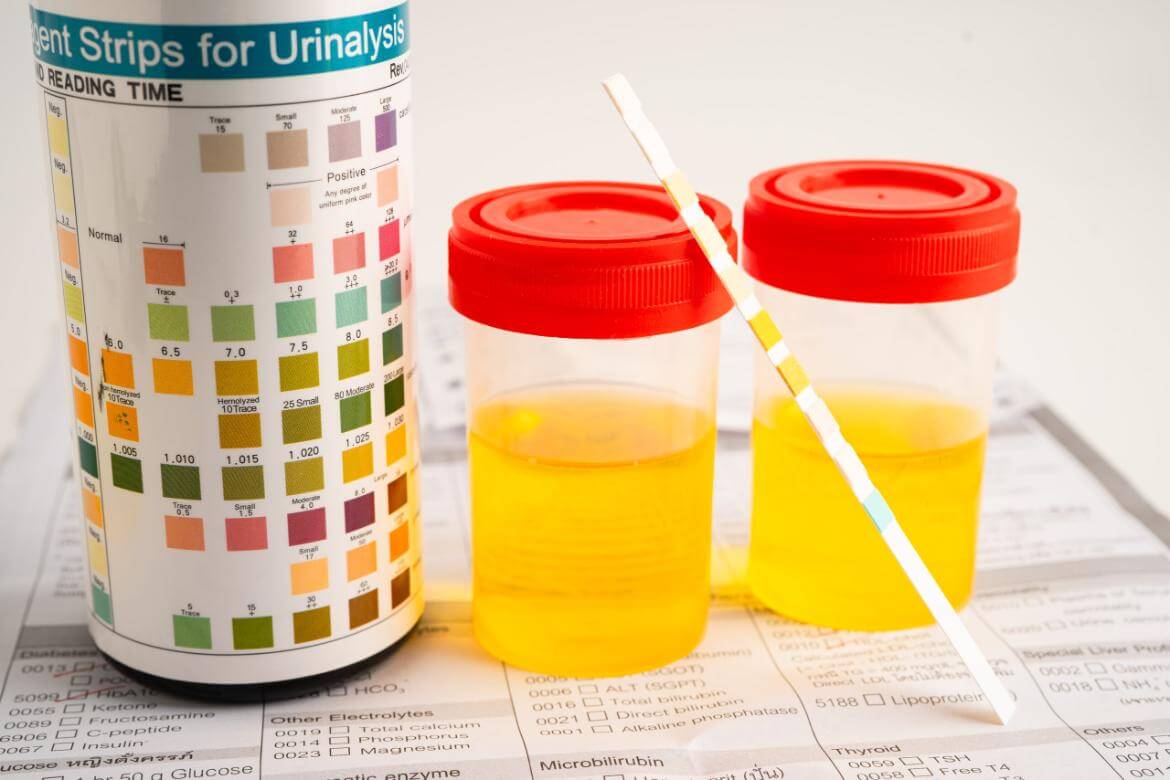
Urinalysis
A complete urinalysis is a laboratory test that examines the visual, chemical, and microscopic characteristics of urine. It is often used for general health assessment, diagnosis of disease, or monitoring of certain health conditions.
A complete urinalysis can be performed for several purposes:
- Urinary tract infections (UTIs): One of its most common uses is diagnosing urinary tract infections. Examining urine for microbes, leukocytes, or nitrites can indicate the presence of an infection.
- Kidney function: To assess kidney function, it is important to examine urine chemical components such as protein, blood, and electrolytes. These parameters can provide important information about kidney function.
- Diabetes: Glucose (sugar) can be found in the urine of people with diabetes. A complete urinalysis can be used to determine blood sugar levels. However, blood tests are now more commonly used to diagnose diabetes.
- Pregnancy: Pregnancy tests can determine pregnancy status by detecting specific hormones in the urine.
- Symptoms of systemic diseases: Urine analysis can reveal symptoms of certain systemic diseases. For example, kidney stones, kidney inflammation, or certain metabolic disorders can be monitored through urine tests.
How is a Complete Urine Analysis Performed?
A complete urinalysis is a laboratory test that involves examining a urine sample in various ways. This test can help diagnose many conditions by evaluating the visual, chemical, and microscopic characteristics of urine.
A urinalysis typically includes the following steps:
- Visual examination: The external characteristics of urine are visually examined. The color, clarity, odor, and consistency of the urine are observed. Cloudy, dark, or strongly odorous urine may indicate certain conditions.
- Chemical examination: The chemical components of urine are analyzed using special test papers or strips. These tests can help identify components such as protein, blood, and sugar in the urine.
- Microscopic examination : Examining urine under a microscope reveals cells, crystals, bacteria, and other solid particles. This allows for the detection of symptoms such as infections, kidney stones, and tumor cells.
- Specific gravity measurement: The density of urine is assessed using specific gravity measurement. This can help determine how concentrated or diluted the urine is.
A complete urinalysis is often used to diagnose or monitor many conditions, including urinary tract infections, kidney disease, diabetes, kidney stones, and metabolic disorders. In cases of abnormal results, additional testing or other medical procedures may be necessary.
What values are checked in a complete urine test?
The values examined in a complete urine test are generally:
Physical characteristics
- Color: Urine is normally expected to be pale yellow. Other colors, especially darker colors or colors such as red or brown, may be abnormal.
- Turbidity: Normally, urine should be clear. Turbidity can be a sign of an infection or other health problem.
- Smell: Normally has a slight odor. Different or strong odors can be a symptom of certain diseases.
- Density and pH: The density (concentration of urine) and the degree of acidity (pH) of the urine are evaluated.
Chemical examination
- Glucose: Normally, there should be no sugar in the urine. In cases of diabetes, glucose may be present in the urine.
- Protein: Normally, protein should not be found in the urine. The presence of protein may be associated with kidney damage or disease.
- Bilirubin: Not normally found in urine. Liver or bile duct problems can increase bilirubin in the urine.
- Urobilinogen: Normally present at certain levels. High or low levels can indicate different health conditions.
- Ketones: Not normally found in urine. High levels are associated with diabetes or starvation.
- Nitrites: Nitrites in the urine may be a sign of infection.
Evaluating these parameters allows urinalysis results to provide important clues about the presence of a disease or health condition. The results are then evaluated and interpreted by your doctor.
What is Strip Microscopy in Complete Urine Analysis?
Strip microscopy is not a specific method used in urinalysis. Strip tests are specialized paper strips used to determine chemical components in urine analysis. These strip tests are used to quickly and often automatically assess various chemical properties of urine.
These strip tests, when dipped into a urine sample, exhibit color changes due to the chemicals they contain. For example, the strip test can be used to determine the presence of various chemical compounds, such as sugar, protein, ketones, acidity (pH), urobilinogen, and nitrites.
Strip tests indicate the presence or concentration of specific components in the urine, while microscopic examination allows for microscopic examination of cells, crystals, and other particles in the urine sample. Microscopy allows for the examination of details such as cells, bacteria, tubular cell casts, crystals, and other elements.
Using strip tests and microscopy together to evaluate the chemical and microscopic elements of a urine sample provides more comprehensive information about health status. This allows for a better understanding of potential pathological conditions found in the urine sample.
Who Should Have a Complete Urine Analysis?
A complete urinalysis is usually performed in the following situations:
- General checkups: During general health checkups, doctors may order a complete urinalysis at regular intervals. This is an important component of monitoring a patient's overall health.
- Kidney and urinary tract diseases: A complete urinalysis may be required to diagnose and monitor kidney diseases, urinary tract infections, stones, urinary tract obstructions and other urinary tract problems.
- Diabetes and metabolic diseases: It is used in the diagnosis, monitoring, and post-treatment evaluation of diabetes. It is also an important test in the diagnosis of some metabolic diseases.
- Blood diseases and endocrine problems : It can be used in the diagnosis and monitoring of certain blood diseases and conditions affecting the endocrine system. It can also be important in evaluating hormonal imbalances.
- Diagnosis and follow-up of systemic diseases: A complete urinalysis may be required in the diagnosis and follow-up of systemic diseases such as lupus and rheumatoid arthritis.
- Pregnant women: It may be requested during pregnancy, before and during pregnancy, to evaluate the health status of women and to identify possible complications.
A complete urinalysis is an important tool in the evaluation of many different health conditions and is used in a wide range of settings. Healthcare professionals determine when this test is necessary and recommend it to their patients.
When Will the Results of a Complete Urine Analysis Be Known?
Complete urinalysis results are usually available within a short timeframe. In most cases, depending on the laboratory's workload and availability, complete urinalysis results can be obtained the same day. However, in some cases, results may take several hours to be ready. However, if a urine culture is ordered and requires time for microorganisms to grow, results may take 1 to 3 days to be completed.
How Should a Complete Urine Analysis Be Given?
There are a few points to consider when collecting a urine sample:
- Cleanliness: Before collecting a urine sample, the genital area should be cleaned. It is important to wash the area with soap and water, then gently dry it with a dry cloth. This step helps prevent contamination of the urine sample.
- Use of a sterile container: A pre-cleaned, sterile container should be used to collect the urine sample. This container should be specifically provided by healthcare facilities.
- Discarding the first portion of urine: The first portion of urine should be discarded without touching the inside of the sterile container. Then, a small amount of urine should be poured into the sterile container. Care should be taken to avoid touching the inside or outside of the container.
- Capping: After collecting the urine sample, the sterile container should be carefully capped. This will prevent and protect the sample from contamination.
- Delivery: The prepared urine sample should be delivered to the laboratory as soon as possible. It is important to follow these guidelines, especially if urine samples must be stored at specific temperature conditions.
These steps ensure accurate and sterile urine collection and increase the reliability of the results. These guidelines are crucial for obtaining accurate results during treatment and diagnosis.
Can a Complete Urine Analysis Be Given at Home?
A complete urinalysis is usually performed in a laboratory setting because the sample must be stored under specific conditions and analyzed as quickly as possible after collection. However, in some cases, patients may need to collect a urine sample at home.
Patients may be asked by their healthcare professional to provide a urine sample at home under specific instructions and under certain conditions, particularly when they may have difficulty reaching a remote healthcare facility or laboratory. In these cases, it is important to carefully follow the instructions for collecting the sample.
However, urine samples should generally be analyzed as soon as possible, so a urine sample collected at home should be delivered to the laboratory quickly. Furthermore, the sample may require storage under certain conditions after collection, which should also be taken into account.
The need for, and method of collecting, urine samples at home may vary depending on individual patient circumstances and healthcare professional guidance. Therefore, it is important to heed healthcare professional instructions.
Is a complete urinalysis performed in emergency rooms?
Yes, urinalysis can be performed, and is frequently performed, in emergency rooms. Conditions such as urinary tract infections and kidney stones play an important role in the evaluation of patients presenting to emergency rooms.
Urinalysis is used to diagnose conditions such as urinary tract infections and to evaluate problems such as kidney stones and urinary system diseases. Depending on the symptoms, complaints, or clinical findings of patients presenting to the emergency department, doctors may request a urinalysis. These tests are crucial for evaluating the patient in emergency situations and developing an appropriate treatment plan.
Emergency rooms typically conduct various tests, examinations, and investigations, depending on the patient's condition and symptoms. A urinalysis can be an important tool for diagnosing conditions such as urinary tract infections or kidney stones. Therefore, the emergency room is dedicated to performing the necessary tests and developing a treatment plan tailored to the patient's clinical condition.
Why is a complete urine test performed during pregnancy?
A complete urinalysis during pregnancy is used to monitor and evaluate a number of important conditions. Some purposes of a complete urinalysis during pregnancy include:
- Pregnancy monitoring: Urine tests performed at regular intervals during pregnancy provide information about the expectant mother's general health. Levels of protein, sugar, and other components are monitored.
- Urinary tract infections: A urinalysis is used to determine the presence or absence of infections, such as urinary tract infections (UTIs). During pregnancy, these infections may be more common and require treatment.
- Preeclampsia screening: Monitoring protein levels in your urine is important to assess the risk of preeclampsia. High protein levels may be a sign of a serious pregnancy complication, such as preeclampsia.
- Monitoring other health problems: The presence or absence of blood cells and other markers can help detect kidney disease, urinary stones, or other health problems.
Regular urine tests performed during pregnancy are an important tool for assessing the health of both mother and baby. These tests play a crucial role in early detection of potential complications and initiation of appropriate treatment. They are considered a routine test that should be followed throughout pregnancy.
How much urine is enough for a complete urinalysis?
A urinalysis typically requires 50 to 60 milliliters (ml) of urine. This amount is usually sufficient to perform the tests requested by the laboratory. However, in some cases, if the laboratory requires special or additional tests, a larger urine sample may be required.
When collecting a urine sample, care must be taken to ensure that the container is clean and sterile. To avoid contamination with any external substances or microbes, it is recommended to urinate directly into the container, without allowing the urine to come into contact with the container. This is crucial for accurate urine analysis results.
Do I need to be fasting for a urine test?
You don't need to fast for a urinalysis. However, it's important to communicate with your doctor about medications, vitamins, or herbal supplements taken before the urinalysis, as they can affect the results. Providing information about medications or supplements can help ensure accurate results. Therefore, it's important to follow your doctor's instructions before the urinalysis and follow any specific instructions as needed.
What is the difference between a urinalysis and a urine culture?
Urinalysis and urine culture are two separate tests performed for different purposes:
- Urinalysis: A urinalysis involves the visual, chemical, and microscopic examination of a urine sample. This test provides information about the overall health of the urine and can identify kidney and urinary tract diseases, certain systemic diseases such as diabetes, or infections. A urinalysis evaluates a number of parameters in the urine, including cells, protein, glucose, pH, and other chemical properties.
- Urine culture: A urine culture is a test performed to identify bacteria in a urine sample. This test is used to diagnose bacterial infections such as urinary tract infections. A urine culture helps determine appropriate treatment by determining the type of bacteria in the sample and the antibiotics they are susceptible to.
