


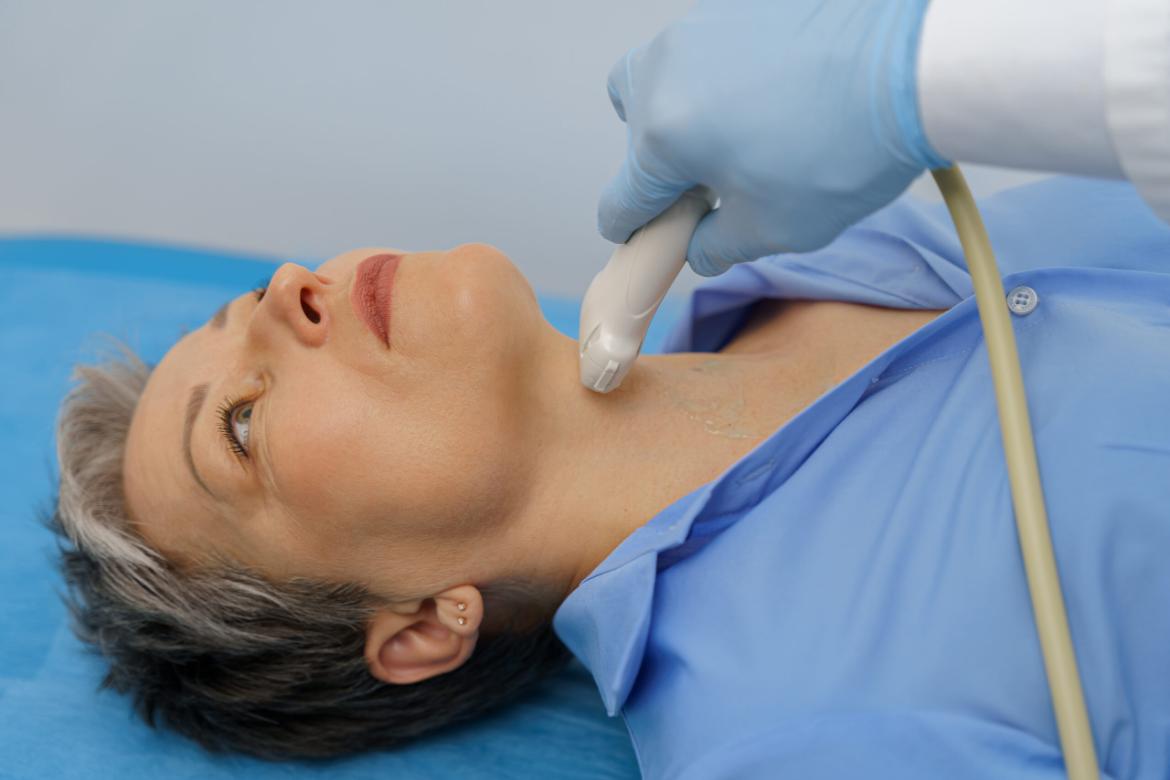
Thyroid Biopsy
A thyroid biopsy is a critical medical procedure used to determine whether nodules or suspicious lesions in the thyroid gland are benign or malignant. It is typically performed using fine-needle aspiration biopsy (FNAB) and is considered the gold standard for diagnosing thyroid diseases. This article will provide detailed information about the definition, causes, procedure, outcomes, and risks of a thyroid biopsy.
Thyroid Biopsy A thyroid biopsy is the process of removing a tissue or cell sample from the thyroid gland. This procedure is usually performed using a thin needle under ultrasound guidance. It is used to evaluate whether thyroid nodules are malignant (cancerous) or benign (benign).
Why is a Thyroid Biopsy Performed?
The main reasons for thyroid biopsy are:
- Evaluation of Thyroid Nodules:
- Thyroid nodules are a common condition and although most are benign, a small number can be malignant.
- Cancer Suspicion:
- Features such as micro-calcification, irregular margins, and hypervascularity in ultrasound findings may raise suspicion of malignancy.
- Nodules That Enlarge or Harden:
- Enlargement or hardening of nodules during follow-up may increase the risk of malignancy.
- Lymphadenopathy in the neck:
- Enlargement of the lymph nodes in the neck may be associated with thyroid cancer.
How is the Procedure Performed?
A thyroid biopsy is usually performed on an outpatient basis and involves the following steps:
- Preparation:
- No special preparation is required before the procedure. If you are taking blood-thinning medications, they can be discontinued beforehand, as per your doctor's instructions.
- Ultrasound Guidance:
- Ultrasound is used to visualize the thyroid gland in detail and the area to be biopsied is marked.
- Pinning:
- A thin needle (usually 22-25 gauge) is used to collect a sample from the nodule or suspicious area. The procedure usually takes a few minutes.
- Analysis:
- The samples taken are examined under a microscope by pathologists and reported using a system called the “Bethesda classification.”
Bethesda Classification and Interpretation of Results
Biopsy results are evaluated according to the Bethesda classification as follows:
- Category I: Insufficient material (new biopsy may be required).
- Category II: Benign (follow-up is usually sufficient).
- Category III: Atypical (unclear, may require additional evaluation).
- Category IV: Follicular neoplasia (surgery is usually recommended).
- Category V: Suspected malignancy (high risk of cancer).
- Category VI: Malignant (definite diagnosis of cancer).
Risks and Side Effects
A thyroid biopsy is generally a safe procedure, but in some cases, side effects can occur:
- Bleeding or Bruising: There may be slight bleeding or bruising in the area where the needle was inserted.
- Pain or Tenderness: There may be short-term pain after the procedure.
- Fine Needle Trauma: In very rare cases, it is possible for the needle to injure the wrong structure.
Advantages and Limitations
Advantages:
- It is fast and minimally invasive.
- It provides a high accuracy rate in cancer diagnosis.
- It does not require general anesthesia.
Limitations:
- In case of inadequate sampling, a repeat biopsy may be necessary.
- Some results may not be definitive (e.g., Bethesda Category III).
Conclusion
Thyroid biopsy is an important diagnostic tool for the evaluation of thyroid nodules and the early detection of thyroid cancer. The procedure is minimally invasive and generally safe and effective. Patients with suspicious thyroid nodules should consult an endocrinologist or general surgeon to develop an appropriate treatment plan based on the biopsy results.
If a thyroid biopsy is recommended, it is important to discuss the details of the process with your doctor and express any concerns you may have.
Ankara Private Magnet Hospital
