


Kidney MRI (Kidney MRI)
Kidney MRI ( magnetic resonance imaging ) is a non-invasive imaging technique used to provide a detailed examination of your kidneys. This test is highly effective for detecting structural changes in the kidneys, including cysts, tumors, stones, and other diseases. Because it does not use radiation, provides high-resolution imaging, and is painless except in emergencies, it is frequently preferred for diagnosing kidney diseases.
What is Kidney MRI?
A kidney MRI is a medical test that visually examines the internal structure of your kidneys using magnetic fields and radio waves. This test is used to detect kidney function , kidney disease , and serious health problems such as cancer . A kidney MRI is preferred when other imaging methods (such as ultrasound or CT scan) are inadequate.
How is a Kidney MRI Performed?
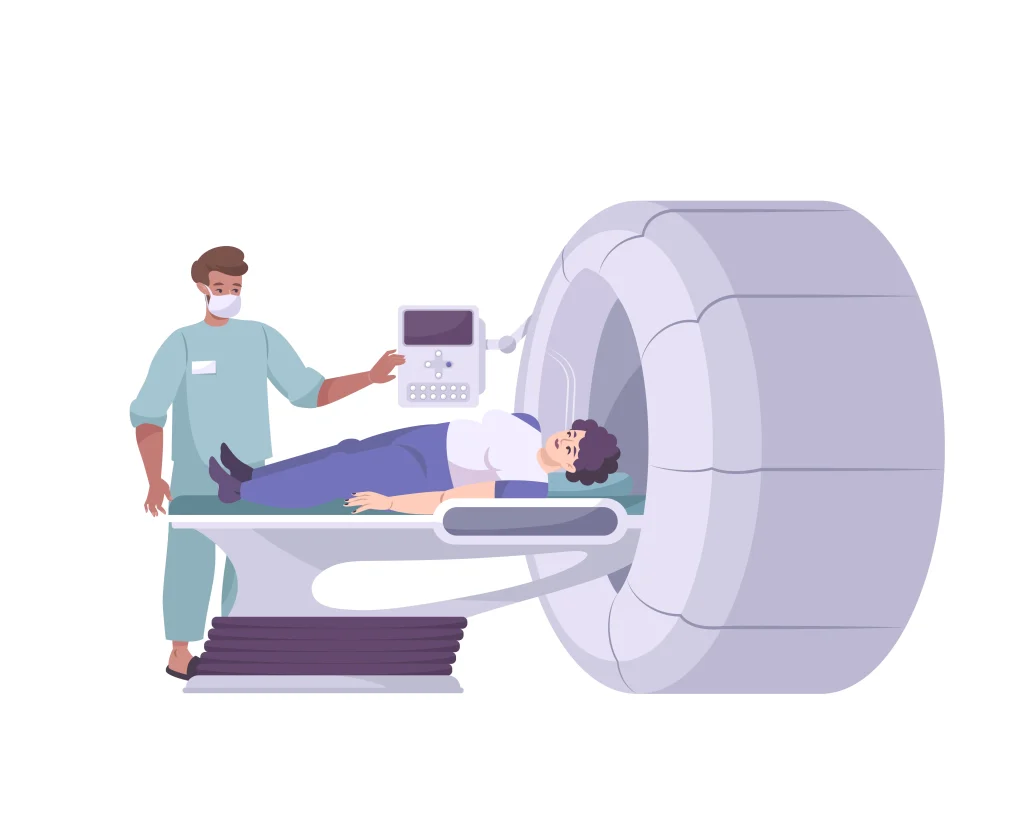
During a kidney MRI, the patient is placed on their back in the MRI machine. The patient must remain still during the procedure, as movement can interfere with the clarity of the images.
- Kidney MRI Preparation Process
No special preparation is required for a kidney MRI. In some cases, a contrast medium may be used. This is injected intravenously and provides a clearer view of the kidneys. If contrast medium is used, the patient should fast for 4-6 hours before the procedure .
- MRI Scan
An MRI machine uses a powerful magnetic field to scan the kidneys' internal structures in detail. This procedure takes approximately 20-30 minutes. The patient must remain still throughout the procedure.
- When will the results of Kidney MRI be available?
Kidney MRI results are available within 24-48 hours . The results are evaluated by a radiologist and communicated to your doctor. Your doctor will use this report to develop the necessary treatment and monitoring plan.
What is a Kidney MRI and Why is it Performed?
Renal MRI (Magnetic Resonance Imaging) is an effective imaging method used to examine the kidneys and surrounding structures. Because it does not use radiation and provides high-resolution images, it is the preferred test if there are concerns about kidney health. A renal MRI is used to detect and evaluate the following conditions.
- Detection of Kidney Stones
- Kidney stones are formed as a result of hard minerals and salts accumulating in the urinary tract. MRI is effective in identifying kidney stones, their size, and location. It also indicates the extent of damage the stones have caused to the urinary tract.
- Examination of Kidney Cysts
Fluid-filled cysts in the kidneys are harmless, but they can sometimes grow and affect kidney function. A kidney MRI shows the size, internal structure, and spread of the cysts.
- Detection of Kidney Tumors
Cancerous or benign tumors can occur in the kidneys. MRI is used to detect tumors in the kidneys. It also helps assess the tumor's size, location, and impact on surrounding tissues.
- Abnormalities in the Kidney Veins
Kidney vessels may be blocked, dilated, or have other abnormalities. MRI is used to detect these vascular conditions and determine whether the vessels are functioning properly.
- Kidney Inflammation and Infections
Infection or inflammation in the kidneys can affect kidney function. An MRI can show the effects of infections and determine the extent of kidney damage.
- Evaluation of Renal Function Disorders
While renal MRI cannot directly demonstrate kidney function, it can provide information about kidney function through structural changes and abnormalities. Such examinations are useful for assessing kidney function.
- Kidney Bleeding or Injuries
Internal bleeding in the kidneys can occur as a result of trauma or accidents. MRI helps determine the location and severity of bleeding.
- Monitoring of Genetic Diseases
Genetic diseases such as polycystic kidney disease can lead to the formation of multiple cysts in the kidneys . Kidney MRI plays an important role in monitoring and tracking such diseases.
- Post-Transplant Monitoring
For patients who have received a kidney transplant, the condition of the transplanted kidney can be monitored with an MRI. The health of the transplanted kidney can be assessed using an MRI to check for any complications.
- Examination of Other Structural Changes in the Kidneys
- MRI can examine structural changes in the kidneys beyond cysts, tumors, or infections. It is very useful in the early diagnosis of certain diseases that impair kidney function.
Advantages of Kidney MRI
- Radiation-Free: A kidney MRI doesn't involve radiation, making it safer. Tests like computed tomography (CT) use radiation, while an MRI works entirely with magnetic fields and radio waves.
- High-Resolution Images: A kidney MRI provides extremely clear and detailed images of the kidneys and surrounding structures. This is a major advantage in detecting early-stage disease.
- Non-invasive: An MRI is non-surgical and painless, allowing patients to be comfortable during the test.
- Early Diagnosis: Kidney MRI plays a crucial role in the early diagnosis of serious diseases such as kidney cancer. Early diagnosis simplifies the treatment process and increases the success rate.
What is Medicated (Contrast-Enhanced) Kidney MRI (EMAR)?
- A contrast material containing gadolinium is given intravenously before or during the imaging .
- This substance allows the vessels and soft tissues to be seen more clearly.
- It provides more precise results for details such as tumors , vascular diseases, inflamed structures, and kidney blood flow. It is often preferred in the following situations.
- Suspicion of tumor
- Renal vascular abnormalities
- Evaluation of renal blood flow
- Transplant kidney follow-up
Is Contrast Media Safe?
- Gadolinium-based contrast agents are safe.
- It should be used with caution in patients with poor renal function.
- Patients with kidney failure may rarely be at risk of a serious complication called nephrogenic systemic fibrosis.
- Therefore, kidney function tests such as creatinine may be requested before MRI.
What are the results of a kidney MRI?
Kidney MRI results are reviewed and interpreted by a qualified radiologist. The results may show:
- Kidney cysts: Harmless cysts or more complex cyst structures.
- Kidney tumors: The presence of malignant (cancerous) or benign tumors.
- Kidney stones: It can determine the size and location of stones in the kidneys.
- Inflammation and infection: Indicates the spread of infections or inflammation in the kidneys.
- Kidney functions: Checks whether the kidneys are functioning properly and checks for any blockage or deterioration in their vessels.
Frequently Asked Questions
When is Kidney MRI (EMAR) requested?
It is ordered when there is a suspicion of a kidney tumor, cyst, stone, vascular disorder, infection, or cancer. It can also be used in post-kidney transplant checkups.
How long does a kidney MRI (EMAR) scan take?
The procedure takes between 20 and 45 minutes. If contrast material is used, it may take a little longer.
Is Kidney MRI (EMAR) performed on an empty stomach?
If contrast material is used, it is recommended that the test be performed on an empty stomach. For more information, please contact the center where you made your appointment.
What is the difference between medicated MRI and drug-free MRI?
Drug-assisted MRI provides more detailed images thanks to the intravenous administration of contrast material. It is preferred for examining tumors and vascular structures. Drug-free MRI is used for basic imaging.
Is contrast material harmful?
It is a safe medication, but should be used with caution in people with kidney failure. Kidney function tests may be performed before the procedure.
Is there any pain during an MRI?
No, the procedure is completely painless, although some people may feel uncomfortable as you have to remain still.
Can people with claustrophobia have an MRI?
Yes, this must be reported in advance. If necessary, a sedative may be administered or open MRI devices may be preferred.
Can Kidney MRI (EMAR) be performed on children?
Yes, it can be used in children. Light sedation may be administered if necessary.
Can I wear metal jewelry during an MRI?
No. Since the MRI device works with a magnetic field, you must remove all metal jewelry, belts, watches, glasses, etc.
Kidney MRI Prices 2025
Kidney MRI prices may vary depending on the technology used, the use of contrast material, the scope of the examination, your location, and the MRI center's pricing policies. For information about Magnet Hospital Kidney MRI prices, please call the call center at 0 312 212 80 80.
Private Hospital Kidney MRI (EMAR)
The extraction can be done quickly and comfortably on the same day and the treatment process can be started.
Nearest MRI center
There are several ways to get information about MRI services . You can research online, visit the websites of nearby hospitals, or contact them by phone. Located in Tandoğan, Ankara's most central district, Magnet Hospital is easily accessible.
Kidney MRI (EMAR) on the same day
For more information, please call Magnet Hospital's call center at 0 312 212 80 80.
