


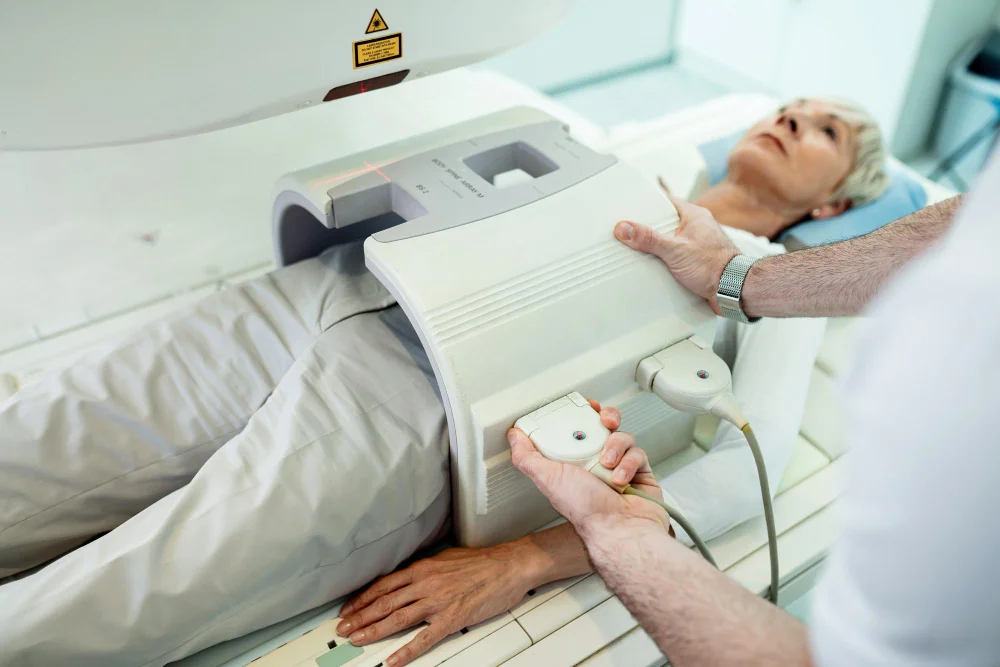
Abdominal MRI (Abdominal MRI)
What is Abdominal MRI (EMAR)?
Abdominal MRI is an advanced magnetic resonance imaging (MRI) technique that provides detailed imaging of the internal organs of the abdomen . Its radiation-free nature and high-resolution imaging provide significant convenience for both patients and physicians. Abdominal MRI is an extremely valuable method for early diagnosis of diseases of the abdominal organs.
What is an Abdominal MRI Scan?
An abdominal MRI (electromagnetic resonance imaging) scan is a non-invasive imaging technique used to provide detailed examination of the organs in the abdominal area. This test is widely used to detect structural changes, diseases, and abnormalities within the organs.
Why is an Abdominal MRI Performed?
Abdominal MRI is used to diagnose many internal diseases. It is preferred when more detailed examination is needed after ultrasound or CT scan.
- Abdominal pain and complaints of unknown cause
- Suspicion of a mass, cyst, or tumor in the liver
- Suspicion of obstruction or stones in the bile ducts
- Pancreatic tumor or inflammation
- Renal masses and cystic structures
- Evaluation of vascular structures (e.g. aneurysm)
- Intestinal diseases (such as Crohn's, ulcerative colitis)
How is an Abdominal MRI Performed?
The patient may be asked to fast for 4-6 hours before an abdominal MRI (EMAR) . During the procedure, the patient lies motionless in the MRI machine and images are taken. Contrast media may be used for more detailed evaluation if necessary.
How many minutes does it take to perform an abdominal MRI?
The process takes approximately 20-30 minutes to complete.
Which organs are displayed in an abdominal MRI?
With abdominal MRI, the following organs can be examined in detail.
- Liver
- Kidneys
- Pancreas
- Gallbladder and bile ducts
- Spleen
- Intestines
- Large vascular structures (aorta, etc.)
What are the Benefits of Abdominal MRI and What Diseases Can It Diagnose?
Abdominal MRI can detect a wide range of conditions, from organ diseases and tumors to vascular disorders and inflammatory conditions. It is the preferred diagnostic method for cases that cannot be clarified with ultrasound or CT scans. Abdominal MRI can diagnose the following conditions.
Liver Diseases
- Liver cysts
- Hemangioma (benign tumors)
- Liver cancer (Hepatocellular carcinoma)
- Liver metastases (cancers that have spread from another organ)
- Cirrhosis and liver fibrosis
- Fatty liver (hepatosteatosis)
Pancreatic Diseases
- Inflammation of the pancreas (pancreatitis)
- Pancreatic tumors
- Pancreatic cysts
- Pancreatic cancer
Kidney Diseases
- Kidney stones
- Kidney cysts
- Kidney tumors
- Kidney cancer
- Kidney infections (pyelonephritis)
Gallbladder and Bile Ducts
- Gallbladder stones (cholelithiasis)
- Bile duct obstruction
- Inflammation of the gallbladder (cholecystitis)
- Bile duct tumors
Spleen Diseases
- Spleen enlargement
- Splenic mass or cyst
- Spleen injuries
Intestines and Digestive System
- Crohn's disease
- Ulcerative colitis
- Intestinal obstructions
- Intra-abdominal abscesses
- Mass or tumor formations
- Appendicitis (in atypical cases)
Abdominal Veins and Circulatory System
- Abdominal aortic aneurysm (vessel ballooning)
- Portal vein thrombosis
- Vascular occlusions
- Varicose vein formation (intra-abdominal vein dilation)
Lymph Node and Mass Examinations
- Intra-abdominal lymph node enlargement
- Lymphoma
- Benign or malignant masses
Other Situations
- Intra-abdominal fluid accumulation (ascites)
- Congenital structural disorders of organs
- Abdominal wall hernias
- Internal organ damage due to trauma
Frequently Asked Questions
Is Abdominal MRI Dangerous?
No. MRI technology does not involve radiation, so an abdominal MRI is also safe. People with devices such as pacemakers, deep brain pacemakers, or metal prosthetics should inform their doctor beforehand.
How many minutes does an Abdominal MRI take?
It takes approximately 20-30 minutes. If contrast material is used, the procedure may take a little longer.
Is an abdominal MRI performed on an empty stomach?
Yes, an average of 4-6 hours of fasting is required.
Which is better, MRI or CT scan?
MRI does not contain radiation and provides a more detailed view of soft tissues. The choice may vary depending on the disease and diagnostic needs.
Is an Abdominal MRI Painful?
No, an abdominal MRI is completely painless . The loud sounds of the device and the prolonged immobility can be bothersome for some patients. Other than that, it doesn't cause any pain or discomfort.
Is Contrast Media Used in Abdominal MRI?
Yes, contrast material is used in some cases . Contrast material is administered intravenously and highlights organs, resulting in more detailed images. Contrast material is not necessary for every patient and is recommended only under the guidance of a doctor.
Is Preparation Necessary Before an Abdominal MRI?
A 4-6 hour fast is often recommended and allows for clearer visualization of organs such as the liver, gallbladder, and pancreas. If contrast material is used, urinary tract preparation or additional precautions may be required. It's important to consult your doctor regarding preparation requirements.
Does an MRI Scan Contain Radiation?
No, an abdominal MRI does not involve radiation . Unlike X-rays or other radiation-based procedures, MRI uses only a magnetic field and radio waves to image the inside of the body, making it a safe imaging method.
Is There an Age Limit for MRI Scans?
In general, there is no age limit for an abdominal MRI. MRIs are not recommended during the first trimester of pregnancy. If pregnant, a doctor should be consulted before undergoing an MRI.
When Will Results Be Available After an MRI?
Abdominal MRI results are available within 1-2 days . Some hospitals or clinics may provide results within 24 hours for urgent cases . The results will be evaluated and reported by a specialist physician.
How Are Abdominal MRI Results Interpreted?
Abdominal MRI results are evaluated by a specialist radiologist. The radiologist identifies abnormalities in the organs, such as cysts, tumors, or inflammation. This report is then forwarded to your doctor, who can then take action to address the issue.
Is Abdominal MRI Safe?
Yes, abdominal MRI is extremely safe . Because it doesn't involve radiation and is a non-invasive procedure, there are no harmful effects. Patients with pacemakers, deep brain pacemakers, or metal implants may need to inform their doctors beforehand.
Can Abdominal MRI Results Be Misleading?
Abdominal MRIs are highly accurate, but in some cases, imaging errors or technical issues can occur. Therefore, MRI results should be evaluated by a physician and, if necessary, supported by other tests.
What Should I Do After Abdominal MRI?
After an MRI scan, if contrast material has been used, patients are observed for several hours. Most people can immediately resume their normal activities. If you experience any complications, it's important to contact your doctor.
Abdominal MRI Prices 2025
Abdominal MRI prices may vary depending on the hospital's pricing practices, the scope of the examination, the materials used, and the contrast medium. For information about Magnet Hospital Abdominal MRI prices, please call the call center at 0 312 212 80 80.
There are several ways to find information about the nearest MRI center . You can search online, visit the websites of nearby hospitals, or contact them by phone to find MRI services . Located in Tandoğan, Ankara's most central district, Magnet Hospital is easily accessible.
Abdominal MRI in a Private Hospital
An abdominal MRI is a radiation-free imaging method that provides detailed examination of the organs within the abdomen. Private hospital MRIs are preferred for fast, effective, and accurate results.
For same-day MRI , please call Magnet Hospital's call center at 0 312 212 80 80.
