


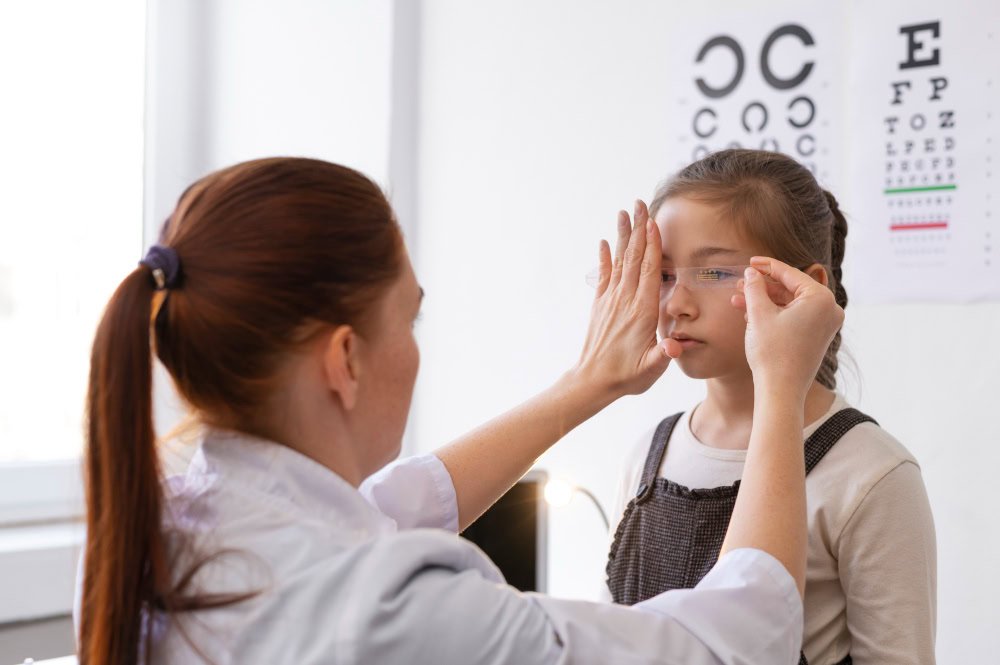
Eye Diseases in Children
Children's eye health is critical for both their educational success and their social lives. Childhood eye diseases, if not diagnosed early, can lead to permanent vision impairment. Therefore, it is crucial for parents to regularly monitor their children's eye health and, if in doubt, consult an ophthalmologist immediately.
In this article, common eye diseases in children, their causes, symptoms and treatment methods will be discussed in detail.
Eye Examination in Children According to Age
Regular eye checks in children are critical for both academic success and visual health.
The question “ How often should children have eye exams? ” is frequently asked by parents, and experts generally recommend regular exams every year .
The Most Common Eye Diseases in Children
1. Strabismus in Children
Strabismus is one of the most common eye conditions in children. It occurs when one or both eyes are misaligned due to the unbalanced functioning of the eye muscles. Strabismus can be congenital or acquired. It's essential to see an ophthalmologist for an eye examination and follow-up.
Strabismus in children is often easily noticed by parents and should not be ignored. Strabismus in babies can be detected in the first few months of life, and early treatment has a higher chance of success.
Symptoms of Strabismus in Children
a) Eyes not being parallel
b) Double vision
c) Headache and eye fatigue
d) The child trying to see by tilting his head
Treatment of Strabismus in Children
a) Use of glasses
b) Eye exercises
c) Eye patch (a method of covering the healthy eye)
d) Surgical intervention (strabismus surgery in advanced cases) is recommended
Strabismus that is not treated early can cause permanent vision loss and lazy eye (amblyopia) in children.
2. Lazy Eye in Children (Amblyopia)
It occurs in children as a result of inadequate visual development. It is often accompanied by strabismus or refractive errors. As the connections between the eye and brain weaken, the eye-brain interaction becomes impaired, resulting in amblyopia.
The question, " Up to what age can amblyopia in children be treated? " is an important one for families. While early treatment is generally more successful, treatment becomes more difficult as we age.
Symptoms of Lazy Eye (Amblyopia) in Children
a) Seeing more clearly with one eye
b) Crossing of the eyes
c) Decreased visual acuity
d) Squinting while reading or watching television
Treatment of Lazy Eye in Children
a) Use of glasses
b) Covering the healthy eye and forcing the lazy eye to work (eye patch treatment)
c) Vision therapies
d) Surgical intervention in some cases
If lazy eye is not treated early, it becomes very difficult to correct in later ages.
3. Eye Infections in Children (Conjunctivitis)
Conjunctivitis is one of the most common eye infections in children. It occurs when the membrane covering the white part of the eye and the eyelid becomes inflamed. Treatment for eye infections in children depends on the cause of the infection.
Conjunctivitis (Eye Infection) Symptoms
a) Redness and swelling in the eye
b) Watering and itching
c) Yellow or white sticky discharge
d) Sensitivity to light
Conjunctivitis (Eye Infection) Treatment
a) Bacterial conjunctivitis → Antibiotic eye drops
b) Viral conjunctivitis → Supportive treatment and hygiene measures
c) Allergic conjunctivitis → Antihistamine drops
" Is conjunctivitis contagious in children? " is a frequently asked question among parents. Conjunctivitis is contagious. Therefore, children should definitely pay attention to hand hygiene.
4. Drooping Eyelids (Ptosis) in Children
Ptosis is the drooping of one or both eyelids. It can be congenital or caused by nervous system disorders. In severe cases, eyelid surgery is performed in children to widen the field of vision and prevent amblyopia.
Symptoms of Drooping Eyelids in Children
a) Drooping eyelids
b) Restriction in the field of vision
c) The child looks with his head tilted back
Treatment of Drooping Eyelids in Children
a) Follow-up in mild cases
b) Eyelid surgery is required in cases that seriously affect the visual field
If left untreated, it can lead to vision loss and lazy eye in children.
5. Eye Injuries and Traumas in Children
Children frequently injure their eyes while playing or through accidents. In emergencies, treatment for eye injuries in children should not be delayed, as it can lead to permanent vision loss.
Symptoms of Eye Injuries in Children
a) Pain and watering in the eye
b) Redness or bleeding
c) Change in the external appearance of the eye
d) Blurred vision
Treatment of Eye Injuries in Children
a) Antibiotic drops for minor injuries
b) Emergency surgery for serious trauma
Eye injuries should not be ignored and an ophthalmologist should be consulted immediately.
6. Refractive Errors in Children
One of the most common eye problems in children is refractive errors.
a) Myopia (nearsightedness): Blurred distance vision is most common in school-aged children. Glasses are usually recommended to correct vision. Treatment for myopia in children begins with regular eye exams.
b) Hyperopia (nearsightedness): While some regression may occur in children during the first three years of life, the degree remains constant in later years, requiring glasses. Treatment for hyperopia in children, when initiated at an early age, has a positive impact on the learning process.
c) Astigmatism (blurred vision): Glasses are recommended. Symptoms of astigmatism in children include blurred vision and headaches.
Refractive errors in children are easily detected through regular eye examinations.
Symptoms of Refractive Errors in Children
a) Difficulty in seeing the board
b) Watching TV or tablet closely
c) Constantly squinting
d) Headaches and eye fatigue
Treatment of Refractive Errors in Children
a) Glasses
b) Contact lenses
c) Laser surgery in older ages
7. Tear Duct Obstruction
In children, treatment for blocked tear ducts involves massaging the tear ducts in the direction and direction indicated by the ophthalmologist to try to clear the blockage. If this doesn't work, surgery is recommended.
8. Dark Circles Under the Eyes in Children
Causes of dark circles under the eyes in children include allergic diseases and vitamin deficiencies .
The increased visibility of capillaries under the eyes can manifest as dark circles on the lower eyelids. Allergies are the most common cause. Allergic rhinitis, allergic conjunctivitis, and allergic sinusitis are the most common causes. In children, the most common cause of dark circles under the eyes is usually allergic conjunctivitis.
Dark circles under the eyes in children can also be seen in cases of vitamin B–C–D–K–E deficiencies.
Causes of dark circles under the eyes in children include allergic diseases and vitamin deficiencies.
9. Double Vision in Children
Double vision, the seeing of an image not once but twice, is a serious condition. Over time, the brain tunes itself out from the second image, and amblyopia begins to develop.
“ What causes double vision in children? ”
It is mostly caused by eye muscle incompatibility and neurological problems.
Pediatric Eye Health Diagnostic Methods
Eye exams in children are a crucial screening procedure that should be performed at regular intervals, starting from birth. They impact children's perception, learning, and academic success. Therefore, eye exams should be performed from birth onward.
Eye examinations in babies should be performed in the first months of life, and potential congenital eye problems should be identified early. Early diagnosis and treatment are possible through comprehensive eye examinations performed by an ophthalmologist.
Visual Object Test
Eye movements and object tracking are controlled by moving an object that will attract the newborn baby's attention at eye level, up, down, and right.
Red Reflex Test
In cases of doubt, a test is performed on newborn babies by putting drops in their eyes to dilate their pupils and holding a lamp to wait for a red reflection. A white reflection indicates a problem with the eye.
Pupil Reflex Test
A light is shined on the pupils of both eyes of the baby, and their response to the light is measured. The pupils that respond to the light constrict. If there is no response and they do not constrict, this could be a serious problem.
Eye Examination in Children According to Age
First Eye Examination
The first eye examination performed on newborn babies screens for corneal and retinal problems and cataracts.
First Age Examination
Age-appropriate eye movements are examined, including eye contact, eye tracking, strabismus, pupillary equilibrium, and pupillary reflexes. In cases of problems, treatment begins immediately.
Eye Examination for 3 Year Olds
This is the period when the nerves and nervous system accelerate their development. Therefore, visual acuity also begins to develop in children in this age group. Visual acuity, color blindness, and eye numbers are assessed during this period.
Eye Examination for 6 Year Olds
Before the child starts school, an eye examination should be conducted to detect any eye diseases and start treatment and follow-up.
10 Year Old Eye Examination
It's the beginning of puberty. Eye conditions such as myopia and astigmatism are common.
Symptoms of Eye Diseases in Children
A pediatric eye examination should be considered if one of the following conditions exists:
-
If your child tries to squint while reading a book,
-
If you have frequent headaches,
-
If you notice your eyes squinting or watering,
-
If there is a family history of eye disease,
Early diagnosis improves both children's academic success and their quality of life.
Recommendations for Protecting Eye Health in Children
-
Have your child have regular eye exams.
-
Limit screen time (TV, tablet, phone). Screen time in children directly affects eye health.
-
Make sure to eat a balanced diet (vitamins A, C, and E, Omega-3, lutein, and zinc, etc.). These vitamins are important for preventing eye diseases in children.
-
Read books and notebooks under adequate lighting.
-
Pay attention to eye hygiene.
Frequently Asked Questions (FAQ)
All questions below are listed in alphabetical order, keeping the content intact.
a. Does strabismus go away on its own in children?
No. In most cases, it requires treatment. If not diagnosed early, permanent amblyopia can develop.
b. How often should children have eye examinations?
The first examination should be done between 6 months and 1 year of age, then once a year in preschool and school age.
c. Does wearing glasses make eyes lazy?
No. On the contrary, wearing glasses helps the eyes develop properly.
d. What are the symptoms of eye infection in children?
Symptoms of eye infection in children:
-
Redness, burning, stinging, itching in the eyes
-
Swelling of the eyelids
-
Light sensitivity
-
Clear or yellow-greenish discharge from the eyes
These complaints are symptoms of eye infection.
d. Is conjunctivitis contagious?
Yes, especially bacterial and viral conjunctivitis are very easily transmitted.
e. What happens if eyelid drooping is not treated?
The child's field of vision may be restricted and amblyopia may develop.
f. Does strabismus go away on its own in children? (Repeat Question)
No, in most cases, strabismus does not correct itself. If not detected and treated early, it can lead to permanent amblyopia. Therefore, regular eye exams are essential.
g. How to understand myopia in children?
Myopia in children usually:
-
Inability to see the board
-
Don't watch the television closely
-
Frequent squinting
It is noticed. A definitive diagnosis is made with regular eye examinations.
g. What are the symptoms of hyperopia in children?
Symptoms of hyperopia include nearsightedness, watery eyes, easy fatigue, and headaches. It can affect learning, especially in school-aged children.
h. How is astigmatism treated in children?
Astigmatism is usually corrected with glasses. Contact lenses or laser treatment may also be used in older adults. Early diagnosis positively impacts the learning process.
i. When should eye examinations be performed in babies?
The first eye exam should be performed between 6 months and 1 year of age. Afterward, checkups are recommended at 3 years of age, before school, and at regular intervals.
i. What diseases do dark circles under the eyes indicate in children?
The most common dark circles under the eyes in children are:
-
Allergic rhinitis
-
Allergic conjunctivitis
-
Sinusitis
It is seen in such cases. Vitamin deficiencies can also cause bruises.
j. Does drooping eyelids hinder vision in children?
Yes, in severe cases, it can narrow the field of vision and cause amblyopia. In such cases, surgery may be necessary.
k. Until what age can lazy eye be treated in children?
Amblyopia can usually be treated by age 7 or 8. After this age, the chances of cure decrease, so early diagnosis is crucial.
Where Can I Find a Children's Eye Hospital in Ankara?
Eye exams are performed in the ophthalmology departments of many public and private hospitals. If you prefer a private hospital eye exam, children's eye exams are performed by ophthalmologists at Magnet Hospital's Eye Clinic . To schedule a pediatric eye exam, visit:
Magnet Hospital for appointment: 0312 212 8080
Online Appointment: magnethastanesi.com.tr
