


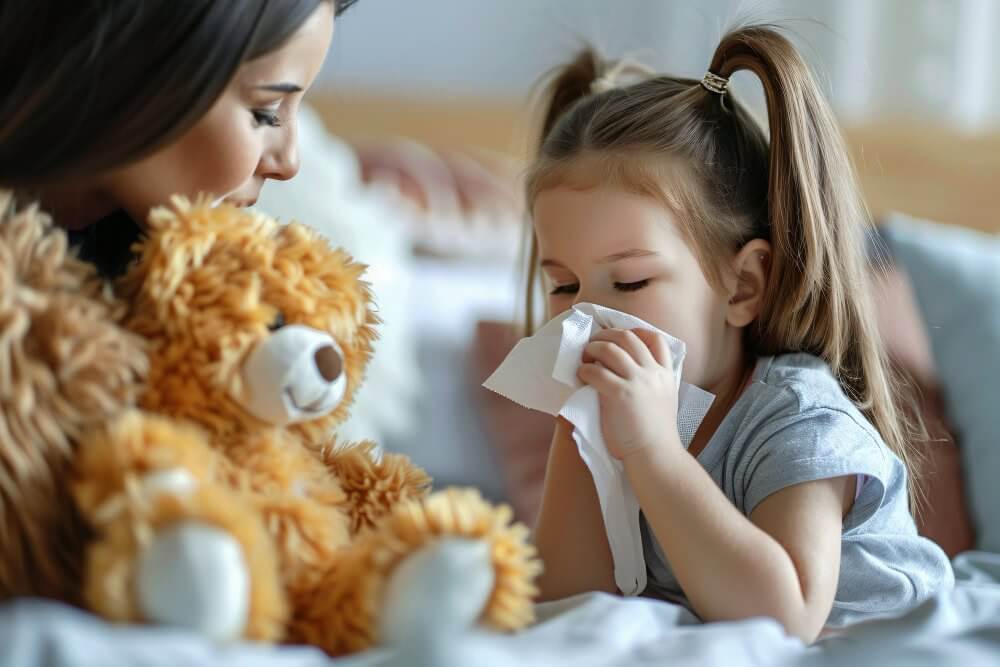
Allergies in Children
Allergies in children occur when the body's immune system overreacts to harmless substances. These substances are called allergens , and allergic reactions can affect a child's quality of life.
Allergies are often linked to an innate predisposition , and genetic factors, combined with environmental factors, can cause allergies in children. Allergies, such as allergic asthma in children , can present with very different symptoms in various forms.
1. Causes of Allergies in Children
Allergies in children occur when the body's immune system overreacts to harmless substances. These substances are called allergens and can seriously affect a child's quality of life.
Allergies are generally linked to genetic predisposition and may develop in combination with environmental factors.
Main reasons:
-
Genetic predisposition
-
Environmental factors
-
Food allergies
-
Immune system disorders
-
Drug allergies
-
Insect stings and latex
-
Latex allergies
Genetic Predisposition
Allergies are often linked to a family history of similar conditions. If one or both parents have allergies, a child may be more likely to develop them.
Environmental Factors
Environmental factors can trigger allergies. For example, factors such as pollen, dust mites, pet dander, fungi, cigarette smoke, and pollution can cause allergic reactions in children.
Food Allergies
Food allergies are a common problem in children, especially those aged 1–2 years .
Milk, eggs, nuts, fish, and seafood are the most common foods that can cause allergies. Food allergies can cause serious reactions such as nausea, vomiting, abdominal pain, rashes, and anaphylaxis .
Immune System Disorders
Allergic diseases are caused by the immune system mistakenly overreacting to harmless substances. These disorders can lead to allergic reactions in children.
Drug Allergies
Allergies can develop, particularly from antibiotics like penicillin . These allergies can even cause anaphylactic reactions and severely affect the respiratory system. Therefore, drug allergy prevention is crucial in children.
Insect Sting Allergies
With the sting of insects such as bees:
-
Skin lesions
-
Symptoms such as skin swelling and redness
-
Even in severe allergic reactions, anaphylaxis may occur.
Latex Allergies
It is an allergy to materials containing latex , such as gloves and balloons . It manifests itself through lesions on the skin.
2. Symptoms of Allergies in Children
Allergies can manifest with a variety of symptoms in children. These symptoms may vary depending on the type of allergy.
Below you'll find common allergy symptoms in children. Symptoms can vary depending on the type of allergy.
-
Skin reactions
-
Respiratory problems
-
Digestive problems
-
Severe allergic reactions (anaphylaxis)
-
Eye inflammations
Skin Reactions
Allergic reactions such as itching, rash, redness, or hives (urticaria) are common. Food allergies or insect bites, in particular, can cause these types of skin reactions.
Doctor visits due to skin allergies are quite common in children.
Respiratory Problems
Symptoms such as allergic rhinitis (hay fever), nasal congestion, runny nose, sneezing and itchy throat are common symptoms of allergic reactions in children.
It can also cause allergic asthma , cough, wheezing and shortness of breath in children.
Digestive Problems
Food allergies can cause digestive problems such as abdominal pain, vomiting, diarrhea, or constipation. They may need to be linked to a specific food the child ate.
Severe Allergic Reactions (Anaphylaxis)
Allergic reactions can sometimes develop into a serious condition called anaphylaxis .
This condition can make it difficult for the child to breathe and requires immediate medical attention.
Symptoms of anaphylaxis:
-
Swelling (especially in the lips, tongue, or throat)
-
Shortness of breath
-
Hypotension
-
Fainting
Eye Inflammation
Allergic conjunctivitis may present with symptoms such as watering, itching, redness and burning in the eyes.
Allergic conjunctivitis in children is often associated with exposure to allergens such as pollen or dust.
3. Allergy Diagnosis and Tests in Children
Allergy tests measure the immune system's response to an allergen.
Allergy testing in children can be performed in both public and private hospitals in Ankara and other cities.
Things to consider before the allergy test:
Antihistamine or cortisone use should be discontinued 7 days before the test.
Allergy Tests
-
Blood test (IgE measurement)
-
Skin prick test
-
Patch test
-
Intradermal skin test
IgE Measurement in Blood
Allergens are added to the child's blood sample, and IgE levels are measured. Positive test results indicate the substances to which the child is allergic.
Skin Prick Test
Light punctures are made on the forearm with a needle, allergens are applied to the skin, and reactions are observed.
Reactions such as redness and itching indicate that the body is reacting to that substance and is allergic.
Intradermal Skin Test
If the skin prick test is negative, this test is performed. A small amount of the allergen is injected into the epidermis using a syringe, and the skin's reaction is evaluated.
Patch Test
This test detects food allergies, substance allergies in contact dermatitis, and substances that cause allergies through skin contact.
Allergens are applied to the skin on the arm, covered with a bandage, and left for 48 hours . After 48 hours, the bandage is removed and skin reactions are observed.
Things to Consider Before an Allergy Test (Summary)
Allergy tests are performed to measure the immune system's response to an allergen. Based on this response, the allergen is identified.
However, medications used for allergies , such as antihistamines or cortisone, suppress this response.
For a healthy result, the use of these drugs should be stopped 7 days before the test .
4. Allergy Treatment and Management in Children
Treatment for allergies in children varies depending on the type and severity of the allergy. Treatment generally focuses on preventing allergic reactions , but in some cases, medication may be necessary.
Allergy treatment and management in children:
-
Avoiding allergens
-
Antihistamines
-
Corticosteroids
-
Allergy shots (immunotherapy)
-
Emergency intervention (anaphylaxis)
✅ Avoiding Allergens
The most effective way to prevent allergic reactions is to avoid allergens .
It is important to determine what causes children's allergies in order to reduce their exposure to allergens.
For example, cleaning the home or using appropriate air filters can limit exposure to allergens such as pollen or dust mites.
✅ Antihistamines
Antihistamines , which are allergy medications for children , are medications commonly used to relieve allergic reactions.
These medications reduce allergic symptoms by blocking the body's production of histamine. They may be recommended for allergic rhinitis, skin rashes, or itchy eyes.
✅ Corticosteroids
In severe allergic reactions or severe conditions like asthma , doctors may recommend corticosteroid therapy. These medications help reduce inflammation and relax the airways.
✅ Allergy Vaccines (Immunotherapy)
Allergy vaccinations may be recommended for children, especially those who are sensitive to allergens such as pollen or house dust .
This treatment aims to train the immune system to resist allergens and can reduce allergic reactions in the long run.
✅ Emergency Response (Anaphylaxis)
In severe allergic reactions such as anaphylaxis, an immediate injection of epinephrine (adrenaline) may be required.
Depending on the child's condition, immediate admission to the hospital is essential.
5. Tips and Precautions for Allergies in Children
Allergies can affect children's quality of life, but with proper management, children can grow up healthy.
Suggestions:
-
Protect yourself from environmental factors:
Avoid cigarette smoke, air pollution, and dust as much as possible. Regular cleaning and using air purifiers at home can reduce allergic reactions. -
Check food labels:
If your child has food allergies, it's important to read food labels carefully. One of the most important ways to prevent food allergies in children is to check the ingredients of the products they buy. -
Keep an allergy diary:
Keeping a diary can be helpful to understand which situations trigger allergic reactions. For food allergy prevention methods in children, you can seek help from an Ankara pediatric allergy center or allergy centers. This can help keep allergies under control. -
Consult an allergist: It is very important to consult an allergist
to create the right treatment plan for allergies .
6. How Do Allergies Affect Growth and Development in Children?
Food allergies, in particular, can affect the absorption of nutrients by causing inflammation in the digestive system .
Since nutrients cannot be absorbed adequately, it can cause growth and developmental delays in children .
What Causes Allergies in Children?
-
In children, allergies have a negative impact on growth and development . In children, allergies can cause growth retardation.
-
Diseases like allergic rhinitis , which particularly affect the respiratory system, significantly impact a child's quality of life. Sleep is poor at night, and because the brain doesn't receive enough oxygen, its functions are affected.
Concentration is impaired, and academic performance declines. This, in turn, leads to a lack of self-confidence in the child . This decreased cognitive function can lead to increased irritability and tension, potentially leading to depression. -
Infections caused by allergies increase; allergies pave the way for diseases such as sinusitis, allergic rhinitis, and otitis .
Allergies in children are a condition in which the body's immune system overreacts, resulting from genetic and environmental factors. Allergies can lead to various health problems, but they can be managed with appropriate treatment and allergen avoidance.
Parents should monitor their children's allergic reactions, apply the correct treatment methods and seek professional help when necessary.
7. Frequently Asked Questions (FAQ)
Sub-questions are listed by letter to avoid confusion , and the content is preserved as is.
a. How long do allergy tests take in children?
The duration of allergy tests varies depending on the type of test.
-
A skin prick test or blood test (IgE measurement) can usually be completed within 15–30 minutes and provides rapid results.
-
More comprehensive intradermal or patch tests can take 24–48 hours because accurate results are obtained by observing the body's reactions to the allergen.
It is important that the test is performed under the supervision of a specialist to ensure that the child is comfortable and does not feel any discomfort during the test period.
b. Are allergy medications safe for children?
Allergy medications, especially antihistamines and corticosteroids , are safe for children when used under the supervision of a doctor.
The dosage of medication is determined by the child's age, weight, and severity of the allergy. Incorrect dosage or uncontrolled use can lead to unwanted side effects. Therefore, medication should always be used according to the recommendations of a pediatric allergist or pediatrician.
c. How to prevent food allergies in children?
The most effective way to prevent food allergies is to keep your child away from risky foods.
Additionally, it's helpful to carefully monitor the ingredients of the foods your child eats and keep an allergy diary . These diaries help both parents and doctors plan their child's diet safely by identifying which foods trigger allergic reactions.
d. How is allergic rhinitis managed in children?
Allergic rhinitis (hay fever) manifests itself with symptoms such as runny nose, sneezing, itching and watery eyes.
Under the management of:
-
Antihistamines
-
Nasal sprays
-
Corticosteroids
-
In some cases, allergy shots (immunotherapy)
is used.
Additionally, environmental measures such as dust and pollen control, air filters, and humidity balance at home also reduce symptoms.
Treatment for allergic rhinitis in children can be done by a pediatrician at any hospital you go to in Ankara.
d. Is allergy permanent in children?
Some allergies may improve or disappear completely as a child grows; milk and egg allergies are particularly common and usually disappear in childhood.
But some allergies—for example, allergies to nuts, seafood, or pollen— can last a lifetime.
The persistence of the allergy is related to genetic factors and the amount of allergen exposure.
e. Where can allergy testing for children be done in Ankara?
Allergy tests in children can be performed in public hospitals, university hospitals and private hospitals.
Ankara Magnet Hospital offers allergy testing and tests specifically for children, boasting a modern laboratory infrastructure and experienced medical staff. Both blood and skin tests can be safely performed here.
f. Can food allergies in children be treated?
Food allergies can be managed with allergen avoidance and treatments that support the immune system.
In some cases, antihistamines or immunotherapy may be necessary. The primary goal of treatment is to reduce symptoms that occur when the child comes into contact with the allergen and prevent serious reactions.
g. How can allergy-related asthma be prevented in children?
Preventing allergic asthma is possible with protection from allergens, regular medication use and doctor follow-up .
Allergens in the child's home and school environment should be minimized. Breathing exercises, respiratory therapies, and regular checkups are also recommended to prevent asthma attacks.
g. What should be done immediately in case of allergic reactions in children?
Serious allergic reactions ( anaphylaxis ) are life-threatening. In this case:
-
An injection of epinephrine (adrenaline) should be administered
-
Emergency services should be contacted immediately.
In addition, the child should be accompanied until his/her condition stabilizes, and symptoms such as shortness of breath or fainting should be closely monitored.
h. How much do food allergy tests cost in children?
The price of food allergy testing in children varies depending on the type of test and the service policy of the laboratory.
Allergy test prices may vary in private hospitals and laboratories.
For Magnet Hospital's current price and appointment information, you can call 0312 212 80 80 or make an appointment online.
