


Astigmat
Astigmatism is an eye disorder that prevents the eye from focusing correctly. It occurs when light is focused unevenly on the retina due to an irregular curvature in the eye's cornea or lens.
While normally the cornea and lens refract light evenly to create a clear image on the retina, in an astigmatic eye the light focuses at different points.
Astigmatism is usually present at birth and can be passed down genetically. It can also be caused by factors such as trauma, eye surgery, or corneal diseases.
What Causes Astigmatism?
Astigmatism occurs when light, normally refracted smoothly by the cornea and lens, is focused irregularly on the retina. This irregular focus causes light to focus at different points, preventing a clear image from being formed. Causes of astigmatism include:
- Congenital factors: Astigmatism can be present from birth, starting in infancy, and can be passed down genetically from family members. Some families may be more prone to astigmatism.
- Deformities of the cornea or lens: Any abnormal deformity of the cornea or lens can cause astigmatism. The cornea may become more round or more oval than normal.
- Eye trauma: Trauma to the eye can cause shape changes in the cornea or lens, leading to the development of astigmatism.
- Eye surgeries: Previous eye surgeries, especially those involving the cornea, can increase the risk of astigmatism.
- Corneal diseases: Certain diseases of the cornea can contribute to astigmatism. For example, a corneal disease called keratoconus can cause astigmatic vision.
The causes of astigmatism can be complex and vary depending on different factors for each individual. An ophthalmologist can perform an eye exam to determine the cause of astigmatism and offer a personalized approach by recommending appropriate treatment options.
What are the symptoms of astigmatism?
- Blurred or hazy vision: People with astigmatism tend to have difficulty seeing objects clearly, both near and far. Images can often be blurry, fuzzy, or have a distorted shape.
- Image distortion: People with astigmatism may experience additional image distortions, such as halos, double vision, or rings of light around objects.
- Eye strain and discomfort: People with astigmatism may experience symptoms such as tired, irritated, burning, or stinging eyes. They may need to work harder to focus their eyes.
- Headaches: Astigmatism can lead to headaches due to prolonged periods of unclear vision and eye strain.
- Photophobia: Some people with astigmatism may experience increased sensitivity to light and feel uncomfortable in bright light.
- Difficulty with night vision: People with astigmatism may have difficulty seeing at night or in low-light environments. Objects may appear less clear or blurry.
Astigmatism symptoms can vary from person to person and can range from mild to severe.
What are the Types of Astigmatism?
- Corneal astigmatism: This type of astigmatism occurs when the cornea has an irregular shape. The cornea is the transparent tissue at the front of the eye and should generally have a smooth surface. However, in cases of corneal astigmatism, the cornea may have an irregular curvature or shape. Corneal astigmatism can be congenital or acquired.
- Lental astigmatism: This type of astigmatism occurs when the natural lens inside the eye has an irregular shape. The lens is a transparent structure inside the eye through which light passes and should generally have a regular shape. However, in the case of lental astigmatism, the surface of the lens may be irregular. Lental astigmatism is usually a congenital condition.
Astigmatism can often be present alongside myopia (nearsightedness) or hyperopia (nearsightedness) and is called complex astigmatism. Astigmatism can be identified by an ophthalmologist during an eye exam and may require correction with an eye prescription. Prescription eyeglasses or contact lenses can help correct astigmatism and improve clear vision. In severe cases of astigmatism, more advanced treatment options, such as laser surgery, are also available. It's important to consult an ophthalmologist to determine the type of astigmatism you have and the appropriate treatment.
Astigmatism Test
Astigmatism tests are used to detect irregularities in the eye's cornea or lens and to determine the degree and orientation of astigmatism. Some astigmatism testing methods include:
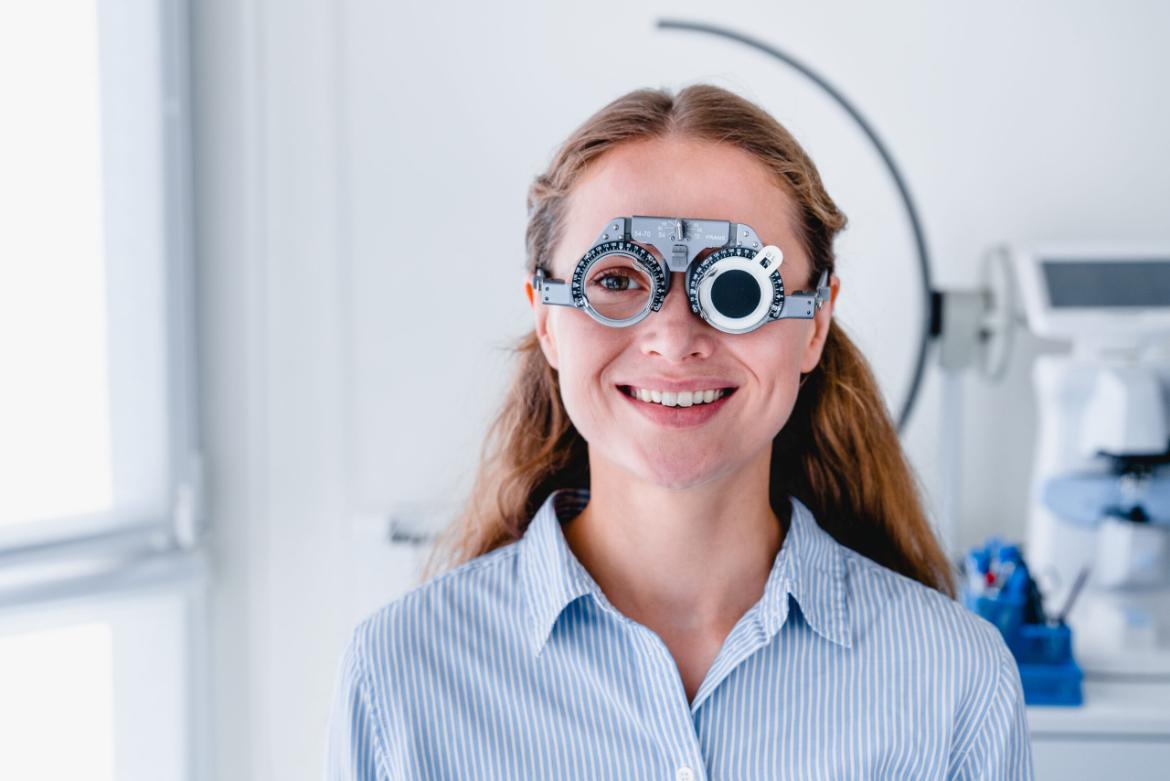
- Refraction Test: A refraction test is a basic test used by an ophthalmologist or optometrist to evaluate the eye's optical power and clarity levels. During this test, the patient is shown a series of different lens combinations to determine which lens provides the clearest vision. Astigmatism can be identified by the irregular or blurry vision revealed during the refraction test.
- Astigmatism test (astigmatic lines test): An astigmatism test is a test used to determine the degree and orientation of astigmatism. During this test, the patient is shown lines slanted in various directions and is asked to indicate which lines appear clearer or blurrier. This test can help determine the degree, axis, and orientation of astigmatism.
- Keratometry: Keratometry is a test used to evaluate the surface curvature of the cornea and astigmatism. During this test, an instrument is focused on the surface of the cornea and the curvature and astigmatic irregularities are measured.
- Topography: Corneal topography is a test used to thoroughly assess the surface shape and astigmatic irregularities of the cornea. This test, which maps the corneal surface, provides a more detailed view of the degree of astigmatism, its orientation, and the corneal topographic features.
How is Astigmatism Treated?
Astigmatism treatment can vary depending on the severity of the astigmatism, symptoms, and the patient's overall health. Here are some common methods used to treat astigmatism:
- Glasses or contact lenses: Glasses or contact lenses are the most common methods used to correct astigmatism. Specially prescribed glasses or lenses allow light passing through the irregular corneal or lens surface to be correctly focused.
- Laser eye surgery: Laser eye surgery procedures such as LASIK (Laser-Assisted In Situ Keratomileusis) or PRK (Photorefractive Keratectomy) can be used to treat astigmatism. In these procedures, a laser is used to reshape the cornea, creating a smooth corneal surface.
- Corneal ring implants: Corneal ring implants are another method used to correct astigmatism. This procedure involves placing thin rings in various areas of the cornea to change its shape and correct astigmatism.
- Lens exchange: Toric lenses can be used to correct astigmatism during procedures such as cataract surgery or intraocular lens exchange. Toric lenses are implanted inside the eye to correct the effects of an irregular cornea or lens.
The ophthalmologist should determine which method to use for astigmatism treatment, based on the patient's eye health, the severity of the astigmatism, their age, and their overall health. It's important to consult with an ophthalmologist to determine the most appropriate treatment method.
