


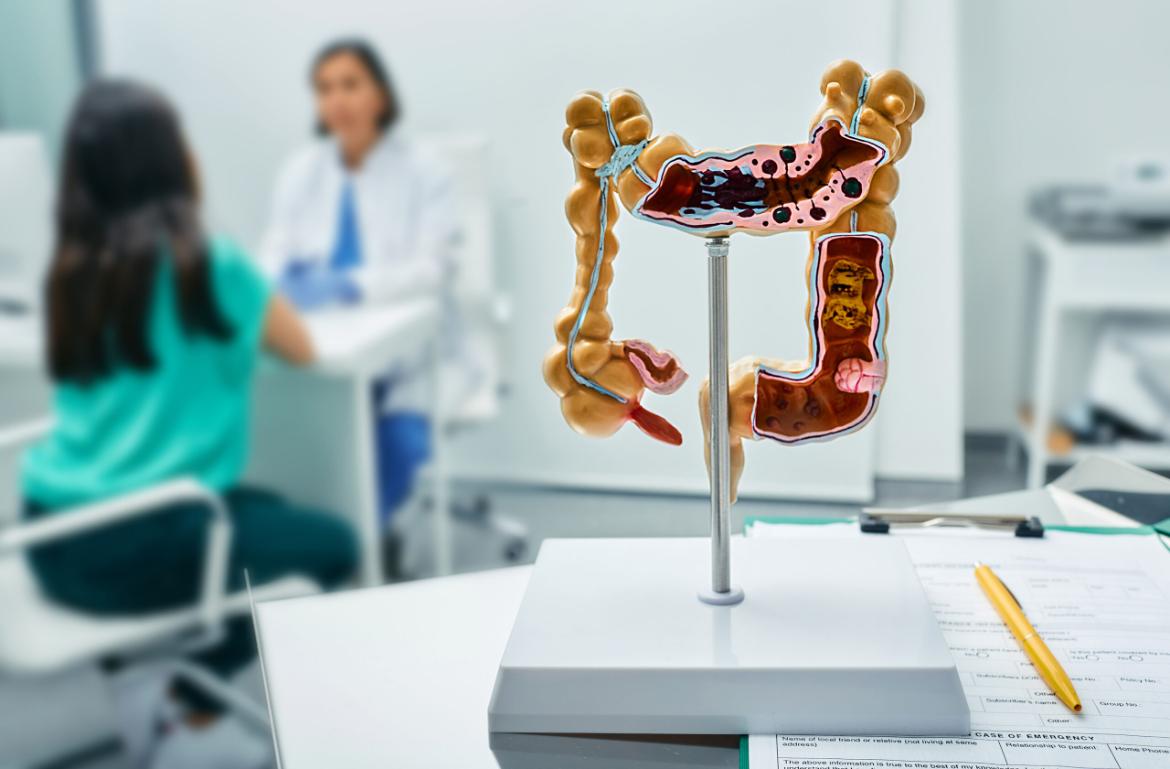
What is Colon Cancer (Large Intestine Cancer)?
Colon cancer is a cancerous growth that begins in the large intestine, or colon. The large intestine is the final section of the digestive system and absorbs undigested food waste and water. The large intestine is a tube-shaped structure with various sections extending to the anus, its exit point.
Colon cancer occurs when normal cells grow and divide uncontrollably. Cancerous cells can invade other normal cells and tissues and spread to other parts of the body through the blood or lymphatic system. This is a treatable type of cancer when detected early.
Colon Cancer (Large Intestine Cancer) Symptoms
Colon cancer symptoms can vary depending on the cancer's size, location, and spread. However, in the early stages, there are often no symptoms, so regular screening tests are important. However, symptoms can appear in later stages of colon cancer. Some symptoms include:
- Abdominal pain, cramps, or cramps
- Constipation , diarrhea, or changes in bowel movements
- Blood in the stool or bright red bleeding
- Black blood in the stool or dark stools
- Fatigue, weakness or rapid weight loss
- Loss of appetite
- Nausea and vomiting
- A feeling of fullness or pressure in the intestines
The presence of one or more of these symptoms may be a possible sign of colon cancer. However, these symptoms can have many different causes. It's important to talk to a doctor if you experience any symptoms. Furthermore, regular screening tests are crucial for detecting and treating this type of cancer in its early stages.
Colon Cancer (Large Intestine Cancer) Causes
The exact causes of colon cancer are unknown. However, several factors are thought to increase the risk of developing colon cancer. Some possible risk factors include:
- Age: The risk of colon cancer increases as you get older.
- Heredity: Certain inherited genetic syndromes may increase the risk of cancer.
- Personal or family history: This risk is higher in people who have close family members with colon cancer.
- Dietary habits: High-fat and low-fiber diets may increase the risk of colon cancer.
- Obesity : Being overweight or obese can increase the risk of colon cancer.
- Smoking: Smoking can increase the risk of colon cancer.
- Alcohol consumption: Excessive alcohol consumption can increase the risk of colon cancer.
- Sedentary lifestyle: Not getting regular exercise and adopting a sedentary lifestyle can increase the risk of colon cancer.
- Inflammatory bowel diseases: Chronic inflammatory bowel diseases (ulcerative colitis, Crohn's disease) may increase the risk of colon cancer.
Although these risk factors are associated with the development of colon cancer, it is not possible to predict with certainty whether a person will develop it. Early diagnosis and treatment can significantly reduce colon cancer mortality rates.
What are the methods used in the diagnosis of colon cancer?
Several different methods can be used to diagnose colon cancer. These include:
- Colonoscopy : This procedure uses a thin, flexible tube (colonoscope) to examine the inside of the colon. The tube has a camera on the end, allowing the doctor to examine the lining of the colon and take a biopsy.
- Fecal Occult Blood: Detection of fecal occult blood can help detect colon cancer in its early stages.
- Magnetic resonance imaging (MRI): This procedure uses large magnets and radio waves to create detailed images and help visualize the colon cancer and surrounding tissues.
- Computed tomography (CT) scan: CT scan is a frequently used imaging method to determine the extent of colon cancer.
- Ultrasound : This procedure uses a scanning device (ultrasonography) to image the inner surface of the colon. Ultrasound can be used to assess the spread of colon cancer.
- Biopsy : A biopsy is the removal of a sample of tissue from a suspicious area. A biopsy may be taken during a colonoscopy or by another method.
One or more of these tests can help diagnose colon cancer. A treatment plan depends on the patient's stage of the cancer, its spread, and other factors.
What are the Stages of Colon Cancer?
Colon cancer staging is a classification system used to determine the stage of cancer. The stage of cancer is determined by the extent and progression of the disease. Colon cancer is generally described as follows:
Stage I: Cancer has spread only to the inner layer of the colon.
Stage II: The cancer has spread to the muscle layer or outer layer of the colon, but not to the lymph nodes.
Stage III: Cancer has spread into the muscle layer or outer layer of the colon and has also spread to nearby lymph nodes.
Stage IV: Cancer has spread to other organs or tissues outside the colon (for example, liver, lungs).
Many factors can influence the stage of cancer, including its size, how it has spread, and whether it has spread to the lymph nodes. Cancer stage is an important factor in determining treatment options, and factors such as the likelihood of the tumor being removed, the patient's overall health, life expectancy, and preferences are also taken into consideration.
Colon cancer treatment in Ankara is carried out using up-to-date methods by experienced specialist doctors in our private hospital, as in many other hospitals.
Colon Cancer Treatment Methods
Colon cancer treatment can vary depending on the stage of the disease and other factors. Treatment options include surgery, chemotherapy, radiation therapy, and targeted therapies. The treatment plan is determined by considering the patient's overall health, life expectancy, and preferences.
Surgery is a common treatment for colon cancer. The section of intestine containing the mass is removed, and the healthy ends of the intestine are reconnected. In some cases, a permanent colostomy (an opening to the outside of the intestine) may be necessary.
Chemotherapy is a drug treatment used to destroy cancer cells in the treatment of colon cancer. In colon cancer, chemotherapy is usually given after surgery. Chemotherapy can be administered according to different protocols, depending on the stage of the cancer and the patient's health.
Radiotherapy , the use of high-dose radiation energy for therapeutic purposes, is called " radiotherapy ," or colloquially, "ray therapy." Colon cancer treatment uses high-energy rays to destroy cancer cells. For colon cancer, radiotherapy can be used before or after surgery. It can be used to shrink tumors or prevent cancer from spreading.
Targeted therapies are treatments that target drugs to kill or inhibit the growth of cancer cells. These treatments can be used in patients with colon cancer that is resistant to chemotherapy.
Colon cancer surgery
Colon cancer surgery is a surgical procedure performed to remove a tumor. The surgery itself can vary depending on the size, location, and spread of the tumor, as well as the patient's overall health. Colon cancer surgery is usually performed under general anesthesia.
The length of hospital stay after colon cancer surgery can vary depending on the type of surgery and the patient's overall health. For the first few days, the patient's bowels may not function properly, so fluids and nutrients are administered intravenously. Once the bowels begin to function again, the patient can be given normal food and discharged.
The recovery period after colon cancer surgery can vary depending on the patient's overall health, the type of surgery, and the stage of the cancer. It's important to follow your doctor's recommended follow-up and treatment plan after surgery. This plan often includes other treatments such as chemotherapy or radiation therapy. Colon cancer surgery is a serious procedure and, like any surgical procedure, carries risks. Therefore, it's crucial to share your questions and concerns with your doctor before and after surgery.
Individuals seeking colon cancer surgery in Ankara conduct extensive research, thoroughly researching numerous doctors and hospitals. At Ankara Magnet Hospital, these surgeries are performed with the patient's health and comfort at the forefront, from admission to discharge.
Frequently Asked Questions
What is the risk of death from colon cancer?
Colon cancer can often be treated successfully when detected and treated early. However, colon cancer diagnosed in advanced stages or that has spread may increase the risk of death.
The risk of dying from colon cancer depends on many factors and can vary depending on the individual situation. Important factors include:
- Colon cancer diagnosed in its early stages generally has a better prognosis and is treatable. However, as the cancer progresses and spreads to other organs, treatment options and survival rates may decrease.
- Age is a factor that affects the risk of dying from colon cancer. Older adults generally have a higher risk.
- Certain genetic syndromes may increase the risk of colon cancer. Individuals with a family history of colon cancer may also be at increased risk.
- A person's overall health can affect the effectiveness of colon cancer treatment and survival rates. People with underlying health conditions may find it more difficult to respond to treatment.
- Colon cancer treatment can include a variety of methods, including surgery, chemotherapy, radiation therapy, and targeted therapy. Treatment options vary depending on the extent of cancer spread, its stage, and individual circumstances.
A combination of these factors determines the risk of dying from colon cancer. Because each individual's situation is different, it is difficult to provide a precise estimate of mortality risk.
Where does colon cancer spread first?
Colon cancer usually begins in the large intestine (colon) or rectum. However, cancer cells can spread to surrounding tissues and organs over time. This process of colon cancer spreading is called metastasis.
Colon cancer usually spreads through the lymphatic system or bloodstream. Lymphatic spread refers to cancer cells traveling through lymphatic vessels to reach and grow in surrounding lymph nodes. Bloodstream spread refers to cancer cells entering the bloodstream and being carried to other parts of the body.
Colon cancer can spread to the liver, lungs, bones, abdomen, brain, and lymph nodes, especially.
At what age does colon cancer occur?
Colon cancer usually occurs in middle-aged and older adults, but it can occur at any age. Generally, it is more common in individuals aged 50 and over. Additionally, the incidence of colon cancer is increasing in individuals under 45.
The risk of developing colon cancer at a given age can vary depending on many factors. Some risk factors include:
- Advanced age increases the risk of developing colon cancer. Screening tests are recommended for individuals aged 50 and over.
- Individuals with a family history of colon cancer may be at increased risk. This risk may be particularly high if a first-degree relative (parent, sibling, child) has had colon cancer.
- Certain genetic syndromes increase the risk of colon cancer. For example, inherited syndromes such as Lynch syndrome and familial adenomatous polyposis (FAP) increase the risk of developing colon cancer.
- Irritable bowel syndrome: People with irritable bowel syndrome may have an increased risk of colon cancer.
- Inflammatory bowel diseases such as chronic colitis (ulcerative colitis and Crohn's disease) increase the risk of colon cancer.
The important thing is that you take appropriate screening and early detection steps based on your age and risk factors.
