


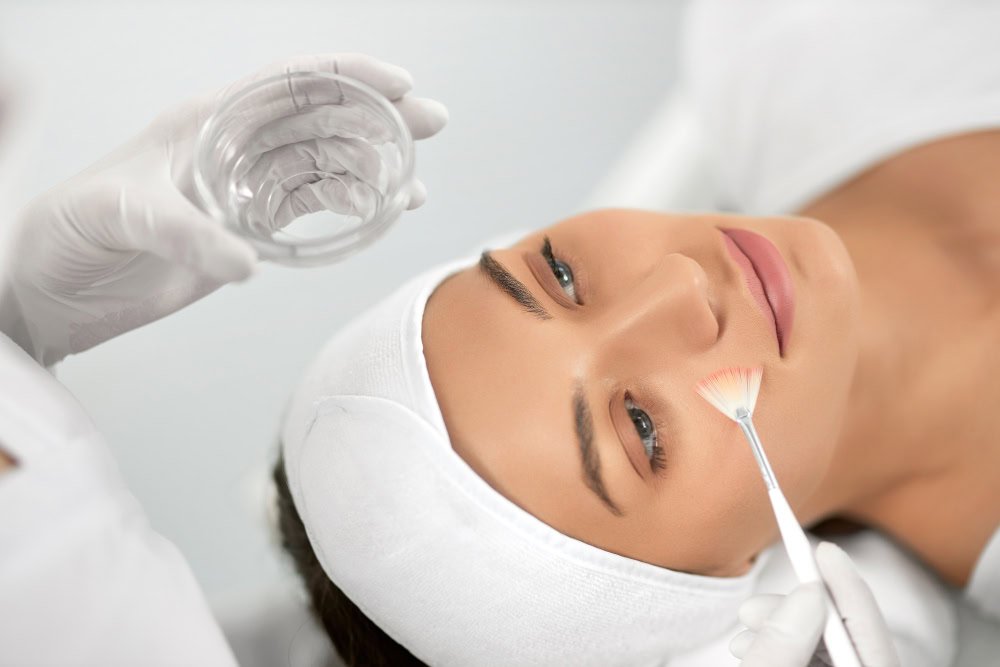
What is Chemical Peeling (Skin Rejuvenation)?
Chemical peels are a skin rejuvenation method used to remove dead cells from the upper layer of the skin. They contain specialized chemical solutions such as glycolic acid, salicylic acid, and TCA (trichloroacetic acid). These acids promote controlled exfoliation, promoting the formation of new, fresh, and smooth skin.
The treatment is recommended for reducing issues such as acne scars, sunspots, fine wrinkles, and uneven skin tone.
How is Chemical Peeling Applied?
Before the treatment, a dermatologist performs a skin analysis. The skin is then cleansed, and the appropriate chemical solution is carefully applied. A slight burning or stinging sensation may occur during the treatment, but it is usually short-lived.
Once the chemical's effect has passed, it is neutralized and the skin is moisturized with a soothing cream. The treatment takes approximately 15-30 minutes and is safely performed in a clinical setting.
Areas Where Chemical Peeling Is Applied
Chemical peeling can be applied not only to the face but also to the following areas:
• Face (most frequently applied area)
• Neck and décolleté area
• Back (especially for acne scars)
• Hands (for age spots)
• Arms and shoulders
Why is Chemical Peeling Applied?
Chemical peels are used to accelerate skin regeneration, reduce blemishes, and improve overall appearance. They are particularly preferred in the following cases:
• Eliminate or reduce acne and acne scars.
• Eliminate sunspots and age spots.
• Dull and dull skin appearance .
• Enlarged pores.
• Superficial wrinkles
. • Even out skin tone.
Chemical Peel Risks
As with any medical procedure, chemical peeling should be performed with caution.
Possible risks include:
• Temporary redness and flaking
• Increased sensitivity
• In rare cases, hyperpigmentation (darkening)
• Risk of burns if not applied to the appropriate skin type
Advantages of Chemical Peeling
The main advantages of chemical peeling:
• Renews and revitalizes the skin
• Reduces the appearance of blemishes and scars
• Tightens pores
• Balances skin tone
• Ensures that makeup stays on more evenly
• When used regularly, young and radiant skin is achieved.
Things to Consider After Chemical Peeling
The skin becomes more sensitive after the procedure. Therefore, the following rules should be followed:
• Sunscreen must be used.
• Scabs should never be picked while peeling.
• Makeup should not be worn for the first 24 hours.
• Drink plenty of water and choose moisturizing products.
• Saunas, Turkish baths, and tanning beds should be avoided for one week.
Chemical Peeling Application Time
Processing time varies depending on the type of application:
• Superficial peeling: 10-15 minutes
• Medium-depth peeling: 20-30 minutes
• Deep peeling: may take up to 45 minutes.
Returning to social life after the procedure is usually possible the same day.
Who Can Get Chemical Peeling?
• It can be applied to people over the age of 18 who want skin renewal or spot treatment
• Oily, acne-prone skin types
• People with superficial wrinkles
• Those with uneven skin tone
• Those who want to tighten their pores.
Who Should Not Get Chemical Peeling?
• It is not applied to those with active inflammatory acne
. • It is not applied to pregnant or breastfeeding women . • It is not applied
to areas with open wounds or eczema . • It is not applied to those
who have used isotretinoin (Roaccutane) in the last 6 months
. • It is not applied to those with allergic skin.
• It is not applied to those who are allergic to aspirin.
• It is not applied to those with keloids in the area where it will be applied.
Chemical Peeling Ankara Magnet Hospital Applications
Ankara Magnet Hospital's Dermatology Clinic offers personalized peeling treatments tailored to your skin type.
Before treatment, a detailed skin analysis is performed, and expert dermatologists select the appropriate solutions based on the patient's needs.
With a focus on patient satisfaction, we also offer post-procedure care.
To schedule a chemical peel at Magnet Hospital, please contact the dermatology department via our hotline.
Chemical Peeling Price (2025)
Chemical peel prices vary depending on the type of solution used, the number of sessions, and the treatment area.
Prices are changing at private hospitals in Ankara as of 2025.
For Magnet Hospital pricing information, please contact the call center or online appointment system.
Before and after chemical peel evaluation.
The first evaluation should be performed two weeks after redness and skin side effects of the chemical peel have subsided.
Which Department Performs Chemical Peeling?
Chemical peels are performed by the Dermatology Department.
Expert dermatologists determine the most appropriate peeling method based on your skin type and needs.
Frequently Asked Questions
1. Will there be any undesirable skin appearance after a chemical peel?
If the application is done correctly and the recommended care is followed, no permanent undesirable appearance will occur. Mild redness and peeling are temporary.
2. Is a chemical peel a painful procedure?
It's generally painless. You may experience a slight burning or stinging sensation during the treatment, but this subsides within a few minutes.
3. Can you wear makeup after a chemical peel?
It's not recommended for the first 24 hours. Once the skin has calmed down, you can apply makeup with products recommended by your dermatologist.
4. How long do chemical peel effects last?
While this varies depending on the individual's skin type, effective results can last between 3 and 6 months. Regular sessions increase longevity.
5. Can a chemical peel be performed at home?
Chemical peels require professional supervision. Improper acid application at home can cause burns, blemishes, and permanent damage to the skin. Therefore, peels should always be performed by a dermatologist or qualified aesthetician.
6. Does a chemical peel leave permanent scars?
If performed correctly, it won't leave permanent scars. However, if your skin type is unsuitable, if products with high acidity are used, or if post-treatment care is neglected, the risk of spots and scars may increase.
7. How long does it take for a chemical peel to heal?
Depending on the depth of the peel, the skin generally heals within 5 to 10 days. Peeling, redness, and mild crusting are normal during this time. For deeper peels, the healing time can be up to two weeks.
8. Does chemical peeling whiten skin?
Yes, chemical peeling can lighten skin tone. By removing dead cells, skin appears brighter, more vibrant, and lighter in tone. It provides a significant whitening effect, especially on superficial blemishes.
9. Is it normal for crusts to form after a chemical peel?
Yes, this is a natural part of the skin's renewal process. Crusting should never be removed; the skin should be supported with moisturizers and restorative creams.
10. When does a chemical peel show its effects?
Initial results are usually visible within 7-10 days. As the skin regenerates, brightness, smoothness, and skin tone become more noticeable. The full effect lasts only after a few sessions.
11. Does chemical peeling remove blemishes?
Yes, with regular use, it reduces sunspots, acne scarring, and uneven skin tone. However, for deep blemishes, a single session is not sufficient; 3-6 regular treatments are recommended.
12. Where is a chemical peel performed?
Chemical peels should only be performed in dermatology clinics, medical aesthetic centers, or the skin care units of private hospitals. For the safety of the procedure, it is crucial that it be performed by a specialist physician or experienced aesthetician.
Chemical peels are a frequently used and effective method in modern dermatology for skin rejuvenation and a vibrant appearance. The Dermatology Department at Magnet Hospital in Ankara offers safe, professional peels with its expert staff and sterile clinical environment.
