


What is Carotid Doppler Ultrasonography?
Carotid Doppler ultrasound is a painless, radiation-free ultrasound method that examines blood flow and vascular structure in the neck vessels, particularly the carotid and vertebral arteries that supply the brain. It is particularly used for early diagnosis of conditions such as stroke risk, vascular occlusion, blood clots, atherosclerosis (hardening of the arteries), and stenosis of the neck vessels. The procedure, which takes approximately 15–20 minutes, requires no special preparation and is covered by the Social Security Institution (SGK).
What is Carotid Color Doppler Ultrasonography?
Carotid Doppler ultrasound is a specialized radiological examination that evaluates the carotid arteries, located on both sides of the neck, and the vertebral arteries, which carry blood to the brain.
This method uses color Doppler imaging to show the thickness of artery walls, plaque (fatty deposits) on the inner surface, and the direction and speed of blood flow.
It is one of the most important imaging methods for assessing stroke risk, as the majority of strokes are caused by narrowing or blockage of the neck arteries. Carotid Doppler ultrasound identifies these risks, enabling early treatment.
How is a Carotid Doppler Ultrasound Performed?
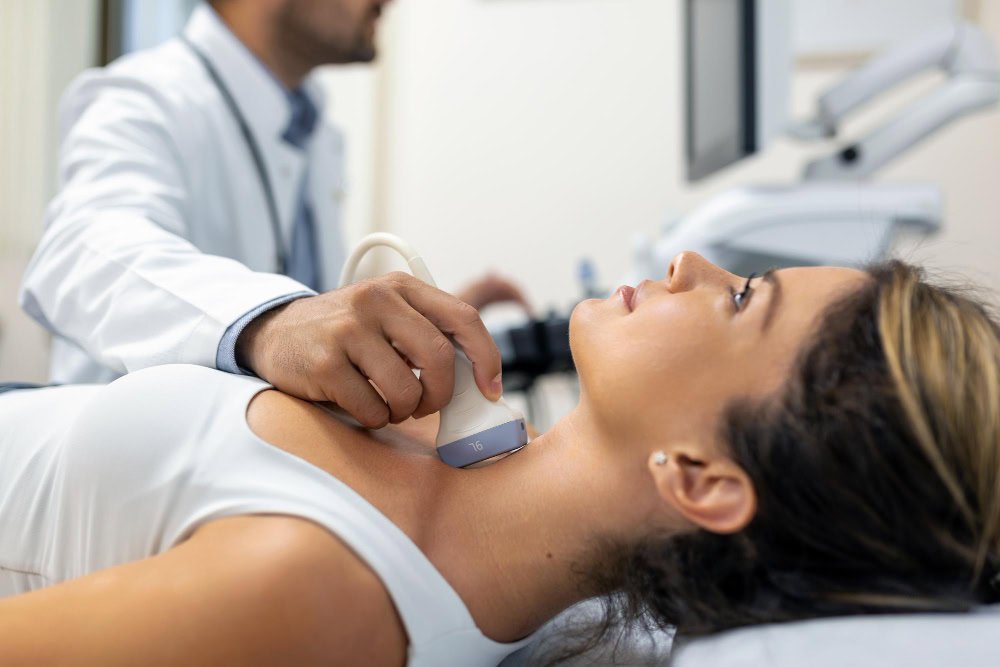
The procedure is completely painless and non-invasive. The patient is positioned supine, and the neck is positioned so that the neck area is exposed. The radiologist applies special ultrasound gel and examines the neck veins with a Doppler probe. The cross-section of the veins, their internal structure, and the direction and speed of blood flow are displayed in color on the screen. Problems such as vascular stenosis, plaque buildup, or clots can be clearly identified. The entire procedure usually takes 15–20 minutes, and the patient can immediately return to their normal activities.
In Which Diseases is Carotid Doppler Ultrasound Performed?
Carotid Doppler ultrasound is used in the early diagnosis of many serious diseases that affect blood flow to the brain. The most common diseases are:
• Atherosclerosis (Atherosclerosis): Narrowing occurs due to the accumulation of fat, calcium, and cholesterol in the artery walls. Doppler imaging detects the presence of these plaques at an early stage.
• Carotid Artery Stenosis: The amount of blood flowing to the brain decreases due to the narrowing of the artery's internal diameter. This significantly increases the risk of stroke.
• Carotid Artery Occlusion: This is a complete blockage of the artery. Doppler ultrasound helps determine the location and level of the blockage.
• Vertebral Artery Insufficiency: Narrowing of the vertebral arteries, which carry blood back to the brain, can cause dizziness and loss of balance.
• Cervical Artery Clot (Thrombosis): A clot (thrombus) formed within the artery can block blood flow.
• Stroke Risk Assessment: The condition of the cerebral vessels is checked in people who have previously had a transient paralytic attack (TIA).
• Preoperative Vascular Assessment: It is performed to check vascular health before heart or brain surgery.
For which complaints and to whom is Carotid Doppler Ultrasound performed?
This test is generally recommended for people experiencing the following symptoms:
• Dizziness and imbalance: It is used if a vascular occlusion is suspected, especially for sudden-onset and frequently recurring dizziness.
• Temporary vision loss or double vision: Narrowing in the carotid artery can affect blood flow to the eye vessels.
• Sudden slurred speech, arm or leg weakness: These findings may be signs of a mini-stroke (TIA).
• Neck bruit (vascular noise): The doctor may order a Doppler ultrasound after hearing an abnormal sound with a stethoscope.
• People with chronic hypertension or diabetes: Vascular health should be checked regularly.
• Smokers: Long-term smoking accelerates arteriosclerosis, and a Doppler ultrasound is recommended in these individuals.
• People with a history of cardiovascular disease: If there is a history of heart attack, bypass, or stent surgery, the carotid arteries should also be evaluated.
Carotid Doppler ultrasound may also be performed for routine screening in middle-aged and older individuals, as vascular stenosis is common in this age group and often progresses asymptomatically.
Preparation Before Carotid Doppler Ultrasound
No special preparation is required before the procedure.
The patient can eat, drink, and take medications as normal.
It is recommended not to wear jewelry or necklaces around the neck. Comfortable clothing is recommended.
What to Do After Carotid Doppler Ultrasound
After the procedure, the patient can immediately return to their daily activities.
No restrictions are necessary after the ultrasound gel is removed.
The results are evaluated by a radiologist and communicated to the attending physician.
If vascular stenosis or clot is detected, the doctor may recommend medication or surgery.
Disadvantages and Risks of Carotid Doppler Ultrasound
This method does not involve radiation and is completely safe.
However, some disadvantages include:
• Image quality may be reduced in overweight individuals.
• Sound wave transmission may become difficult in very advanced vascular calcification.
• Results may vary depending on operator experience.
In general, there are no serious risks or side effects.
Advantages of Carotid Doppler Ultrasound
• It is painless and quick.
• It does not involve radiation.
• It offers early diagnosis.
• It helps predict the risk of stroke.
• Vascular patency can be checked after treatment.
• It is an economical test because it is covered by the Social Security Institution (SGK).
Carotid Doppler Ultrasonography Alternative Methods
In some cases, further evaluation may be necessary. Alternative methods include:
• CT angiography (Computed Tomography Angiography)
• MR angiography (Magnetic Resonance Angiography)
• Conventional (Catheter) angiography
However, these methods usually require contrast material and radiation. Therefore, Doppler ultrasound should always be the first choice.
Areas of Use for Carotid Doppler Ultrasound
• Pre-stroke risk assessment
• Chronic blood pressure, cholesterol and diabetes monitoring
• Pre-heart surgery vascular control
• Diagnosis of cerebral blood circulation disorders
• Post-operative vascular control
• Post-neck trauma vascular status assessment
Carotid Doppler Ultrasound SSI and Private Insurance Coverage
The Social Security Institution (SGK) covers this examination if requested by a neurologist. Private health insurance companies also generally cover this procedure as part of their policies. Pricing may vary at private hospitals.
In Which Department Is Carotid Doppler Ultrasonography Performed?
Carotid Doppler ultrasound is performed in the Radiology department. The results are evaluated by a radiologist, and the findings are sent to the relevant specialist (neurology, cardiology, internal medicine).
Who Should Not Have Carotid Doppler?
This examination is generally performed on anyone. However, it may be temporarily postponed for individuals with open wounds, infections, or recent surgical incisions in the neck. It can also be safely performed on pregnant women because it does not involve radiation.
What Does a Carotid Doppler Ultrasound Show?
The following findings can be seen with this ultrasound:
• Thickening of the vascular wall
• Fatty plaques (atheroma plaque)
• Narrowing or blockage of the artery
• Decrease or cessation of blood flow
• Presence of a clot (thrombus)
• Decrease in vascular elasticity
These data are invaluable in predicting stroke risk.
Where Can I Get a Carotid Doppler Ultrasound in Ankara?
Carotid Doppler ultrasounds are available at university hospitals, state hospitals, private hospitals, imaging centers, and private radiology centers in Ankara.
Same-day appointments and expedited reporting are available at centers like Magnet Hospital.
Carotid Doppler Ultrasound Current Prices
Carotid Doppler ultrasound prices vary depending on the center:
• In public hospitals,
the procedure is free of charge under the Social Security Institution (SGK). • In private hospitals, a surcharge is applied.
• In radiology centers, a special patient tariff is applied.
Carotid Doppler Ultrasound Ankara Magnet Hospital Same Day Scan
Ankara Magnet Hospital's Radiology Department offers same-day carotid Doppler ultrasounds without an appointment. Results are typically reported within an hour and presented to a physician for review. For information and to schedule an appointment, please call 0312 212 80 80.
Frequently Asked Questions
1. Is a Carotid Doppler ultrasound performed on an empty stomach?
No, it doesn't matter whether you're hungry or full.
2. Is Carotid Vertebral Doppler painful?
No, it is completely painless and safe.
3. At what age should a Carotid Vertebral Doppler be performed?
It is generally recommended for individuals over 40, those who smoke, or those with chronic diseases.
4. What is Carotid Vertebral Doppler?
It is a color Doppler ultrasound that examines blood flow and stenosis/blockage in the carotid and vertebral arteries (arteries leading to the brain) in the neck.
5. Why is a carotid Doppler scan ordered?
It's ordered to evaluate the vessels supplying the brain for blockages, narrowing, or plaque.
It's typically performed to diagnose dizziness, forgetfulness, temporary paralysis, or blurred vision.
6. How long does a neck Doppler scan take?
It takes approximately 10–20 minutes.
Because both vascular systems are examined, the time may vary depending on the patient.
7. Carotid Doppler: Fasting
or not? It doesn't matter.
No special preparation is required before the procedure.
8. How is a Carotid Vertebral Doppler performed?
The patient lies supine, and gel is applied to the neck.
Blood flow in the carotid and vertebral arteries is visualized using a color probe.
It is a painless, quick, and safe procedure.
Carotid (neck vein) Doppler ultrasound is a painless, fast, and safe examination that plays a significant role in preventing serious conditions such as stroke. Early diagnosis can help detect vascular stenosis, blockages, and clots, thus preserving quality of life. Regular routine health checks are recommended, especially for individuals with high blood pressure, high cholesterol, and smoking.
