


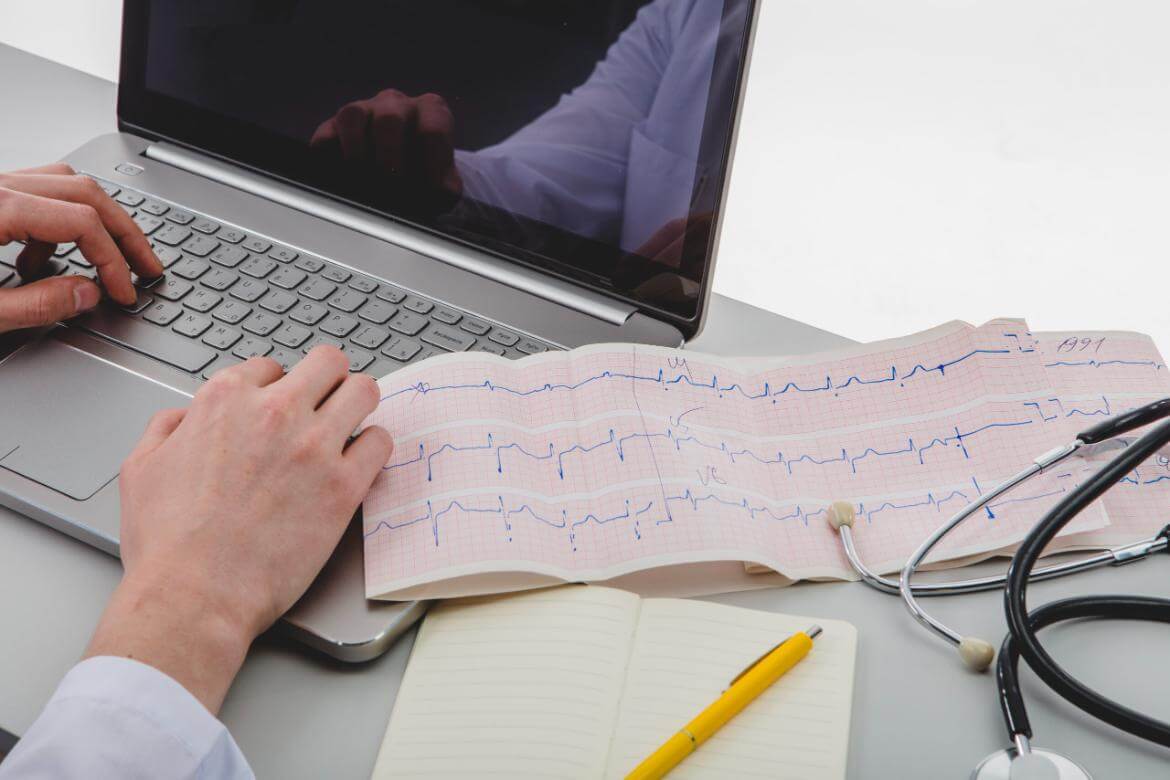
What is an ECG? How is an ECG taken?
What is an ECG ?
ECG is short for Electrocardiography. An electrocardiogram is a medical test that measures and records the electrical activity of the heart. The heart's electrical activity is the electrical signals generated by the heart muscles to cause them to contract.
An ECG is used to evaluate the rhythm, rate, regularity, and other electrical characteristics of the heartbeat. This test is helpful in diagnosing many heart conditions and can help identify heart attacks, arrhythmias, heart failure, and other heart problems.
A typical ECG recording contains distinct components called P waves, QRS complexes, and T waves. These components represent the electrical activity of different parts of the heart muscle.
How to Take an ECG?
An ECG is usually performed by a medical professional or technician and includes the following steps:
Ensure the patient's chest, arms, and legs are clean and dry. Substances such as oil, sweat, or creams on the skin can prevent the electrodes from adhering properly, so the skin should be clean.
You may ask the patient to undress. Often, the patient will be asked to lie down or remain in a specific position with their chest exposed.
Electrodes can be adhesive pads or metal plates. They are typically placed on the chest, left arm, and left leg. Electrodes must be placed accurately at specific points, and each electrode may be marked with a specific color or letter.
- Chest electrodes: Electrodes are placed at different points on the chest. For example, electrode V1 is located just to the left of the right clavicle, and electrode V2 is located just to the right of the right clavicle. Electrodes V3, V4, V5, and V6 are placed at specific points on the left side of the chest, respectively.
- Arm and leg electrodes: Electrodes are placed on the left arm and left leg. These electrodes help record signals from different aspects of heart activity.
Once the electrodes are placed, the ECG recording begins. The recording typically lasts from a few seconds to several minutes. The patient may be asked to remain calm and breathe in and out as needed to ensure accurate recording of the signals.
Once the ECG recording is complete, the results are presented in a graph. This graph helps your doctor evaluate your heart's rhythm, rate, regularity, and other electrical characteristics. Your doctor may perform additional tests or consult with other specialists if necessary.
The extraction is generally a quick and painless procedure. Performed by a professional healthcare professional or technician, it ensures accurate results.
Why is an ECG taken?
- Heart disease evaluation : An ECG is used to evaluate heart health in individuals with symptoms of heart disease. In patients presenting with symptoms such as chest pain, shortness of breath, and palpitations, an ECG can help determine if a heart attack or other cardiac problems are present.
- Arrhythmias: An ECG is used to evaluate irregular heart rhythms. Arrhythmias can cause abnormalities in the heartbeat's rate, regularity, or proper contraction of the heart chambers. An ECG is an important tool for identifying the type of arrhythmia and determining a treatment plan.
- Heart attack detection: An ECG is used in individuals suspected of having an acute coronary syndrome (heart attack). A heart attack occurs when the heart muscle cannot receive enough oxygen. An ECG can show signs of a heart attack and damage to the heart muscle, and can identify conditions that require immediate medical attention.
- Heart failure monitoring: An ECG is used to monitor heart function in individuals with heart failure. Heart failure is a condition in which the heart is unable to pump enough blood. An ECG can show signs of poor heart muscle contraction or relaxation and can be used to monitor response to treatment.
- Medication effects or electrolyte imbalances: Certain medications or electrolyte imbalances can cause changes in the heart's electrical activity. An ECG can be used to monitor these changes and evaluate the effects of medication or electrolyte correction.
- Routine checkups in healthy individuals: An ECG may sometimes be performed as part of a routine checkup in healthy individuals. This is done to monitor heart health, evaluate potential risk factors, or detect early signs of certain heart diseases.
What Should Heart Rhythm Be on ECG?
For an average adult, a normal resting heart rate is generally between 60 and 100 beats per minute. This range reflects a regular, healthy heart rhythm called normal sinus rhythm.
However, each individual's heart rate may be slightly different and can vary depending on many factors. Factors such as physical activity level, age, stress level, medication use, and other medical conditions can affect an individual's normal heart rate.
In some cases, low or high heart rates may not be normal and may be below or above. A low heart rate, called bradycardia, is usually below 60 beats per minute, while a high heart rate, called tachycardia, is usually above 100 beats per minute. These conditions are usually associated with a specific cause or heart problem and may indicate conditions that should be evaluated by a doctor.

What are the types of ECG?
Holter ECG
A portable ECG device that records heart rhythm continuously over a period of time (usually 24 hours or longer). This device is used to monitor changes in heart rhythm and detect arrhythmias while the patient is performing normal daily activities.
A Holter ECG device records heart rhythms using electrodes attached to the patient's chest. These electrodes are attached to the patient's chest and connected to the device via a cable. Because the device is small and portable, patients can continue their daily activities.
A Holter ECG is used to evaluate many different conditions, including diagnosing arrhythmias, monitoring heart rate, monitoring post-heart attack, monitoring the effectiveness of medication, and identifying heart rhythm changes that cause symptoms.
The data recorded by the device helps detect heart rhythm irregularities, abnormalities such as tachycardia (high heart rate) or bradycardia (low heart rate), rhythm disturbances called arrhythmias, and heart blocks. This data provides information your doctor will use to make a diagnosis, create a treatment plan, or adjust existing treatment.
A Holter ECG is typically used when short-term ECG recordings are insufficient or when symptoms are irregular. This method provides a more comprehensive assessment of heart rhythm problems and can monitor heart rhythm activity in real-life situations.

Stress ECG
It's a test used to evaluate a person's heart rhythm and cardiac function while exercising. It's used to monitor changes in heart rhythm during exercise and to assess the condition of the coronary arteries.
A stress ECG is typically performed on exercise equipment, such as an exercise bike or treadmill. The person performs low-intensity exercise for a specific period of time, during which time their heart rhythm, blood pressure, and electrocardiogram (ECG) are recorded.
This test is used to evaluate heart function and detect coronary artery disease in individuals with symptoms of heart disease. Changes in heart rhythm during exercise occur when the heart muscle cannot receive enough oxygen due to narrowing or blockage of the coronary arteries.
During an exercise ECG test, heart rate, rhythm, blood pressure, and ECG are recorded throughout the exercise period. This data is used to evaluate heart rhythm abnormalities, signs of oxygen deprivation (ischemia), or signs of narrowing of the heart's arteries.
An exercise ECG is used to assess heart attack risk, assess exercise tolerance, detect arrhythmias, and support a diagnosis of coronary artery disease. Test results are used by your doctor to evaluate your heart health and determine an appropriate treatment plan.
What is an ECG disorder?
It's called an irregular heartbeat. During an arrhythmia, the heart may beat too fast, too slow, or irregularly. While arrhythmias are often harmless, some can be life-threatening.
ECG abnormalities can occur in individuals with arrhythmias. When the heart cannot pump enough blood throughout the body, the individual may experience shortness of breath, fainting, fainting, and sometimes sudden death. However, arrhythmias are often very treatable.
Are there any risks associated with an ECG? Does an ECG have any side effects?
An ECG carries no risks. It is a completely painless procedure. The test itself takes approximately a few minutes.
Can heart diseases be observed on ECG?
An ECG can identify heart rhythm and conduction disorders, as well as diseases characterized by slow heartbeat. Constriction of the heart vessels or problems with the heart's blood flow can also be observed with an ECG.
