


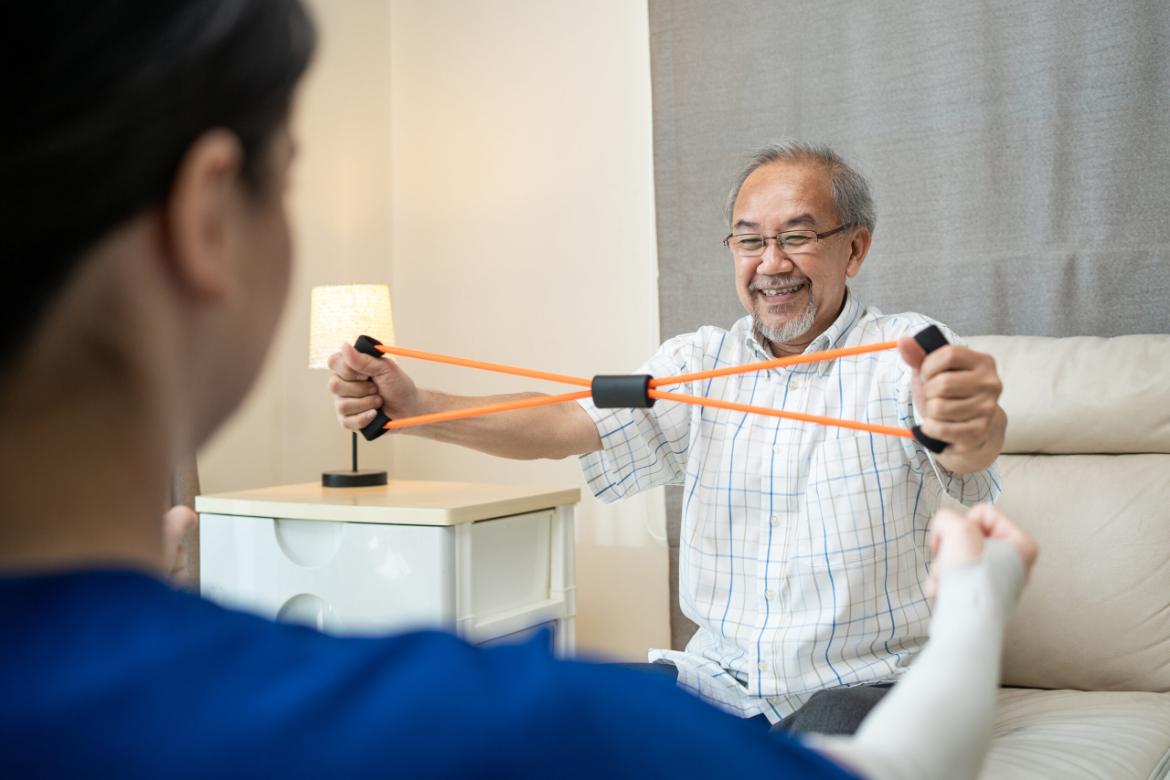
Muscle Disease Rehabilitation
Muscle rehabilitation is a treatment process used to improve or reduce functional limitations and symptoms resulting from disorders or injuries to the muscular system. These conditions can include muscle weakness, muscle cramps, muscle spasms, muscle atrophy, and other muscle dysfunctions.
What is muscle disease rehabilitation?
Musculoskeletal rehabilitation requires an individualized approach based on the patient's specific needs. A rehabilitation program is typically managed by a multidisciplinary healthcare team to assess the patient's condition, determine treatment goals, and select appropriate treatment modalities. This team may include physical therapists, occupational therapists, neurologists, rehabilitation physicians, and other specialists.
Rehabilitation for muscular disorders may involve a variety of treatment methods. These may include physiotherapy, exercise therapy, muscle-strengthening exercises, stretching and stretching exercises, massage, electrotherapy, heat therapy, hydrotherapy (water therapy), the use of medical devices, and movement training. In some cases, medication or surgery may also be necessary.
The goals of rehabilitation include improving muscle function, increasing muscle strength, restoring muscle flexibility and range of motion, reducing pain, controlling muscle spasms, correcting posture, and enabling the patient to independently perform activities of daily living.
Rehabilitation for muscular disorders can often be a lengthy process and can vary depending on individual needs and the patient's condition. Regular follow-up and patient adherence to the treatment plan can impact the success of the rehabilitation process. It's important to consult with a specialist to develop an individualized treatment plan and determine appropriate rehabilitation methods.
What are muscle diseases?
Muscle diseases refer to a variety of conditions that affect the normal function of muscles and typically manifest with symptoms such as muscle weakness, muscle fatigue, muscle twitching, or muscle contractions. These diseases can arise from disorders in muscle structure, function, or interaction with the nervous system. Muscle diseases can generally be inherited (genetic) or acquired (acquired). Muscle diseases can include several types. Some common types of muscle diseases are:
- Duchenne Muscular Dystrophy : Duchenne muscular dystrophy is a common inherited muscle disease that usually appears in childhood. It causes progressive muscle weakness and wasting, eventually leading to limited movement.
- Spinal Muscular Atrophy : Spinal muscular atrophy is a genetic disease that affects the nerve cells that exit the spinal cord. This condition causes the gradual loss of nerve cells that control muscles, leading to muscle weakness and movement problems.
- Myotonic Dystrophy : Myotonic dystrophy is a genetic disorder that prevents muscles from relaxing normally, causing muscle stiffness, twitching, and muscle weakness. The condition can also affect other body systems.
- Polymyositis and Dermatomyositis : Polymyositis and dermatomyositis are autoimmune muscle diseases caused by the immune system attacking the muscles. These conditions are characterized by muscle weakness, pain, and inflammation.
- Myasthenia Gravis : Myasthenia gravis is an autoimmune disease that affects communication with the nerve cells that control muscles. This condition causes symptoms of muscle weakness and fatigue, particularly difficulty performing repetitive movements or using muscles.
These are just some examples; muscle diseases can occur in many forms, each with different symptoms, progression, and treatment requirements.
What are the symptoms of muscle disease?
Muscle diseases can have different types, and each disease's symptoms can vary slightly. However, in general, common symptoms of muscle diseases can include:
- Muscle Weakness
- Muscle Fatigue
- Muscle Stiffness
- Muscle Cramps and Muscle Contractions
- Limited Movement
- Balance and Coordination Problems
- Respiratory Problems
- Speech and Swallowing Problems
These symptoms can vary from person to person and depend on the type of condition. If you experience muscle weakness, fatigue, muscle twitching, or other suspicious symptoms, it's important to consult a healthcare professional. A specialist will evaluate you and take the necessary steps to make a diagnosis.
Diagnostic methods used for muscle disease
- Physical Exam : The doctor may assess the patient's muscle strength, tone (tension level of the muscles), reflexes, and muscle appearance. During the exam, the doctor will look for signs such as muscle atrophy (muscle loss), muscle cramps, or twitching.
- Electromyography (EMG ): This test measures the electrical activity of muscles and nerves. A thin needle electrode is inserted into the muscle, and the electrical activity produced by the muscle movement is recorded. EMG can be helpful in detecting nerve damage or muscle disease.
- Nerve Conduction Tests : Nerve conduction tests are used to evaluate how nerves conduct signals and whether conduction is impaired. These tests generally measure how electrical impulses travel along a nerve.
- Muscle Biopsy : In this procedure, a small sample of muscle tissue is removed and examined in the laboratory. A muscle biopsy can help determine the type and cause of muscle disease.
- Blood Tests : Certain blood tests may be used to assess muscle diseases. For example, muscle enzyme levels can be examined. If muscle cells are damaged, these enzymes may be elevated in the blood.
- Genetic Testing : Some muscle diseases are linked to genetic causes. Genetic testing can be used to identify specific genetic mutations or disorders. These tests are important for making an accurate diagnosis and predicting the course of the disease.
- Imaging Methods : Imaging methods can also be used to diagnose muscle diseases. MRI (magnetic resonance imaging) provides detailed images of muscle structure and condition. Ultrasound can aid in visualizing muscle and soft tissues.

Treatment methods in muscle disease rehabilitation
Treatment methods for muscle disease rehabilitation can vary depending on the type, severity, and symptoms of the disease. Some commonly used muscle disease rehabilitation treatment methods include:
- Physiotherapy : Physiotherapy is a treatment method used to increase muscle strength, improve range of motion, improve muscle flexibility, and increase functional independence. Physiotherapists design exercise programs tailored to patients' specific needs and administer treatment using therapeutic devices and techniques.
- Exercise Programs : Exercise programs specifically designed for patients with muscular dystrophy are used to increase muscle strength, improve endurance, and maintain range of motion. These exercises are tailored to individual patient abilities and tolerance.
- Respiratory Therapy : Some types of muscular disorders can affect the respiratory muscles and cause breathing difficulties. In these cases, breathing exercises, ventilators, or special exercises to strengthen the respiratory muscles may be used as respiratory therapy.
- Nutrition and Diet : Nutrition and diet are important for individuals with muscle disease. A well-balanced nutritional plan is essential to meet the muscles' energy needs, prevent muscle loss, and promote muscle recovery. Dietitians can create a nutritional plan tailored to the needs of patients.
- Supportive Devices : Muscle disorders can sometimes cause difficulties with mobility and daily activities. Supportive devices are used to increase patients' independence and mobility. Examples include wheelchairs, walkers, prosthetics, or specialized foot and hand devices.
- Medication : Medication may be used to manage symptoms or slow the progression of some muscle disorders. Medications may be used to reduce inflammation, control muscle spasms, or improve nerve conduction. Medication should be prescribed by a specialist.
- Psychosocial Support : Individuals with muscle disorders and their families can receive psychosocial support to cope with the emotional and psychological challenges of the disease. Support groups, therapy, or counseling can be used to provide support and improve the quality of life for individuals and families.
Treatment methods for muscle disease rehabilitation should be tailored to the needs of the patient and should adopt a multidisciplinary approach. A specialized healthcare team should work together to manage the disease and ensure optimal patient outcomes.
Physical therapy phase in muscle disease
Physical therapy for muscle disorders is a treatment used to increase muscle strength, improve mobility, reduce pain, and facilitate daily activities. The stages and methods of physical therapy for muscle disorders are:
- Assessment and Initial Evaluation : The physical therapy process begins with an assessment of the patient's condition. The physical therapist takes a detailed history of the patient's symptoms, daily activities, and mobility. A physical examination is performed to assess current muscle strength, range of motion, and functional abilities.
- Goal Setting : Based on the assessment, a treatment plan is developed based on the patient's specific needs and goals. Goals may include increasing muscle strength, improving range of motion, achieving functional independence, or reducing pain.
- Exercise Therapy : One of the fundamental components of physical therapy is exercise therapy. A physical therapist develops exercise programs tailored to the patient's needs and the specifics of their muscular disease. These exercises are designed to strengthen muscles, increase range of motion, improve balance, and improve functional abilities.
- Manual Therapy : Manual therapy is a therapy method that uses a physical therapist's hands to directly apply pressure to muscles, joints, and soft tissues. It utilizes methods such as massage, stretching techniques, mobilization, and manipulation. Manual therapy can be used to relax muscles, increase blood circulation, and reduce pain.
- Electrotherapy : Electrotherapy is a treatment method that uses electrical stimulation to stimulate muscles and promote healing. Methods such as Transcutaneous Electrical Nerve Stimulation (TENS), Electromyography (EMG), and Neuromuscular Electrical Stimulation (NES) may be used.
- Heat and Cold Therapy : Heat and cold therapy are used to relieve muscle spasms, reduce pain, and control muscle inflammation. Heat applications (heating pads, warm towels) or cold applications (ice packs, cold compresses) may be used.
- Supportive Devices and Appliances : Supportive devices and appliances can be used to facilitate mobility and activities of daily living for patients with muscular dystrophy. For example, devices such as walkers, wheelchairs, prosthetics, and specialized foot or hand devices can increase patients' independence.
- Education and Disease Management : As part of physical therapy, patients and their families receive education on disease management. Topics include understanding disease symptoms, performing exercises correctly, energy management, preventative movements, and strategies for daily living activities.
Physical therapy plays an important role in the management of muscle disorders. A treatment plan tailored to individual needs, guided by a qualified physical therapist, can help patients increase their functional independence and improve their quality of life.
What is the importance of physical therapy in muscle diseases?
Physical therapy plays a significant role in treating muscular disorders. Here are some points regarding the importance of physical therapy in treating muscular disorders:
- Increasing Muscle Strength : Physical therapy helps increase muscle strength in individuals with muscular disorders. Strengthening muscles with appropriate exercises and treatment techniques leads to improved functional capacity. This allows patients to perform activities of daily living more independently.
- Improving Mobility : Muscle disorders can limit mobility. Physical therapy improves patients' mobility by increasing muscle flexibility and range of motion. This helps patients perform daily activities more comfortably and improve their quality of life.
- Pain Management : Muscle disorders can often cause pain. Physical therapy can help reduce and control pain. Methods such as massage, manual therapy, and heat and cold therapy are used to alleviate pain and ensure patient comfort.
- Improving Respiratory and Swallowing Functions : Certain muscle disorders can affect the respiratory muscles and swallowing functions. Physical therapy helps strengthen respiratory muscles and improve respiratory function through breathing exercises and techniques. Similarly, swallowing exercises can also support swallowing functions.
- Use of Supportive Devices : Supportive devices and appliances play an important role in physical therapy. Supportive devices such as wheelchairs, walkers, prosthetics, or specialized foot/hand devices help patients increase their mobility and independence.
- Improving Quality of Life : Improving physical function, reducing pain, and increasing mobility in individuals with muscle disease improves overall quality of life. Physical therapy allows patients to more comfortably carry out their daily activities and actively participate in social life.
Physical therapy is an important treatment option for managing muscle disorders. A physical therapy program implemented by a qualified physical therapist and tailored to the patient's needs can increase functional independence, improve quality of life, and slow disease progression.
