


MR Angiography (MRA)
MRI Angiography is a radiation-free medical imaging method that provides detailed, three-dimensional visualization of vascular structures using magnetic resonance (MRI ) technology. It provides clear information about the condition of the body's arterial and venous systems. It is used to diagnose life-threatening conditions such as vascular occlusions, aneurysms (vascular ballooning), vascular stenosis, congenital vascular disorders, and pulmonary embolisms.
Why is an MRI Angiogram Performed? What is its Use?
- It is taken if there is suspicion of narrowing or blockage in the brain, heart, neck (carotid), kidney and leg vessels.
- The condition of the cerebral vessels is examined in patients at risk of stroke.
- It is used to detect bubbles formed in the vascular walls of the brain or other areas.
- Provides early diagnosis against the risk of aneurysm rupture.
- Abnormal vascular structures such as AVM (Arteriovenous Malformation) are detected.
- Congenital or acquired vascular disorders are detected.
- If there is suspicion of a clot in the vessels leading to the lungs, MRA may be preferred.
- It is performed to diagnose serious conditions such as aortic aneurysm and dissection (rupture).
- To check whether the vessels are open after heart surgery.
- When investigating the cause of high blood pressure, the kidney vessels are examined.
- It is used to investigate vascular constrictions that cause pain in the legs when walking.
How is an MRI Angiography Performed?
- The patient wears a patient gown suitable for the MRI device, all metal items are removed, and if contrast material is to be used, vascular access is established.
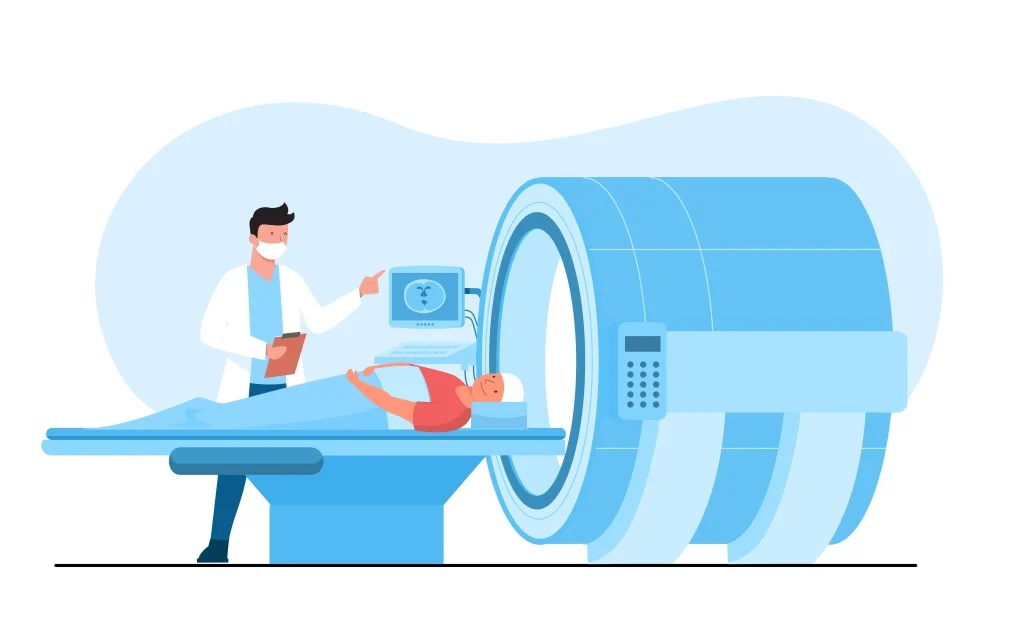
- The patient lies on his back on the examination table of the MRI device. A special coil is placed on the head, neck or the relevant area .
- The body is immobilized with pillows to prevent movement. Headphones or earplugs are provided (the device may be noisy when operating).
- The device starts working and the patient must remain still during the examination .
- During the scan, a radiology technician will monitor you from a separate room and communicate with you when necessary.
- In contrast-enhanced MRA, gadolinium-containing contrast material is administered intravenously during or just before the imaging.
- No pain is felt during the procedure.
- There may be a brief feeling of warmth when the contrast medium is administered (it is harmless).
- The process may be a little challenging for those who have discomfort in confined spaces, but it is possible to talk to the technician.
- If a contrast scan is performed, it is recommended that you drink plenty of water (to accelerate elimination from the body).
- If no side effects occur, you can return to your daily life immediately.
- The results are evaluated by the radiologist and transmitted to your doctor.
How to Prepare Before MRI Angiography?
- If you have ever had an allergic reaction to an MRI or contrast material, be sure to inform your doctor.
- If there are conditions such as kidney disease, diabetes, pacemaker, stent, metal implant, prosthesis, pregnancy or suspicion of pregnancy, this information must be provided in advance.
- If contrast-enhanced MRA is to be performed, fasting should be done for 4–6 hours beforehand.
- Fasting is not required for non-contrast MRA, but hospital guidance should still be followed.
- If you take any medications regularly (such as blood pressure, diabetes, or heart medications), you should continue taking them on the day of the procedure. In some cases, medications may need to be temporarily stopped; your doctor will inform you in this case.
- Since the MRI device contains a strong magnetic field, metal and magnetic items such as jewelry, watches, hair clips, glasses, hearing aids, belts, and credit cards should be removed.
- Products such as makeup, nail polish and hair spray may also contain metal particles, so it is recommended not to use them.
Which areas are imaged with MRI Angiography?
- Brain MRI Angiography
- Neck Carotid and Vertebral Arteries
- Heart and Cardiovascular System
- Pulmonary Vessels MRI Angiography
- Thoracic Aorta
- Abdominal Aorta and Intra-Abdominal Vessels MRI Angiography
- Lower Extremities (Legs)
- Upper Extremities (Arms)
- Total Body MRA
Advantages of MR Angiography
- Unlike methods such as X-ray or CT Angiography, ionizing radiation is not used, which is a great advantage in repeated imaging.
- No surgical incision or catheter placement into the vein is required.
- Only intravenous contrast material may be required (in some cases, it may be done without contrast).
- Vessels in areas such as the brain, neck, heart, aorta, kidneys and legs can be viewed in high resolution and three-dimensionally.
- Gadolinium-based contrast agents used in MRI carry less risk of allergic reactions and place less strain on the kidneys than iodine-based agents used in CT angiography.
- During the procedure, the patient simply lies still; no pain or discomfort is felt.
- The technician can communicate with the patient during the scan.
- Many important diseases such as aneurysm, vascular occlusion and malformation can be detected at an early stage.
- It can be used repeatedly to monitor conditions such as stent control and post-bypass vascular patency without the risk of radiation.
Frequently Asked Questions
How Long Does an MRI (MRI) Angiography Take?
MRI Angiography takes approximately 35-40 minutes and is painless. This time may be extended due to vascular access and contrast injection.
What are the risks of MRI Angiography ?
- MRI Angiography is a safe test and does not involve radiation.
- Metal implants or devices: Patients with pacemakers, metal prosthetics, or certain devices should inform their doctors before undergoing an MRI scan, as the strong magnetic field can damage these devices.
- Contrast media allergy: Contrast media use can cause allergic reactions in some people. Therefore, it is important to inform your doctor about any allergies you have before using contrast media.
Who Should Not Have MRI Angiography?
- It is not advisable for those with claustrophobia, those with metal implants, and pregnant women to have an MRI Angiography.
Is It Prohibited to Eat or Drink Before an MRI Angiography ?
- Fasting is not required for MRI Angiography; fasting may sometimes be recommended if contrast material is to be used and for intra-abdominal organ imaging.
Is MRI Angiography Painless? Yes, there is no pain during MRI angiography. The procedure is non-invasive, meaning no surgery is required. If contrast material is used, some patients may experience a brief feeling of warmth; this is rare and mild, but common.
What Should Be Considered After the Procedure?
You can return to your daily routine immediately after the procedure. If contrast material is used, the patient is advised to drink plenty of water. Occasionally, symptoms (such as headache or nausea) may occur; if these symptoms persist, you should contact your doctor.
What is the Difference Between MRI Angiography and Other Imaging Methods?
Radiation: MRI (Medral) angiography does not use radiation; therefore, it is safer than radiation-involved methods such as CT angiography. MRI provides high-contrast, three-dimensional images of soft tissues and blood vessels. It is also non-invasive and provides comfort to the patient. Contrast agents in MRI carry less of an allergic risk than iodine-based ones.
Can I Return to My Normal Life After the Shoot?
Answer: Yes, you can resume your daily routine immediately after the procedure. If contrast material has been administered, it is recommended that you drink plenty of water.
Is Contrast Media Harmful?
Answer: Gadolinium-based contrast agents are safe. Those with kidney disease or a history of allergies should definitely inform their doctor.
Is There Pain During MRI Angiography?
Answer: No, the procedure is completely painless. You only need to remain still. If contrast material is to be administered, an injection may be administered.
Is There Radiation in MRI Angiography?
Answer: No. MRI (Emar) Angiography does not involve radiation because it works with a magnetic field.
Making an Appointment for MRI Angiography
When you research MRI centers in Ankara , you'll see that prices and appointment times vary . At private hospitals, MRI angiography can be performed on the same day or at a convenient time. The appointment process is quick and simple.
MRI Angiography Prices 2025
MRI Angiography prices may vary depending on the technology used, hospital policies, scope of examination, materials used, and health insurance coverage.
Private Hospital MRI Angiography Prices
Most private hospitals offer various solutions for MRI Angiography pricing , depending on the patient's health insurance policy. Private health insurance and supplemental health insurance policies may cover advanced tests like MRI Angiography , depending on the policy. For more information about MRI Angiography pricing , please contact your healthcare provider to inquire about current pricing.
You can make an appointment for a private MRI Angiography at MRI centers , imaging centers , and private hospitals , and you can also have an MRI Angiography at state hospitals and university hospitals .
Magnet Hospital MR Angiography
At Magnet Hospital, an MRI Angiography takes approximately 30-45 minutes in a comfortable environment . All necessary precautions are taken to ensure patient comfort during the MRI. MRI Angiography results are analyzed by expert radiologists , and the results are quickly evaluated and reported to your doctor the same day.
Magnet Hospital is one of the hospitals with an open MRI. Open or closed MRI angiography can be performed.
To get an MRI Angiography price and an appointment at Magnet Hospital, you can use the online appointment system or call our call center at 0 312 212 80 80 to make an appointment.
April 2025
