


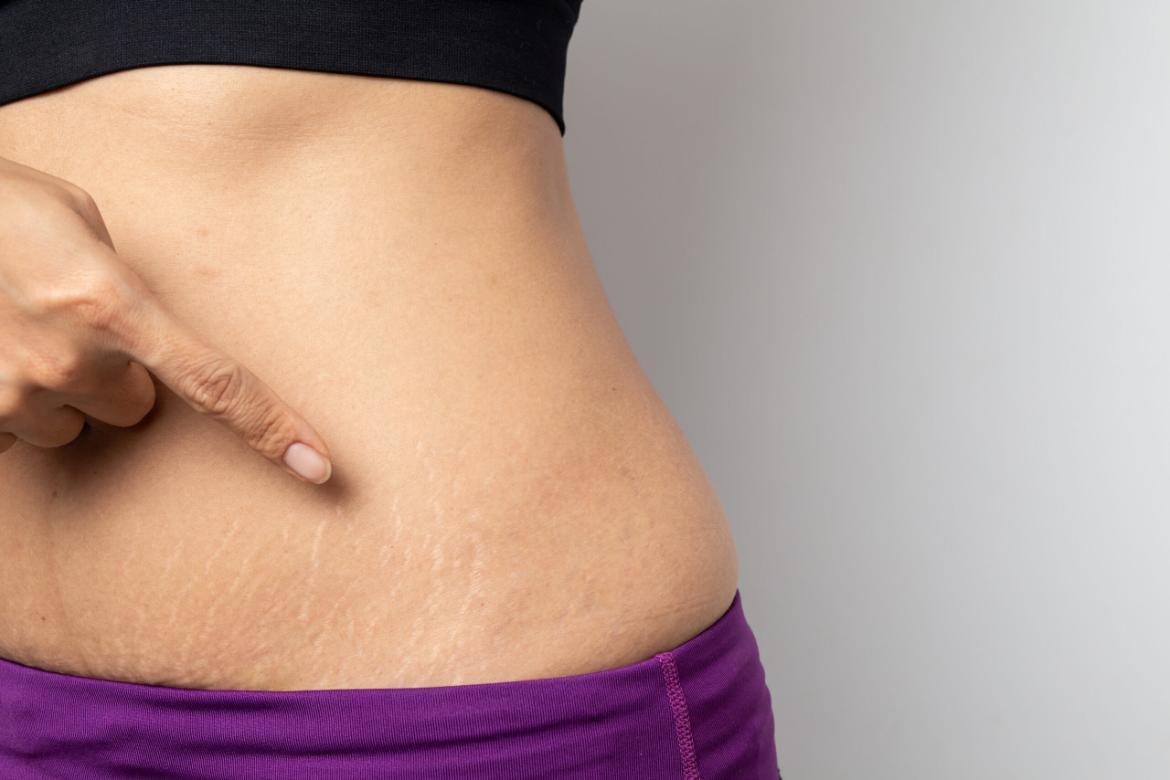
How to Treat Stretch Marks?
Stretch marks are a common problem that affects women in particular and can lead to aesthetically disfiguring skin. Stretch marks, which occur as a result of weakening or deterioration of the underlying skin fibers, are not a serious medical condition but can often cause discomfort. Stretch marks are a skin problem that affects not only women but also men.
These stretch marks can develop due to a variety of factors. Factors such as rapid weight gain and loss, hormonal changes, pregnancy, genetic predisposition, and loss of skin elasticity can all contribute to the appearance of stretch marks. These stretch marks typically appear on the abdomen, hips, thighs, breasts, and buttocks. Stretch marks may initially appear pink, red, or purple, but may fade over time and appear as distinct lines on the skin. Many different methods and products are available to prevent or treat stretch marks. These treatments include creams, lotions, oils, dermatological procedures, and laser treatments. While complete stretch marks removal is not possible, treatments can improve their appearance and reduce their symptoms. It's important to consult a dermatologist or specialist before undergoing such treatments.
What is skin cracking?
Stretch marks are linear deformations that occur as a result of the weakening and damage of elastin and collagen fibers in the dermis. These stretch marks occur when these fibers, part of the skin's natural structure, break and lose their elasticity. Medically known as "striae," these stretch marks occur in the deeper layers of the skin and are usually visible in pink, red, or purple. While stretch marks are not harmful to a person's health, they are a cosmetic problem that often causes aesthetic concerns. They can appear in particular due to factors such as sudden weight fluctuations, pregnancy, puberty, genetic predisposition, hormonal changes, and decreased skin elasticity. These stretch marks are typically seen on the abdomen, hips, thighs, breasts, and buttocks. They can fade, increase in depth, or become less noticeable over time. Although they are not completely curable, their appearance can be reduced or their symptoms alleviated with certain treatment methods.
Causes of skin cracks
There are many different factors that contribute to the formation of stretch marks. These include:
- Rapid weight gain or weight loss: Sudden weight changes can exceed the skin's ability to maintain its elasticity and collagen structures, which can lead to skin stretch marks.
- Pregnancy: Expansion of the skin during pregnancy can predispose to stretch marks, especially in the abdomen, hips and breast areas.
- Hormonal changes: Factors such as puberty, hormonal treatment, and birth control pills can cause changes in skin structure due to hormonal changes.
- Genetic predisposition: It has been observed that some people are genetically more prone to stretch marks due to their skin structure.
- Cortisone medications: Long-term use of cortisone medications can increase the risk of stretch marks by thinning and weakening the skin.
- Skin damage: Skin injuries or burns can lead to cracks in the skin.
- Obesity : Excess weight can cause the skin to stretch and cause stretch marks.
- Cushing's syndrome: In this case, high cortisol levels in the body can cause thinning of the skin and the formation of stretch marks.
- Lack of water: Not getting enough water can contribute to stretch marks by making it harder for skin to retain moisture.
Each of these factors can affect the skin's elasticity and structural integrity, facilitating stretch mark formation.
Symptoms of cracks
The symptoms and appearance of stretch marks can vary from person to person and depending on the factors that cause them. However, in general, the following symptoms can be observed:
- Color and appearance: Stretch marks typically occur in the lower layers of the skin and can be reddish, pink, or purple when they first appear. Over time, stretch marks may turn white or silvery and become more visible scars.
- Location: Stretch marks typically appear on the breasts, abdomen, hips and legs, inner arms, back, shoulders, and waist area. Stretch marks often appear on the abdomen during pregnancy.
- Intensity and size: Stretch marks can vary in size and depth from person to person. Some are fine and small, while others are more noticeable and larger.
- Itching and discomfort: In some cases, cracks can cause itching. Itching can be felt, especially during the skin stretching and cracking process. Additionally, in some cases, small scarring may occur in large, dense cracks.
Stretch marks usually do not show any other external symptoms, but in some cases they can be aesthetically disturbing and cause the person to feel uncomfortable.
What are the types and stages of cracks?
There are two types of skin stretch marks and their stages are generally examined in four stages:
- Striae rubra (red-purple stretch marks): When this type first appears, it appears reddish-purple, depending on skin tone. At this stage, called striae rubra, the stretch marks are newly formed and clearly visible lines on the skin.
- Striae alba (White stretch marks): Over time, the striae rubra begin to fade, and the stretch marks take on a paler hue. At this stage, the stretch marks are called striae alba and take on a more visible scar appearance.
Skin cracks are clinically examined in four stages:
- Stage I: This is the stage where newly formed stretch marks appear. Visible cracks appear on the skin and usually have a red-purple color.
- Stage II: Stretch marks have turned white, and there are no signs of depression or indentation around the striae. However, in later stages, the skin may feel sunken to the touch.
- Stage III: Signs of crack opening and skin striation become more apparent.
- Stage IV: Visible and deep cracks are present. This stage is the most advanced stage of stretch marks and generally leaves more visible scars.
Treatment for stretch marks is generally determined by their stage. Different treatment methods and intensities can be applied depending on the stage of the stretch marks. Therefore, understanding the stages of stretch marks is crucial for the treatment process.
Crack treatment
There are various methods used in the treatment of stretch marks and some of them are:
- Fractional laser: This is an effective method for treating stretch marks. Laser beams penetrate the skin and stimulate collagen production in the area where stretch marks are present, helping to heal skin tissue. This method is also used for skin tightening and scar removal. It should be performed by a specialist.
- Radiofrequency: This is a method that has become increasingly popular in recent years. Radiofrequency waves stimulate subcutaneous tissue, increasing collagen production and contributing to the healing of stretch marks. The number of treatments may vary depending on the severity of the stretch marks.
- Dermatherapy: Dermarollers are devices used to puncture the skin with microneedles. This method increases the channels in the skin and promotes skin regeneration. It is often used in conjunction with stem cell extracts to help reduce stretch marks.
- Platelet-Rich Plasma (PRP): Plasma obtained from a person's blood is injected into the area where stretch marks are present. This method can help speed up the healing process.
- Medications and creams: Creams containing vitamin C, which boost collagen production, can help treat stretch marks. These can be used in conjunction with other treatments for more effective results. However, they are generally not sufficient to completely eliminate stretch marks on their own. It is important to follow the recommendations and guidance provided during the application process.
Is it possible to eliminate stretch marks?
Completely eliminating stretch marks can be quite challenging with current technology and treatment methods. Given that stretch marks are caused by damage to the collagen and elastin fibers beneath the skin, it can be difficult to completely restore these fibers.
What is good for cracked areas?
There are some home remedies and natural treatments to reduce the appearance of stretch marks and improve skin:
- Moisturizing creams and oils: Regularly applying moisturizing creams or natural oils (such as almond oil, coconut oil, or wheat germ oil) to stretch marks can help retain moisture and increase skin elasticity. This can help make stretch marks less noticeable.
- Nutrition: Paying attention to your diet and supporting your skin with nutritious foods can reduce the appearance of stretch marks. It's important to consume foods rich in vitamins C and E, which boost collagen production.
- Exercise: Exercise can tighten your skin and improve its overall health. However, things like excessive or rapid muscle growth can increase the risk of stretch marks.
- Coconut oil: A natural moisturizer, coconut oil can be effective against stretch marks. Regularly applying coconut oil to stretch mark areas can improve skin elasticity.
- Aloe vera: Applying aloe vera gel to stretch marks can help the skin heal. Aloe vera moisturizes the skin, promotes healing, and may reduce the appearance of stretch marks.
- Nutritional supplements: Nutritional supplements, such as collagen supplements or vitamin C, can support skin health and reduce the appearance of stretch marks.
These natural methods for treating stretch marks can often help reduce their appearance, but completely removing them can be challenging. If you have serious concerns about your skin health or want to see a significant change in your stretch marks, it's important to consult a dermatologist or specialist. Experts can recommend the most appropriate treatment method for you and help you achieve more effective results.
