


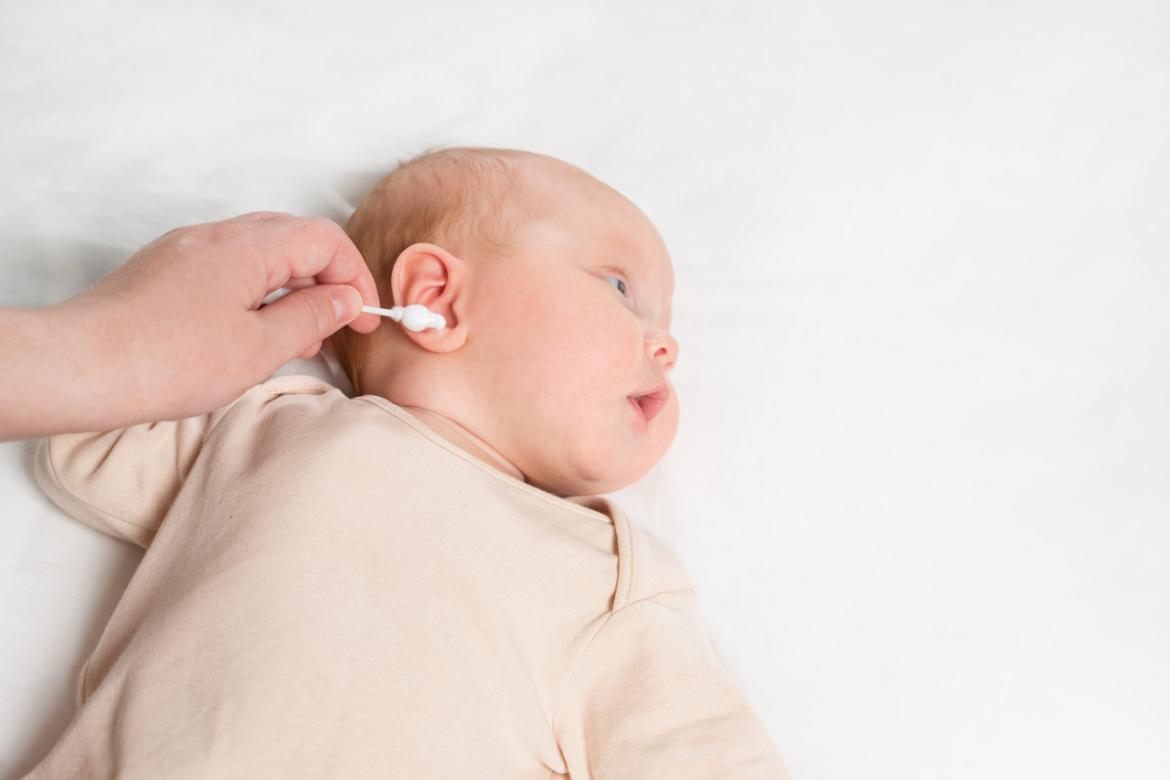
How Should Babies' Ears Be Cleaned?
Babies' ears , like their skin, are sensitive and require proper care. This is where ear care and wax removal become especially important for new parents.
It's perfectly normal for babies, including newborns, to experience watery eyes, mucus buildup in their noses, and earwax buildup. Because babies' skin is more sensitive than adults', maintaining cleanliness is crucial for their health. However, babies' sensitivity and lack of communication skills should be considered, making it more difficult to determine if they've been harmed by cleaning.
Cleaning baby ears may seem scary, especially for first-time parents, but in fact, ear cleaning and earwax removal can be performed safely in babies when caution is taken and certain safety precautions are taken.
Ear care is crucial for babies; their ear canals are short and delicate, requiring gentle cleaning. Even babies' ear canals produce earwax, a secretion that protects the ear from external factors. However, if this wax accumulates excessively, it needs to be cleaned.
Essentially, care and gentleness should be taken when cleaning a baby's ears. The baby's comfort and safety should be considered during earwax cleaning. Hard, narrow objects such as cotton swabs should be avoided when removing earwax. It's always beneficial to seek advice from a healthcare professional or pediatrician regarding earwax cleaning.
Should Babies' Ear Hygiene and Care Be Done?
Yes, ear hygiene is important for babies, but it's important to be careful when cleaning their ears. Babies' ears should be cleaned with care, and special attention should be paid when doing so.
Keeping your baby's ears clean is important to prevent potential problems in the future. During bath time, the outer ear and the surrounding area can be gently cleaned. Use a cloth or cotton ball soaked in warm water to do this.
However, attempting to clean the inside of the ear canal is not recommended for babies. The use of cotton swabs is generally unsafe and discouraged in newborns and infants. Earwax is a natural substance that has antibacterial properties, acts as a protective barrier, and provides lubrication inside the ear. Therefore, removing or attempting to clean earwax can damage the eardrum and increase the risk of infection.
When Should Baby Ear Hygiene and Care Be Done?
Cleaning your baby's ears is an important part of a regular hygiene routine. However, handling them too frequently can damage the delicate eardrum. Generally, babies' ears can be addressed during regular cleanings, such as during bath time.
Newborn babies may not need a bath every day. A few times a week may be sufficient to prevent dry skin. In this case, bath time can also be a good time to clean the ears.
Ear cleaning may involve gently cleaning the outer area with a cotton swab. However, cotton swabs or any other objects should not be inserted into the inner ear. The skin inside the ear is very sensitive, and a soft cloth dampened with water can be used to clean this area instead of specialized products.
It's important to remember that a normal amount of sulfur buildup in babies' ears serves a protective function, and this protective layer can aid in the natural cleansing process. If any abnormalities are noted in the ear, a specialist should be consulted.
In conclusion, cleaning babies' ears should be done as part of a regular care routine, as needed and with care. However, excessive cleaning should be avoided, and no objects should be inserted into the ears unless there is a specific situation.
How to Clean Babies' Ears?
Cleaning babies' ears is a delicate matter and should be done using the correct methods. Ears can usually be cleaned during baby's bath time. This can be conveniently done while bathing your baby.
First, prepare warm water and make sure it's warm enough to not harm your baby's delicate skin. Lightly dampen a soft towel or cotton ball with the water. Use the damp towel or cotton ball to gently clean the outer part of your baby's ears, behind the pinna, and around the ears.
Extra soap or cleaning agents are not necessary or even recommended for cleaning. Avoid inserting any liquid or object into the ear, as this could damage your baby's delicate eardrum.
When cleaning each ear separately, wash, rinse, and dry the towel or cotton swab used between each ear. Be careful not to let water drip into your baby's ear, and dry carefully.
It's important to note that ear cleaning isn't intended to remove earwax. It's used to care for areas outside the ear, and it's important to remember that no objects should be inserted into the ear.
If you notice any abnormalities in your baby's ears, such as redness, discharge or irritation, be sure to consult a healthcare professional.
It is important to be careful and gentle when cleaning your ears, and if you have any concerns, it is best to consult a professional.
Information on the Use of Ear Drops in Babies
Ear drops for babies should generally be used with a doctor's advice or prescription. If a doctor recommends them, or if there's an ear problem or you want to prevent earwax buildup, they should be used with caution.
First, the baby is placed on its side, with the affected ear facing up. The ear canal is gently pulled downward and backward to open the ear canal. The doctor's recommended dose of drops is instilled into the baby's ear, and the baby is asked to remain in the position for about 10 minutes. It is important that the drops remain in the ear for this period.
To ensure the drops are fully distributed in the ear, gently turn the baby's head to the other side and wait. Excess drops may drain out, which is normal and can be removed with a clean cloth or tissue.
Ear drops should be used as prescribed by your doctor. This usually refers to the number of times per day and the frequency of use, as directed by your doctor. When using ear drops, follow your doctor's instructions and avoid overdoing it.
The use of ear drops in infants is a sensitive issue and should therefore be carried out according to a doctor's instructions. Furthermore, if any problems or side effects are noticed, consult a doctor immediately.
What Causes Earwax Accumulation in Babies?
Babies generally don't experience earwax buildup because their bodies naturally regulate earwax production as needed. However, in some cases, excessive earwax buildup can occur, causing discomfort for babies.
Earwax is a secretion that normally forms in the ear canal and acts as a barrier to keep out dirt, dust, and germs. However, certain factors can lead to earwax buildup:
- Natural earwax production imbalance: Some babies may produce more earwax than normal. In this case, earwax buildup can occur.
- Anatomical structure of the ear canal: The anatomical features of the baby's ear canal may make it more prone to earwax accumulation.
- Ear cleaning: Foreign objects entering the ear or incorrect cleaning can cause earwax accumulation.
Babies often show signs of discomfort when they have excessive earwax buildup. These can include ear tugging, crying, fussiness, hearing problems, and sometimes ear pain. It's important to consult a healthcare professional if these symptoms occur.
Interfering with the natural cleaning process of babies' ears and avoiding inserting any objects into the ear can help prevent excessive earwax buildup. However, if you have any health concerns, you should consult a doctor.
Is Earwax Dangerous?
Earwax (cerumen) is a secretion typically produced in the ear canal that serves an important protective role for the body. It is harmless and serves a number of important functions, some of which are listed below:
- Ear hygiene and protection: Earwax is produced to protect the ear canal and keep it clean. This secretion keeps the eardrum and ear canal moist, preventing them from drying out and cracking.
- Fighting germs: Earwax has antibacterial properties and helps prevent germs and infections from entering the ear. This reduces the risk of ear infections.
- Blocking foreign matter: Earwax prevents unwanted foreign matter (such as dirt, dust, and insects) from entering the outer ear canal. This helps prevent irritation and injury inside the ear.
Earwax is usually produced, accumulated, and dried by the body through a natural process. In this way, earwax helps protect the ear and keep it clean. However, sometimes excessive earwax buildup can cause problems, and in these cases, a doctor's advice is recommended for removal.
Earwax usually doesn't need to be cleaned because it is expelled naturally. However, if excessive buildup in the ear is causing hearing problems, discomfort, or pain, it's important to consult a professional. Additionally, using hard objects like Q-tips for earwax cleaning is not recommended, as this can cause irritation and push more wax into the ear, potentially leading to further buildup.
When Should You Seek Help for Your Baby's Ear Health?
- Clogged ear or hearing problem: If your baby's ear sounds clogged or you think your baby has hearing problems, you should consult a doctor.
- Yellow-green discharge: If you notice yellow-green discharge from your baby's ear, this could be a sign of an infection. You should contact a healthcare professional immediately.
- Discomfort, pain, or hearing loss: If you notice any symptoms in your baby caused by earwax, such as discomfort, pain, or hearing loss, you should consult a doctor. Your doctor can then perform appropriate procedures to remove the earwax.
- Bleeding: If you notice bleeding after inserting a cotton swab or other object into your baby's ear canal, you should contact a healthcare professional immediately. This could be a sign of a serious problem.
- General Condition Changes: If you notice a sudden pale appearance, unsteadiness, walking problems, or unexpected movement difficulties in your baby, you should consult a doctor immediately.
If you notice any of these symptoms, it's important to consult a doctor to check your baby's ear health and get the necessary treatment. Being vigilant about ear health and seeking professional help when necessary is crucial for protecting your baby's health.
Symptoms that can be observed to understand ear infection in babies
- Constantly holding the ear: If your baby is constantly holding the ear or trying to scratch that area frequently, this could be a sign of infection.
- Moodiness and insomnia: If your child is constantly fussy, especially before bedtime, or has trouble sleeping, this could be a sign of an ear infection.
- Fever: If your baby has a fever and other symptoms are present (for example, he or she frequently holds his or her ear or is fussy), this may indicate an ear infection.
- Ear discharge: Yellow, green, or bloody discharge from the ear may be a sign of an ear infection.
- Hearing problems: If your baby doesn't respond to soft sounds or doesn't respond to sounds he normally responds to, there may be a hearing problem, which may suggest an ear infection.
These symptoms may suggest an ear infection in babies. If you notice any of the conditions mentioned above or any other concerning symptoms, it's important to see a healthcare provider immediately. A specialist doctor should examine your baby to make a correct diagnosis and prescribe appropriate treatment.
Points to consider when cleaning babies' ears
- Avoid using cotton swabs and fingers: Never use cotton swabs or fingers when cleaning babies' ears. Cotton swabs push earwax deeper and can damage the eardrum. Similarly, avoid using fingers, as they can become lodged in the ear and irritate the eardrum.
- Avoid small parts: Care should be taken to avoid small parts used to clean babies' ears. Small fingers or fingernails, in particular, can irritate and damage babies' sensitive ears.
- Avoid uncontrolled use of ear drops: Ear drops should not be used on babies unless recommended by a doctor. Uncontrolled use can cause ear problems, and use should be avoided without a doctor's advice.
- Learn proper cleaning methods: Babies' ears can usually be cleaned by gently wiping the outer edges with warm water. However, no objects should be inserted into the ears. If you have any health concerns, it's best to consult a pediatrician.
- Consult your doctor for regular checkups: It's important to see your pediatrician regularly to maintain your baby's ear health. Your doctor can check to see if your baby's ears are being cleaned properly and provide any necessary advice.
Being vigilant about cleaning your baby's ears and using appropriate methods is important for maintaining their health. Doctor's recommendations and regular checkups will help ensure your baby's ears are being cleaned properly.
