


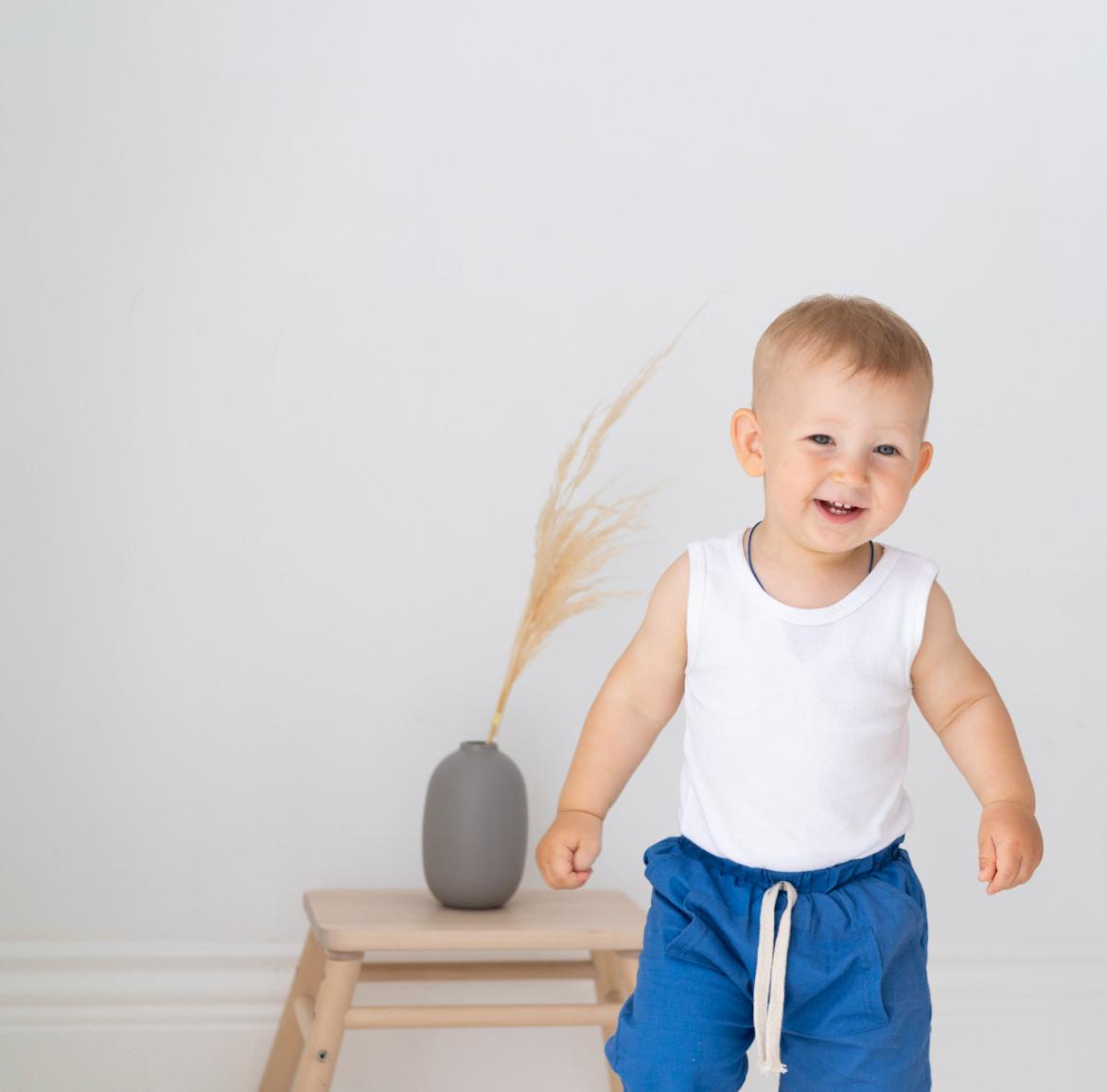
How Does a 12-Month-Old Baby Develop?
12-Month-Old Baby Development: This is an exciting time for your baby's growth and development! As your baby takes their first steps, their exploration progresses, and their communication skills develop, you, as a parent, need to provide a suitable environment for them. You should ensure the safety of your home. Keep fragile items or choking hazards out of reach. It's also important to implement safety measures in your home, such as baby safety gates.
Constantly talking to your baby and using directive phrases can help build their vocabulary. However, since their speaking skills aren't yet fully developed, you can focus on hand signals and facial expressions to understand their needs.
Preventing risky situations and ensuring your baby's safety is crucial. Choosing appropriate toys and educational materials is crucial for both learning and safety. Because manual dexterity is rapidly developing during this period, it's important to choose toys with appropriate, larger pieces.
Additionally, regular health check-ups are important during this period to monitor your baby's development and detect potential health problems in advance.
What are the Social Skills of a 12-Month-Old Baby?
12-Month-Old Babies begin to recognize their family members and generally feel closer and more comfortable with them. However, they may have difficulty recognizing strangers and may avoid them.
Babies' emotional responses are quite pronounced during this period. They begin to express feelings, especially laughter or dissatisfaction, through facial expressions and reactions. They may also imitate their parents or others to replicate something they desire or a pleasurable action.
They begin to learn many basic actions and can imitate gestures and movements, such as waving, clapping, and winking. However, they may refuse to do something they don't want because their personalities are beginning to form during this period. Therefore, it's important to understand babies' desires and reactions, and to establish understanding communication with them.
How should a 12-month-old baby be fed?
Nutrition is crucial and requires careful attention during 12-month-old baby development . During this period, babies become more active and require a variety of nutrients for their growth. Protein, vitamins, and minerals are especially important, along with iron, calcium, and other essential vitamins.
Sharing the table with the family allows them to try different foods and explore a variety of tastes. Babies should be encouraged to eat their own meals and allowed to develop this skill over time.
During 12-Month-Old Development, babies can sometimes be picky eaters, and their eating habits may change. It's important to accept these situations as normal and not insist on them, as long as there are no developmental deficiencies. If your baby prefers a particular food, you can diversify the ingredients of their favorite food to encourage them to consume other nutrients.
Babies should be regularly monitored for development by their pediatrician. This monitoring can identify any deficiencies or nutritional needs, and provide the necessary support. Communication, understanding, and patience are crucial during this process.
What Words Can a 12-Month-Old Baby Say?
At 12 months , babies usually begin to understand some simple words and can say some. However, every baby is different, and language development is individualized, so some babies may understand or say more words, while others may communicate with fewer words.
A 12-month-old baby can usually begin to understand or imitate some simple words, such as "mom," "dad," "baby," "no," "yes," "ball," "go," "come," and "hand." They may not be able to pronounce the words clearly and precisely, but they can be observed beginning to understand and attempting to communicate.
The key is to support babies as they learn words, talk to them frequently, and interact with them. Every baby develops language at a different pace, so it's important to be patient and encourage communication.
What Can Be Taught to a 12-Month-Old Baby?
There's a lot to teach about 12-Month-Old Baby Development . During this period, babies are eager to explore and learn, allowing them to develop a variety of skills. Here are some things you can teach a 12-month-old baby:
- Names of objects: You can teach babies the names of objects they frequently use in their daily lives. For example, you can demonstrate the names of toys, foods, and animals by repeating them.
- Simple commands: They begin to understand simple commands. For example, you can use and teach them basic commands like "come," "take," and "give."
- Waving, kissing hands: You can teach them to imitate gestures such as waving, clapping, and kissing hands.
- Basic daily habits: It's important to teach basic hygiene habits like handwashing and oral hygiene. You can teach them these habits by demonstrating them.
- Simple games: You can play simple games like hide-and-seek and do activities that can develop social skills such as sharing balls or toys.
- Colors and shapes: You can show them colors and simple geometric shapes so they can name them and recognize them.
- Recognizing emotions: You can help them understand emotions like happiness, sadness, fear, etc. You can help them recognize emotions through pictures or facial expressions.
The key is to support their learning and maintain constant communication with them. Every baby is different, so it's important to follow their learning process with patience and understanding.
How to Spend Time with a 12-Month-Old Baby?
There are various activities to spend time with during the 12-Month-Old Baby's developmental period . Babies are eager to explore and learn about their surroundings during this period. Here are some activities you can do when spending time with a 12-month-old baby:
- Playing games: Babies enjoy playing during this period. You can play with soft toys or bouncy, light-up toys. Games that develop manual dexterity, such as simple insertion and subtraction games, are also good choices.
- Reading books and singing: You can read colorful picture books, tell them stories, or sing simple songs. This helps them develop language and entertains them.
- Learning by listening: Babies are open to learning by listening to what's happening around them. You can play them various sounds, animal sounds, or musical instruments.
- Exploration and movement games: You can engage your baby with a variety of toys and encourage them to move with stimulating toys. For example, you can play placement and removal games or simple push-pull games.
- Outdoor activities: When the weather is nice, you can go outside and interact with nature, go to the park and swing on the swing or play in the sandbox.
- Strengthening emotional bonds: While spending time with babies, talking to them, smiling, hugging and showing love strengthens your emotional bonds.
How to Understand Developmental Delay in 12-Month-Old Babies?
There may be signs of developmental delays in a 12-month-old baby . Babies develop individually and differently, but some basic skills generally begin to develop during this period. Developmental delays in a 12-month-old baby can be identified by the following signs:
- Inability to crawl: A baby should usually begin crawling by 12 months of age. If they have difficulty moving or don't crawl at all, this may be a sign.
- Eye contact and social communication: Babies typically begin to make eye contact and engage in social interaction around 12 months of age. If your baby struggles with eye contact or has a lag in social communication skills, this can be concerning.
- Motor skills: Babies can usually stand with support or use gestures. If the baby has difficulty standing even with support or using gestures, this should be evaluated.
- Language development: Babies aged 12 months and older usually begin to understand or imitate some simple words. If they don't say any words or make meaningful sounds, language development can be assessed.
- Object tracking and pointing: Babies often follow or point to objects with their eyes as they disappear. Significant deficits in these skills may be noticeable.
If there is significant regression or concern regarding any of the conditions mentioned, it's important to consult with a pediatrician or child development specialist. Early intervention and support are crucial to addressing developmental delays and providing the baby with the support they need. In any case, seeking professional help is an important step toward a baby's healthy development.
