


Health Benefits of Pilates Exercise
Pilates is a popular sport that is effective in improving flexibility, strength, muscle tone, and pain relief, and has been around for nearly a century. Developed by Joseph Pilates in the early 20th century, this form of exercise originated as a way to rehabilitate injuries in dancers, but over time, it has evolved into a fitness and health practice that appeals to a wide audience.
Pilates is a customizable form of exercise that can be adapted to all ages, genders, health conditions, and fitness levels. This flexibility allows individuals to tailor their program to their own health goals. While it began as a way to speed up recovery for those recovering from injuries, Pilates has now been adopted by anyone looking to improve their overall health and fitness.
Pilates movements focus on balancing, strengthening, and increasing flexibility. Furthermore, when combined with proper breathing techniques, they can help reduce stress and increase mental focus. This means Pilates has positive effects not only on physical health but also on mental and emotional well-being.
Pilates' suitability for people of any age, gender, or fitness level makes it a popular exercise option for a wide audience. For those looking to improve their health, strengthen their bodies, and increase their fitness, Pilates can be an enjoyable and effective option.
What are the benefits of Pilates?
Although Pilates is strength training, it takes a different approach than other strength-training exercises. Rather than building muscle, Pilates focuses on improving muscle tone. This allows the body to gain greater stability and increased endurance.
Pilates, a combination of approximately fifty simple, repetitive exercises, creates muscular effort. These exercises not only increase muscular strength and endurance, but also improve flexibility and improve posture and balance.
Pilates is particularly effective in increasing abdominal and lumbopelvic stability and improving muscle activity. This improves overall body coordination and control, allowing for more efficient movement in daily activities. Pilates can contribute not only to physical health but also to mental focus and stress management. Therefore, for many, it stands out as a comprehensive form of exercise that supports both physical and mental health.
How to do Pilates exercises?
Pilates exercises focus on “five fundamental principles,” each of which includes an important component:
- Breathing: Pilates exercises emphasize controlled, deep breathing. Proper breathing helps activate muscles and make movements more effective.
- Cervical alignment: This principle focuses on proper head and neck alignment. Proper positioning is important for maintaining spinal health and optimizing muscle activation.
- Rib and scapula stabilization: Pilates emphasizes stabilizing the rib cage and shoulders. This supports spinal health by controlling upper body movements.
- Pelvic mobility: Pilates focuses on increasing flexibility and mobility in the pelvic area. Proper pelvic movement contributes to the harmonious functioning of the hips, waist, and back.
- Engaging the transverse abdominis: This principle targets the transverse abdominis muscles, which form the core of the body. Strengthening this muscle group increases core stability.
Every Pilates exercise begins by stabilizing the core musculature, specifically the abdominal, gluteal (buttock), and paraspinal (around the spinal cord) muscles. This is followed by controlled and conscious movements. A unique characteristic of Pilates is its emphasis on the effective use of motor units, focusing on energy efficiency and quality of performance rather than voluntary contractions. Each exercise is typically limited to three to five repetitions, constantly exposing the body to new muscular and kinesthetic challenges. Pilates performed by adhering to these principles can increase body awareness, improve flexibility, and enhance core strength.
Benefits of Pilates to human health
A sedentary lifestyle negatively affects health
Technological advancements have made it possible to easily perform tasks once difficult from a sitting position. However, despite the positive effects of these technological advancements, they have also unknowingly led to inactivity, restricting our lives. Inactivity has become one of the primary health problems today.
A sedentary lifestyle can lead to a range of health problems, including obesity, muscle weakness, poor posture, cardiovascular disease, and many other chronic conditions. Inactivity can reduce the body's natural functions and reduce quality of life.
In the search for a solution to combat inactivity, the training method developed by Joseph Pilates, a physical therapist who served during World War II, played a significant role. Pilates gained immense popularity by helping wounded soldiers recover quickly and regain strength. It also helped those who survived the plague epidemic of the time develop higher immunity.
Pilates stands out as a form of exercise that strengthens not only the body but also the mind. It offers numerous benefits, including toning, improving posture, joint and muscle flexibility, regular breathing, and overall strength. Therefore, Pilates is considered an effective solution to a sedentary lifestyle and contributes to both physical and mental health.
Pilates has many health benefits.
Pilates offers numerous health benefits. Its key characteristics, which distinguish it from other sports, include its reduced risk of trauma and stress, which can occur when performed properly or under excessive load, and its lower likelihood of negative effects on the body. This increases Pilates' appeal and, if adhered to, its potential side effects.
The positive health effects of Pilates may vary depending on individual differences. However, with regular practice, a range of benefits can be achieved. Pilates focuses on fundamental principles such as breath control, core activation, centering, body alignment, mobilization, and stabilization.
The health benefits of Pilates include toning, improving posture, reducing pain from muscle tension, and strengthening muscles. This exercise method can increase flexibility and strength by targeting various muscle groups throughout the body.
These positive health effects of Pilates become more apparent with regular and correct practice. When adherence to Pilates training principles and adopted as part of a healthy lifestyle, this exercise method can be a significant contribution for many people.
It can be done on a mat or with equipment.
Pilates can be performed in two basic types: Matwork (on a mat) and apparatus pilates.
- Matwork Pilates: This type of exercise typically involves exercises performed on a mat on the floor. Equipment is minimal or nonexistent. Movements are performed using body weight and resisting gravity. This allows for a strong focus on core Pilates principles.
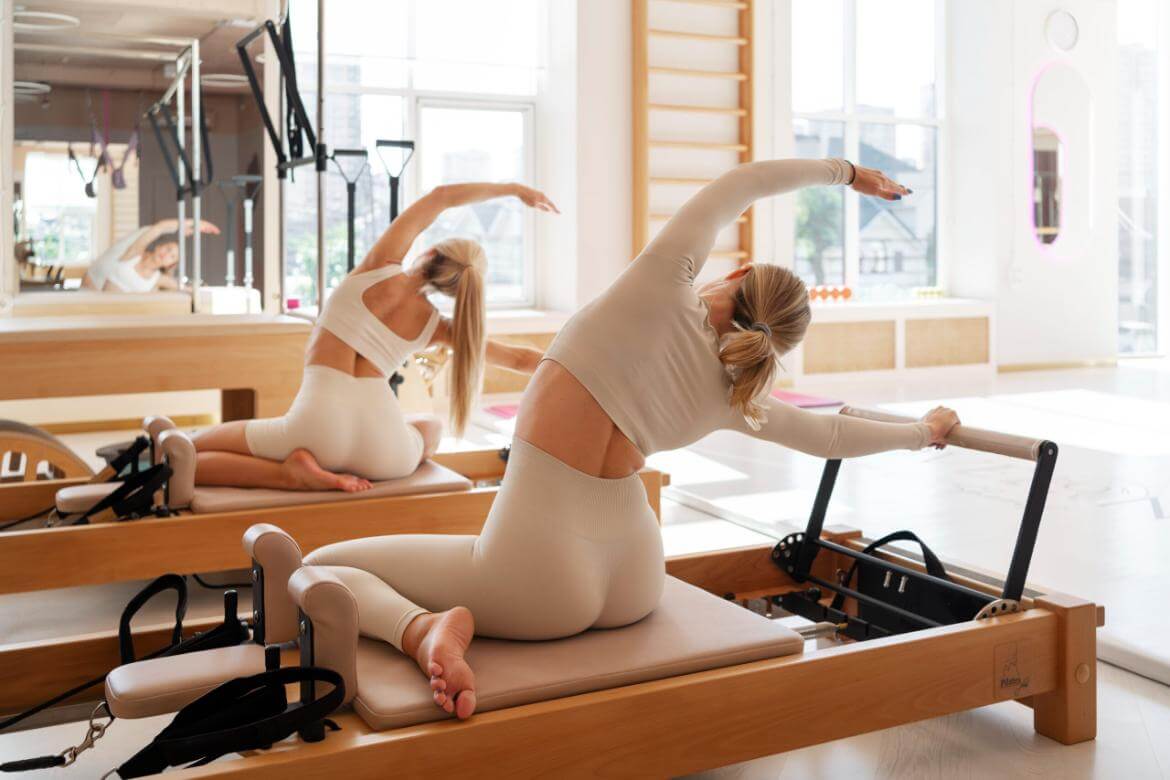
- Equipment Pilates: Equipment Pilates is a form of exercise performed using specially designed equipment. This equipment may include a variety of tools, such as reformers, cadillacs, chairs, and barrels. Equipment makes the workout more effective by increasing resistance and supporting certain movements. Equipment Pilates is particularly useful for targeting specific muscle groups and controlling the resistance.
Both types of Pilates focus on fundamental principles, but equipment Pilates offers more options, particularly in terms of movement variety and resistance control. Matwork Pilates, on the other hand, generally has the advantage of being more portable and can be performed anywhere. The preferred type may vary depending on an individual's goals, preferences, and physical condition.
It needs to be done under the supervision of experienced instructors.
Pilates is a suitable exercise method for those with poor posture, those with a sedentary lifestyle, those experiencing muscle pain, tension, and weakness, those with a sedentary lifestyle, and those needing stretching and strengthening after physical therapy or injury. However, before starting any Pilates program, it's important to consult a professional and work with an experienced instructor who is knowledgeable in the field to learn the exercises correctly.
An experienced Pilates instructor can help understand an individual's specific needs and goals, ensure proper form, and create a personalized exercise plan for each individual. This ensures a program tailored to their physical condition and can help prevent potential injuries.
Pilates, when practiced under the guidance of an experienced instructor, can help individuals increase body awareness, learn proper techniques, and progress safely. Therefore, before beginning Pilates exercises, it's important to consult with a qualified health professional and get started with the instructor's guidance.
How to start Pilates?
To start Pilates, it is important to follow the following steps:
- Talk to your doctor: It's important to talk to your doctor before starting any new exercise program, especially if you have a chronic health condition or medical history. Your healthcare provider can assess whether Pilates is right for you.
- Seek help from a qualified instructor: Pilates requires proper form and technique. Therefore, it's important to seek help from a qualified Pilates instructor. They can create a program tailored to your specific needs and teach you the movements correctly.
- Start slowly: When starting Pilates, it's important to progress slowly and with control. Giving your body time to acclimate to a new activity can reduce the risk of injury. Start by focusing on the basics and gradually increase the difficulty.
- Establish a regular exercise routine: To reap the benefits of Pilates, it's important to exercise regularly. Practicing Pilates several times a week can help you notice changes in your body and improve your health.
Pilates can be an excellent addition to a healthy lifestyle. However, before starting this exercise program, seeking professional advice and learning proper techniques under the guidance of an instructor are essential for an effective and safe Pilates practice.
