



Down Syndrome
Down syndrome is a chromosomal abnormality and is characterized by differences in intelligence, distinct physical features, and various health problems. Normally, each human cell contains 46 chromosomes, but those with Down syndrome have an extra chromosome 21. For this reason, Down syndrome is also called trisomy 21.
Down syndrome symptoms
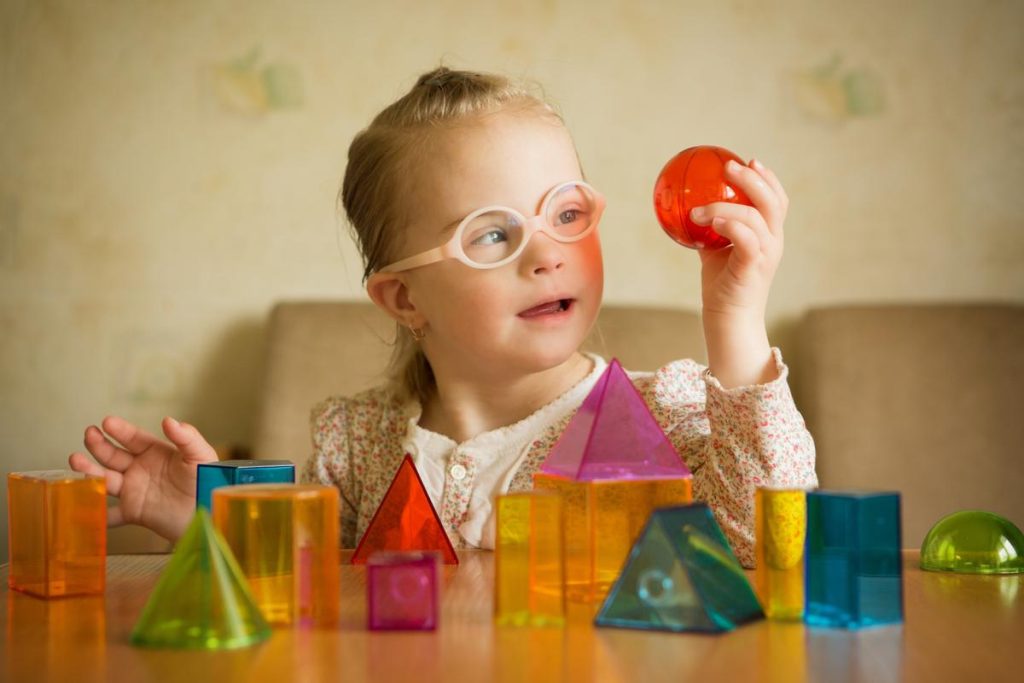
- Physical characteristics: Distinctive physical characteristics such as a round face, small head and ears, a flat nasal bridge, a protruding tongue, wide-set eyes (epicanthic folds), short stature, small hands and feet, and flabby muscle tone (hypotonia) may be present. These may help identify individuals with Down syndrome.
- Intellectual Developmental Disability : Individuals with Down syndrome typically experience mild to moderate intellectual developmental delay. Intelligence is generally considered average, but it can vary from individual to individual. With specialized education, therapy, and support, individuals can discover their potential and develop their talents.
- Language and communication skills: Language and speech skills may vary across development in individuals with Down syndrome. Many are late to begin speaking or may have limited vocabularies. However, communication skills can be improved through early intervention, speech therapy, and alternative communication methods.
- Motor skills: Due to flaccid muscle tone (hypotonia), individuals with Down syndrome often experience motor skill delays. Walking, coordination, balance, and fine motor skills may be difficult. Motor skills can be improved with supportive treatments such as physiotherapy and occupational therapy.
- Health issues: Certain health issues are more common in individuals with Down syndrome. These may include heart disease, hearing loss, vision problems, thyroid problems, digestive problems, sleep apnea, and immune system problems. Therefore, regular health monitoring and early intervention are important.
Types of Down syndrome
Trisomy 21 (Complete Trisomy): This is the most common type of Down syndrome. Normally, every individual has two copies of chromosome 21, but individuals with trisomy 21 have exactly three copies of chromosome 21. This condition is caused by a genetic error and usually occurs during the formation of the mother's egg or the father's sperm.
Mosaic Down syndrome: In individuals with mosaic Down syndrome, some cells have a normal number of chromosomes, while other cells have trisomy 21. This occurs as a result of a chromosome error at fertilization. Symptoms and intellectual development levels are often milder in individuals with mosaic Down syndrome.
Translocation Down syndrome: Translocation Down syndrome is a condition in which a piece of chromosome 21 attaches to another chromosome. The individual's chromosome count is normal, but an extra piece of chromosome 21 attaches to another chromosome. This is usually inherited from parents.
Trisomy 21 is the most common form of Down syndrome and is more common than other variants. The signs and symptoms of each variant may vary slightly, but the physical characteristics and intellectual developmental delays generally associated with Down syndrome are similar across the many variants. In all cases, it is important to provide support and treatment tailored to the individual's needs.
Causes of Down syndrome
Down syndrome results from a genetic abnormality. The most common cause is an abnormality in the 21st chromosome pair. While an individual normally has two copies of the 21st chromosome pair in each cell, individuals with Down syndrome have three copies. This condition is called trisomy 21. Trisomy 21 accounts for approximately 95% of Down syndrome cases.
Trisomy 21 is usually caused by a genetic error that occurs during the formation of the mother's egg or the father's sperm. It can occur in two basic ways:
- Sporadic Trisomy 21: This is the cause of most cases of Down syndrome. Sporadic trisomy 21 occurs when a mother's egg fails to divide after normal fertilization. This is a random occurrence and can occur even if there is no previous family history of Down syndrome.
- Hereditary Trisomy 21: This rare condition can be inherited from one parent to the other. Hereditary trisomy 21 is associated with a specific genetic condition in which one parent is a carrier. This genetic condition occurs when a portion of chromosome 21, which a parent normally has two copies of, attaches to another chromosome. Having this condition in a parent increases the risk of trisomy 21 in a child.
Additionally, in some cases, Down syndrome can occur in mosaic form. In mosaic Down syndrome, some cells of an individual have three copies of chromosome 21, while other cells have a normal number of chromosomes. The exact cause of mosaic Down syndrome is unknown.
Genetics are the primary cause of Down syndrome, but increasing maternal age is also a risk factor. Increasing maternal age increases the risk of Down syndrome, especially for expectant mothers over the age of 35. However, most cases of Down syndrome occur in younger mothers because they have more pregnancies.
Although the exact cause of Down syndrome is not fully understood, genetic and age-related factors are known to play an important role.
How is Down syndrome diagnosed?
Various methods are used to diagnose Down syndrome. These include screening tests and diagnostic tests. Common methods used to diagnose Down syndrome include:
- Ultrasound (USG): An ultrasound test performed during pregnancyis used to monitor a baby's development and detect potential abnormalities. Certain characteristics may indicate a risk of Down syndrome. These include nuchal translucency and nasal bone length. This test can be used as a screening test to assess the risk of Down syndrome.
- Second trimester screening tests: Screening tests performed during the second trimester (between 16 and 20 weeks) are used to assess the risk of Down syndrome. These tests include the triple test (measuring alpha-fetoprotein, estriol, and beta-HCG levels), the quadruple test (measuring inhibin-A levels in addition to the triple test), and the double test (combining ultrasound and blood tests). These tests provide a screening tool to identify the risk of Down syndrome but do not provide a definitive diagnosis.
- Non-invasive prenatal testing (NIPT): NIPT is a test that detects the presence of Down syndrome and other chromosomal abnormalities by analyzing fetal DNA from maternal blood. This test is highly accurate and provides a definitive diagnosis. However, while NIPT is used to provide a definitive diagnosis, diagnostic testing (amniocentesis or chorionic villus sampling) may be needed to confirm positive results.
- Diagnostic tests: If a pregnant woman is at high risk for Down syndrome or has a positive NIPT result, a definitive diagnosis can be made using diagnostic tests. These include amniocentesis (taking a sample of amniotic fluid with a thin needle inserted into the radiolucent cavity) and chorionic villus sampling (taking a sample from the placenta). These tests directly analyze the baby's chromosomal makeup, allowing a definitive diagnosis of Down syndrome and other genetic abnormalities.
What are the common health problems in Down syndrome?
- Mental and cognitive development problems
- Physical development problems
- Heart diseases
- Hearing problems
- Eye problems (blurred vision, cataracts)
- Digestive system problems
- Thyroid problems
- Obesity
- Chronic constipation
- Memory problems (Dementia)
Down syndrome treatment methods
To be fair, Down syndrome is not a disease, but a genetic difference . Individuals with Down syndrome need support and services to improve their quality of life and potential, but treatment cannot eliminate Down syndrome.
Down syndrome is a genetic condition that an individual is born with and is permanent. Therefore, caring for and supporting individuals with Down syndrome requires a comprehensive approach to health, education, therapy, and social inclusion. Below are some of the supports and services typically available to individuals with Down syndrome:
Education and special education: Individuals with Down syndrome can develop cognitive, language, social, and motor skills through appropriate educational programs and special education services. Structured educational plans and teaching strategies are used to address the individual's unique needs.
Physiotherapy and occupational therapy: Physiotherapy is used to improve motor skills and muscle strength, while occupational therapy supports the acquisition of daily living skills. These therapies can help increase an individual's level of independence.
Speech and language therapy: Speech and language therapy can be used to improve speech and language skills in individuals with Down syndrome. This therapy provides support in areas such as language comprehension, communication skills, articulation, and vocabulary.
Medical monitoring and healthcare: It's important for individuals with Down syndrome to receive regular medical checkups. Regular monitoring and treatment are provided for areas such as heart health, vision and hearing, thyroid function, and other potential health issues.
Support groups and family counseling: Support groups and family counseling services are available for families of individuals with Down syndrome. These services provide families with information, resources, and emotional support.
Social and Emotional Support: Support should be provided to address the social and emotional needs of individuals with Down syndrome. Families can obtain support through support groups, professionals specializing in special needs, and community resources. Appropriate environments should be provided for social interaction, relationship building, and emotional development.
Employment and independent living support: Employment opportunities and independent living support should be provided to support the social integration of adults with Down syndrome. Appropriate vocational skills training, workplace support, and life skills development can help increase an individual's independence.
Is it possible to detect Down syndrome as soon as a baby is born?
Babies with Down syndrome can be diagnosed immediately at birth, but genetic testing is necessary for diagnostic accuracy. Certain physical characteristics and signs at birth may suggest Down syndrome, but the diagnosis must be confirmed through clinical evaluation and genetic testing.
Babies with Down syndrome often exhibit physical characteristics such as flattened facial features, slanted eyes, small ears, short stature, short neck, and loose joints. However, these symptoms alone are not sufficient to diagnose Down syndrome.
Blood tests and genetic testing are used to definitively diagnose Down syndrome. Tests such as non-invasive prenatal testing (NIPT), amniocentesis, and chorionic villus sampling can detect Down syndrome by analyzing the baby's chromosomal makeup. These tests examine the baby's DNA to determine the presence of an extra chromosome 21, called trisomy 21.
If Down syndrome is suspected at birth, the baby is usually referred to a geneticist for appropriate testing. Genetic testing for diagnosis is crucial for providing appropriate care and support to babies with Down syndrome.
Who is affected by Down syndrome?
Down syndrome is a genetic disorder that can occur in any ethnic or socioeconomic group. It is usually caused by a genetic condition called trisomy 21. Trisomy 21 means that an individual has three chromosomes instead of the normal two.
Down syndrome usually occurs randomly and depends on the parents' age. The risk of Down syndrome increases with increasing maternal age. However, 80% of babies with Down syndrome are born to mothers younger than 35.
However, there are several other forms of Down syndrome caused by trisomy 21, which are also caused by various chromosome changes. For example, translocation Down syndrome occurs when pieces of one chromosome attach to another. This condition can show a genetic pattern of transmission in families.
Down syndrome can occur in babies of all genders and is common worldwide. Approximately one baby with Down syndrome is born in every 800-1,000 births.
Genetic counseling and prenatal screening tests can help determine the risk of Down syndrome. However, definitive diagnosis requires genetic testing. A child with Down syndrome can be born to any family at any age.
How to prevent Down syndrome?
Down syndrome is usually a condition that occurs at birth and is not related to family history or the parents' ages. However, the risk of Down syndrome increases with increasing maternal age. This risk is generally higher in mothers over 35.
The likelihood of having Down syndrome varies with maternal age. Some statistics include:
- The risk of Down syndrome for a 20-year-old mother is approximately 1 in 1,500.
- For a 30-year-old mother, the risk is approximately 1 in 800.
- For a 35-year-old mother, the risk is approximately 1 in 350.
- For a 40-year-old mother, the risk is approximately 1 in 100.
- For a 45-year-old mother, the risk is approximately 1 in 30.
These statistics provide general guidance, but each individual's situation may vary. A definitive diagnosis requires genetic testing. Prenatal testing can be used to detect Down syndrome. These tests include ultrasound, chorionic villus sampling (CVS), and amniocentesis.
