


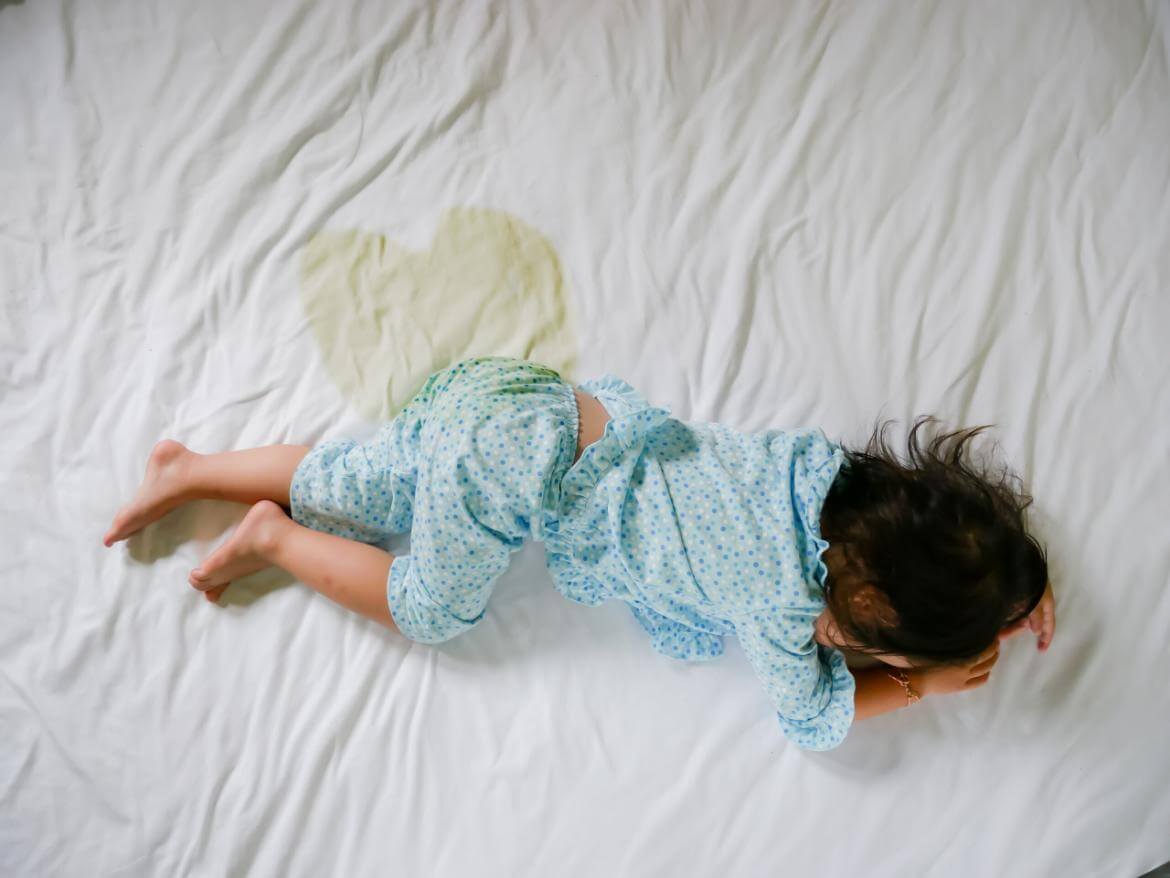
Bedwetting (Enuresis)
Enuresis is a health problem encountered in children and is referred to in Turkish as "bedwetting." This condition is common in our country and can manifest as daytime or nighttime bedwetting. Nighttime bedwetting is called "enuresis nocturna," while both daytime and nighttime bedwetting is called "enuresis diurna." Nocturna enuresis refers to bedwetting in children over the age of 5, who are not congenital or have a central nervous system defect.
Nocturnal enuresis can be divided into two main groups: simple and complicated. In the simple type, the child has no other symptoms other than bedwetting. In the complicated type, problems such as daytime urgency, frequent urination, daytime incontinence, and chronic constipation may also occur.
Primary enuresis refers to the inability to control one's urine from birth. Secondary enuresis describes the recurrence of urinary incontinence after a period of at least six months without urinary incontinence. While enuresis is usually seen in children over the age of five, its frequency decreases with age. It is more common in families with lower socioeconomic and educational levels, in extended families, and generally in boys between the ages of 10 and 11.
Causes of bedwetting (Enuresis)
Enuresis (bedwetting) can be caused by a variety of factors. These factors are generally genetic, hormonal, bladder-related, or non-organic. While the majority of enuresis cases (97-98%) have no organic cause, organic causes can be found in 2-3%. Organic causes include urinary dysfunction, urinary tract infections, urethral obstruction, ectopic ureter (ureter not located normally), sleep apnea, diabetes mellitus, diabetes insipidus, and hyperthyroidism.
Some cases of enuresis may be due to family history or genetic factors. For example, the prevalence of enuresis can reach 77% in children with both enuretic parents, while the prevalence can be as low as 46% in children with one enuretic parent. The prevalence of enuresis may be higher in identical twins.
We can summarize the main causes of enuresis as follows:
- Arousal problems: Some children may experience urinary incontinence due to deep sleep. However, this is not true for every child. Research also shows that urinary incontinence is not related to sleep. In this case, the child's inability to perceive the feeling of bladder fullness and the inability to be awakened may be a problem.
- Bladder capacity and contractions: Many enuretic children have decreased bladder capacity.
- Increased nighttime urine output: Excessive fluid intake or insufficient secretion of the hormone ADH can increase nighttime urine output. This can disrupt bladder capacity and lead to enuresis.
- Urinary tract infections: Enuretic children may experience symptoms such as frequent urination and a burning sensation during the day.
- Urethral Obstruction: Obstruction of the urethra can lead to bladder fullness, causing enuresis.
- Diabetes and Diabetes Insipidus: Urine production may increase due to diabetes or diabetes insipidus.
- Hyperthyroidism, sleep apnea syndrome: These health problems can also lead to enuresis.
- Psychological and genetic causes: Psychological factors such as stress and attention deficit hyperactivity disorder (ADHD) may also be influential. Genetic predisposition may also increase the risk of enuresis.
The causes of enuresis can vary and vary from child to child. If you or a child is experiencing enuresis, the best course of action is to consult a healthcare professional.
How is enuresis diagnosed?
Diagnosing enuresis requires several steps. First, it's determined whether the child has been wetting the bed since the beginning (primary enuresis) or whether it began later (secondary enuresis).
The following criteria are taken into consideration to diagnose enuresis:
- Frequency and duration: For a diagnosis to be made, the child must wet the bed at least twice a week for at least three months.
- Distress and functional impairment: Enuresis must cause significant distress and functional impairment in the child's life. Negative effects must be observed in both social and functional domains.
- Excluding other factors: Various evaluations should be made to exclude other possible causes.
Different assessment methods are used to distinguish between simple and complex urinary incontinence. Therefore, the family may be asked the following questions:
- Do you have daytime urinary incontinence or urinary incontinence while awake during the day?
- Does he have difficulty holding his urine?
- How many times a day does he need to urinate?
- Do you have any straining or urgency while urinating?
- Does he/she struggle to hold his/her urine?
- Has he/she had a urinary tract infection?
- Do you have constipation or fecal incontinence?
The answers to these questions can help identify complex urinary incontinence. In this case, a more detailed second-line evaluation is performed. This stage includes consideration of central nervous system problems, diabetes, and attention deficit hyperactivity disorder.
When making a diagnosis, a detailed history is taken. Urinary habits, defecation habits, fluid intake, psychological status, and family history are questioned. Daytime and nighttime urination, bedwetting frequency, and defecation habits are also recorded. A voiding diary may also be required.
The examination may not usually yield any significant findings. However, the child's abdomen, back, and genital areas are carefully examined. Laboratory examinations include a urinalysis and urine culture. If relevant symptoms are present, tests such as blood sugar and thyroid function tests may also be requested. If necessary, uroflowmetry, cystourethrogram, and ultrasound may be performed as second-line tests. If symptoms such as central nervous system problems are present, direct radiologic imaging may be requested.
How to treat bedwetting?
Bedwetting can be treated using a variety of approaches. These methods are determined by the child's age, the severity of the bedwetting, and underlying factors.
- Supportive treatment: When starting bedwetting treatment, it is important to provide detailed information and a description of the problem to the child and family. The family is informed that approximately 15% of cases resolve on their own each year. Both the child and the family should be an active part of the treatment process. The necessary precautions and points to consider are clearly communicated to the family. Treatment should not begin before the age of 5; school start is generally considered the most appropriate time for treatment. A late start to treatment can lead to social and psychological problems. Daily fluid intake is regulated, and fluid intake is limited in the evening. Caffeinated beverages, tea, cola, salty foods, and calcium-containing foods should be avoided at night. If constipation is a problem, the diet should be adjusted, and medication should be initiated if necessary. Activities such as television viewing and computer games should be limited. Regular daytime toilet visits should be encouraged. Toilet visits before bedtime should be encouraged, and the child should be woken two hours after bedtime. Nighttime toilet visits can be facilitated by leaving a light on. Diaper use is strongly discouraged. The child who wets the bed should actively participate in changing their clothing and bed linens. Punishment should be avoided. The child should keep a calendar that tracks wet and dry nights.
- Alarm therapy: This is an especially effective method for children who have difficulty waking. It wakes the child by sounding an alarm at the time of urinary incontinence. The success rate is between 65-75%. It helps the child develop a habit of waking up. This therapy should be applied for at least 6-8 weeks and continued for 6 months if a response is observed. Family compliance with treatment is also important.
- Medication: Desmopressin, tricyclic antidepressants, and anticholinergic medications can be used to treat bedwetting. Desmopressin is a medication that reduces urine output. It is available in tablet or spray form and is best taken half an hour before bedtime. It is safe for long-term use, but fluid restriction should be considered.
- Psychotherapy: If bedwetting is psychologically based or has caused psychological and social problems, psychotherapy may be helpful.
The treatment method should be determined based on the child's individual situation and the underlying causes of bedwetting. It's best to consult with a healthcare professional before starting treatment.
How to prevent underinfection?
Early diagnosis is crucial for preventing enuresis. Early diagnosis allows for prompt treatment and increases the likelihood of overcoming bedwetting. It's also important to remember that bedwetting can lead to a lack of self-confidence in children. Therefore, a supportive approach is essential. Children should understand that this condition is quite common and can be overcome. In addition to providing emotional support, the following measures can help prevent bedwetting:
- Limiting evening fluid intake: Caffeinated beverages such as tea and cola should be avoided, especially about two hours before bedtime. This can help reduce nighttime urine production.
- Developing toilet habits: Your child should be taught to go to the toilet before bed. This can help reduce bladder filling during the night.
- Encouraging nighttime toilet use: Instead of focusing on the child's bedwetting problem, encourage the child to use the toilet every night. This can help develop toilet habits.
- Providing easy access: It's important for your child to be able to easily reach the toilet. Night lights may be needed to illuminate the path and remove any obstacles. If necessary, a portable toilet may also be considered.
- Diaper use: Diaper use may be considered for babies or young children. However, this may not be a solution to bedwetting in adults. It's important to consult a doctor.
- Pay attention to bowel health: It's important to maintain regular bowel movements. Constipation can make it difficult to fully empty your bladder. Therefore, addressing constipation is important.
It's important to remember that bedwetting (enuresis) can occur in both children and adults. Limiting evening fluid intake and developing toileting habits can help prevent this problem in adults as well.
Individuals interested in learning more about treating and preventing bedwetting can seek expert advice from a healthcare provider. We wish you healthy and trouble-free days.
