


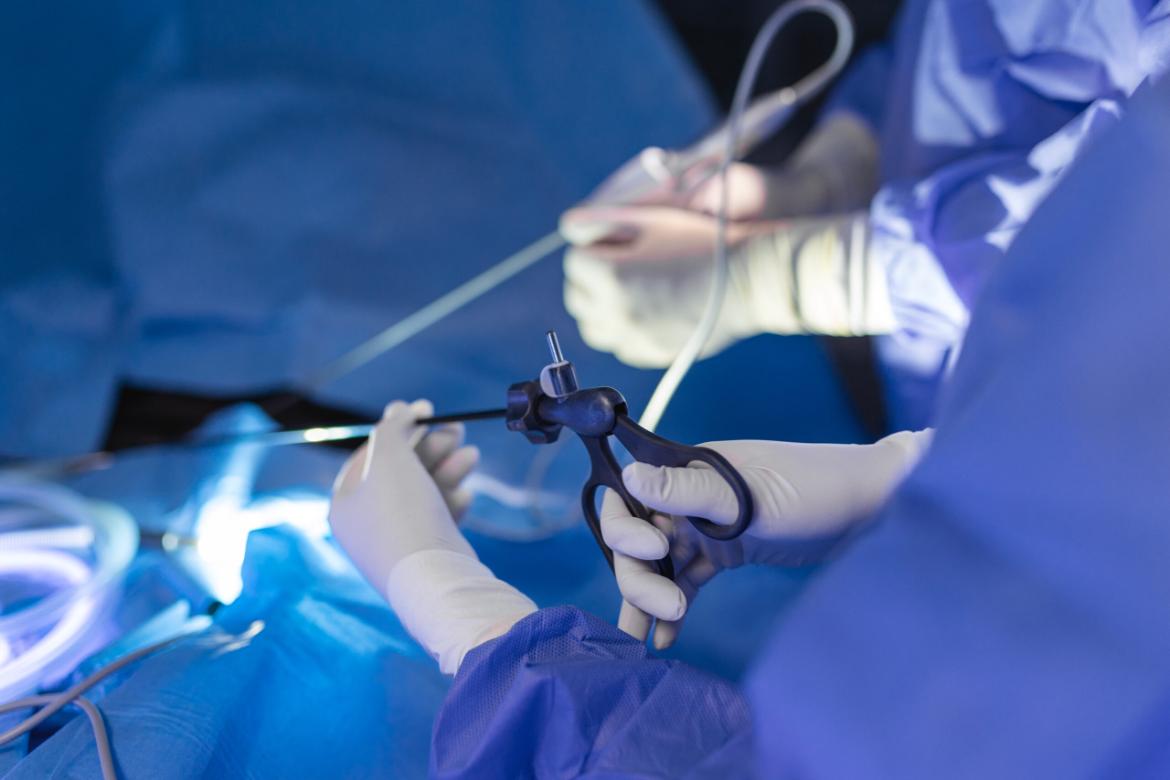
Arthroscopy Surgery
It's a surgical procedure involving joints. It's known as a visual examination, which involves inserting small tubes into a joint to visualize the inside. It's used for the diagnosis and treatment of diseases involving joints using cameras and lighting systems. An arthroscope is an instrument that allows us to see inside a joint. This procedure uses a lens and internal lighting system to magnify and illuminate the joint tissues. Arthroscopy allows for closed-circuit examination without opening the joints. During this examination, your doctor can diagnose injuries, deformities, and diseases in a person's joints and provide information about the necessary examination. The most common arthroscopy procedure involves the knee joint. Our doctor typically performs the procedure using a 4mm arthroscopic television. Arthroscopy is typically used to treat these conditions, along with the knee, shoulder, ankle, wrist, elbow, and hip joints. Images from the joint can be displayed on a screen and examined in detail using lenses and internal lighting.
At Ankara Private Magnet Hospital, the Department of Orthopedics and Traumatology Surgery provides treatment under appropriate hygiene conditions, conducted by our expert physicians. You too can easily address your arthroscopy (joint) problems by visiting Ankara Private Magnet Hospital.
In Which Situations Is Arthroscopy Applied?
- In cases where compression occurs in front or behind the hip joint
- In foot and ankle arthritis
- Synovial diseases of the hip joint
- In the formation of joint inflammation and removal of free bone and its parts within the joint
- Elbow and hip joint tears
- Problems that occur in the kneecap bone and infection in the knee
- Having movement restrictions in the person's joints
- Dislocated shoulder, compressed shoulder during
- Damage to connective tissue and cartilage
- Finger joints, complaints of loss of strength
How is Arthroscopy Treatment Performed?
Before surgery, the patient is asked to undergo periodic examinations. The results will determine which surgery is best for you.
The suitability of the procedure is assessed. The patient undergoing surgery is advised to fast for six hours to empty their stomach. Arthroscopy is performed under general anesthesia. If the diagnosis is simple, it can also be performed under local anesthesia. In this simple procedure, general anesthesia is applied only to the area to be treated. Incisions are made on the skin. Arthroscopic surgery requires at least two incisions, each approximately 0.5 cm in size. A device that allows visualization of the joint is inserted into the first incision. The structures within the joint are displayed on a screen via a camera. The treatment devices are inserted into the second incision, and the surgery is performed. The illuminated lens is about the size of a pencil, eliminating the need for large incisions. During the surgery, light is provided by the fiber optic at the tip of the arthroscopy device. Any problems identified during the diagnosis are corrected, and the surgery is performed. After the surgery, the arthroscope and the instruments inserted into the body are removed, the incisions are stitched, and the surgery is closed with a bandage. The surgery duration varies between approximately 30 minutes and 1.5 hours. Joints and disorders where arthroscopy is frequently used can be listed as follows:
Arthroscopic Knee Surgery: Arthroscopic knee surgery often provides highly successful results for patients experiencing meniscus problems. Additionally, arthroscopic knee surgery is frequently used for a variety of conditions, including anterior and posterior cruciate ligament problems, cartilage problems, rheumatoid arthritis, limited mobility, and removal of foreign bodies from joints.
Anthroscopic Shoulder Surgery: It is preferred in many shoulder surgeries such as structural compression of the shoulder joint, inappropriate and excessive use of muscles, limitation of movement, and diseases developing within the shoulder joint.
Arthroscopy Ankle Surgery: It is frequently used for many problems involving the ankle, such as removal of the joint membrane, cartilage treatment of the joint, tissue compression resulting from an ankle sprain, early-stage arthritis, and treatment of persistent pain and swelling.
Hip Arthroscopy : Unlike other joints, hip arthroscopy requires specialized surgical instruments that are located deep within the body and require extensive coverage. These are preferred for treating loose joints, vague hip pain, cartilage damage, or injuries.
Advantages of Arthroscopy Treatment
Because the surgery is performed through 0.5 cm incisions, recovery is quicker than open surgery. Patients can return to their daily activities after a few days. Because the incision is small, post-operative complications such as wound healing and infection are very rare. The ability to see joint problems in detail is crucial. Patients experience advantages such as less pain, minimal blood loss, and less scarring during surgery.
Post-Arthroscopy Treatment Recovery Process
Recovery after treatment is very rapid. The patient does not experience significant pain. Arthroscopy, which varies from patient to patient and depends on the area treated, produces very successful results. The patient can perform daily tasks at home without experiencing any difficulties.
What is the difference between arthroscopy and open surgery?
During open surgery, large incisions are made to access the joint. The area of the joint that can be seen through these incisions is quite difficult. Patients experience more pain after surgery, and recovery time is correspondingly longer.
In anthroscopy, the instrument used to visualize and treat the joint is approximately half a centimeter thick. Because the incision is small, recovery time is shortened and pain is rare. Patients experience no difficulty with postoperative mobility and can remain comfortable.
Most Frequently Asked Questions?
What is the Price of Anthroscopy Surgery?
At our hospital, prices vary depending on the procedure and the surgeon performing it. Our Ankara Magnet Private Hospital is located in Tandoğan (Anatolian Square). You can schedule an appointment and obtain the necessary information from your doctor by calling our hospital. 0312 212 80 80
When Can Walking Occur After Antroscopy Surgery?
The patient's walking ability varies depending on the procedure and joint location. Patients are generally able to return to their daily lives within a week.
How to Select a Suitable Patient for Anthroscopy?
The selection of suitable patients for anthroscopy varies depending on the age of the person and the type of injury to the joint.
Is Arthroscopy a Difficult Surgery?
Treatment is a relatively simple procedure. Because the incisions are small, the patient experiences a painless and easy recovery.
In what situations is anthroscopy considered useful?
Arthroscopy can be performed on any joint in the body. It is particularly beneficial for conditions such as kneecap tears, meniscus tears, and anterior and posterior cruciate ligament injuries.
How Long After Surgery Can I Take a Shower?
Because the patient will return to the hospital two days after surgery for a dressing change, they are not allowed to shower. They can only shower two days after the stitches are removed.
In What Situations Is Arthroscopy Used in Orthopedics?
It can be used in any area of the body where there are joints. Commonly used joint conditions include knee surgery, shoulder surgery, and ankle surgery.
For more detailed information about Arthroscopic Surgery, please contact us at 0312 212 80 80. As Private Ankara Magnet Hospital, we wish you healthy days.
